


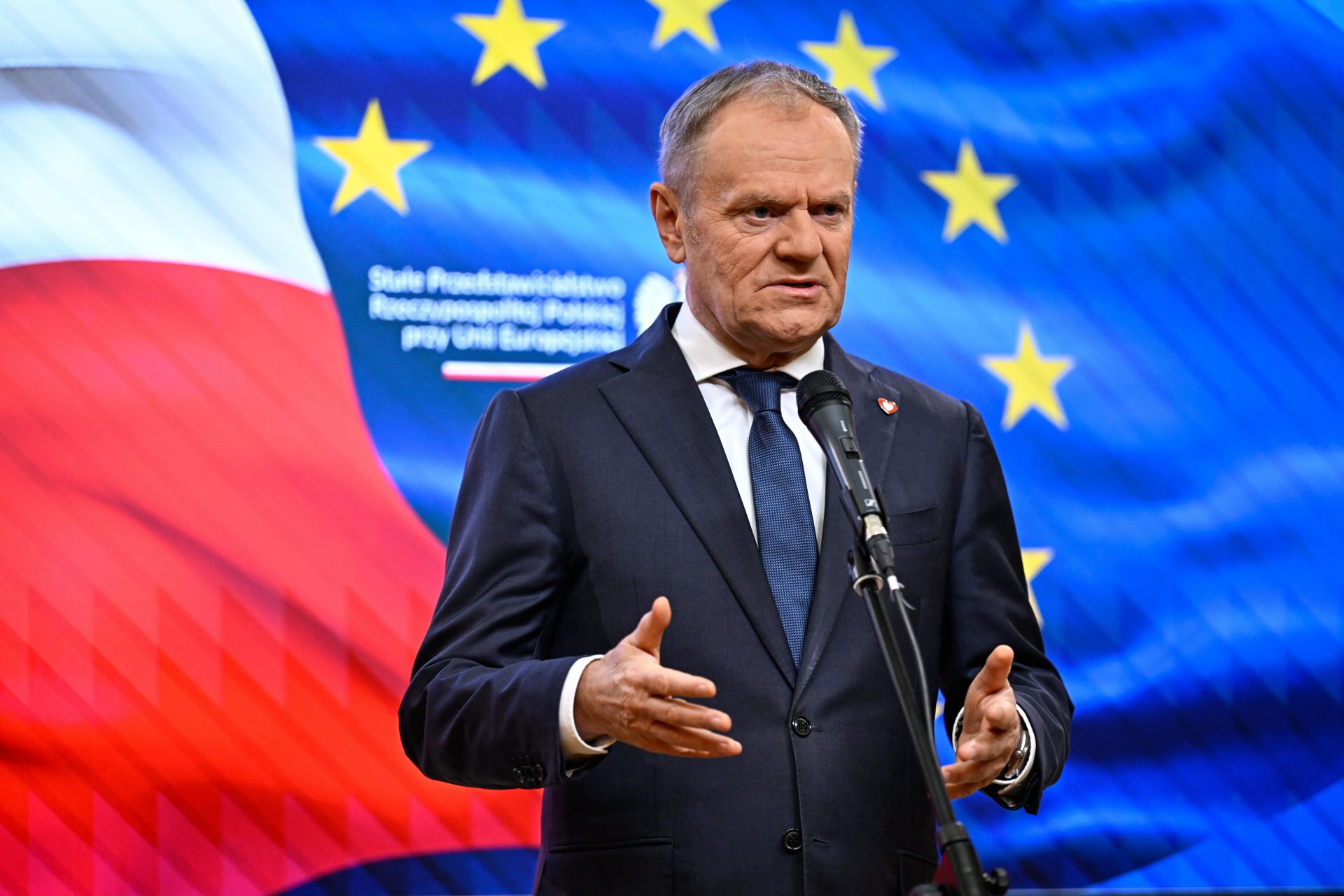
Prime Minister Donald Tusk commented on the outcomes of the European Union summit in Brussels, stating on Friday that while EU leaders did not directly use frozen Russian assets to finance Ukraine, the EU loan for this purpose will still be repaid by Kyiv with funds from Russia.
He highlighted that the agreement among EU leaders secures 90 billion euros for Ukraine, enabling the country to approach negotiations with Russia regarding peace or a ceasefire with “strong arguments.”
However, the financing for Ukraine in 2026 and 2027 will not come from the anticipated reparations loans linked to frozen Russian assets, but rather from a loan sourced from the EU budget. Prime Minister Tusk pointed out that this involves funds from the European Union’s flexible budget reserve, referred to as headroom. He emphasized that Ukraine will repay this loan using Russian reparations it is expected to receive after the conflict. Should Moscow refuse to pay reparations, the frozen Russian assets will be utilized to settle the loan on behalf of Ukraine.
The Prime Minister clarified that Russian assets will still be involved, serving as collateral for the loan. “This means we will recover this money from Ukraine, and Ukraine will reimburse the loan to the European Union when it receives reparations financed by the frozen Russian assets,” Tusk explained.
He asserted that this decision will not impose financial burdens on member states, as the reserve is already part of the EU budget. “To put it simply, Poland will not be contributing additional funds to this initiative,” he assured.
Tusk mentioned that although Hungary, the Czech Republic, and Slovakia were initially listed as countries excluded from the loan to garner their support for an agreement that required unanimity, they will effectively participate like any other member state. “The loan originates from a reserve that has already been agreed upon and funded by all member states. Regardless of how much the Czechs, Hungarians, and Slovaks sought to separate themselves from this, their contribution will be the same as that of others,” the Prime Minister assessed.
Tusk acknowledged that Belgium was the main opponent to directly tapping into Russian funds, as it holds the largest share of Russia’s assets, with its Prime Minister, Bart de Wever, being “the primary obstacle.” “We achieved a solution that addressed many of Belgium’s concerns while providing them with assurance against any financial or legal repercussions of accessing Russian assets,” Tusk said.
During Thursday’s summit in Brussels, EU leaders examined options for financing Ukraine in 2026–27. Estimates from the European Commission and the International Monetary Fund indicate that 137 billion euros are required, with the EU committing to cover two-thirds of this amount. The European Commission suggested two avenues: an EU loan and reparations loans backed by frozen Russian assets, with Belgium consistently opposing the latter from the outset. (19.12.2025)




Leave a Reply