


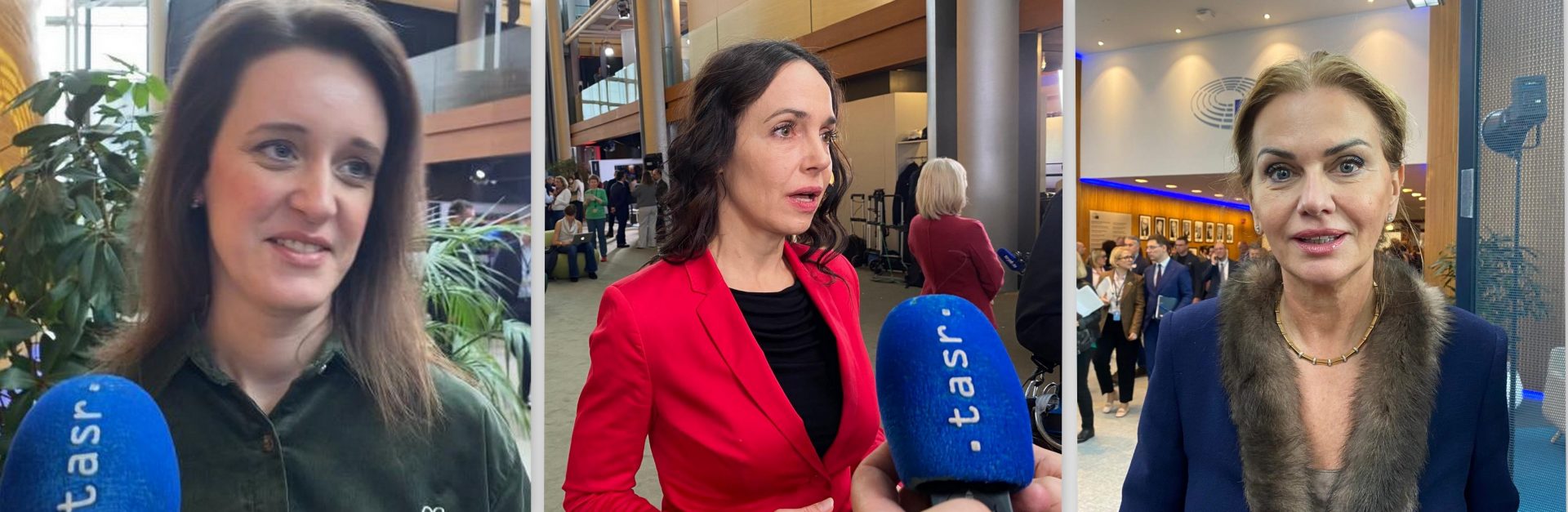
Brussels/Strasbourg – On Wednesday, the European Parliament (EP) approved the final version of EU legislation that will gradually ban imports of Russian gas, set to take effect in autumn 2027. Slovak Members of the European Parliament (MEPs) have differing opinions on this legislative initiative, according to TASR.
MEP and shadow rapporteur Ľubica Karvašová (PS) highlighted the historic nature of this decision during the EP plenary and commended the widespread agreement among MEPs, as well as the “concrete solutions for Slovakia.” She contrasted this with the statements from members of the Slovak government coalition and independent representatives in the EP.
“As shadow rapporteur for the Renew Europe group, I actively contributed to this legislation and supported solutions that consider Slovakia’s unique situation. Russia is an unreliable supplier, and its gas is not economical. If it were, Slovakia wouldn’t currently face some of the highest energy costs for businesses in the EU, necessitating hundreds of millions in energy aid,” she stated.
Karvašová noted that Slovakia currently imports most of its gas from various countries and has interconnections with all its neighbors. The ban on Russian gas will be phased in starting in the latter half of 2027, and Slovakia has secured the longest transition period along with specific technical exemptions.
Monika Beňová (Smer-SD) cautioned that this decision could have adverse economic effects for the EU and particularly for Slovakia. “The International Monetary Fund forecasts significant negative impacts on our gross domestic product. This could lead to a considerable rise in gas prices, a decline in Slovak industry competitiveness, and a weakening of our energy security,” she warned.
She emphasized the importance of the exemption allowing Slovakia to maintain a long-term contract for Russian gas for an additional two years and expressed the need for the European Commission to follow through on compensation commitments related to this ban.
Miriam Lexmann (KDH) appreciated the improvements for Slovakia in the final draft negotiated between the EU Council and the European Parliament, noting that specific timelines for decoupling apply only to natural gas, excluding oil and nuclear fuel. She believes this approach is technically feasible for Slovakia without jeopardizing households or businesses.
“The proposal allows for negotiations on justified exemptions for individual countries. Because of these safeguards, I supported the regulation on the gradual halt of Russian natural gas imports and enhancements in monitoring energy dependencies,” she remarked. Lexmann asserted that post-war, the EU must act decisively and in the interest of its citizens to avoid disadvantages stemming from unpreparedness in restoring economic relations.
Martin Hojsík (PS) emphasized that peace can only be achieved if the EU halts funding for those involved in the conflict in Ukraine. “Ending funding for Putin’s efforts to revert Slovakia to a Russian state is essential. Our freedom and prosperity rely on breaking free from Russian gas, which is not only costly but has also disrupted peace in Europe, undermined industry competitiveness, and endangered jobs. Therefore, I am very pleased that we will finally eliminate it,” he concluded. (18 December)

Leave a Reply