


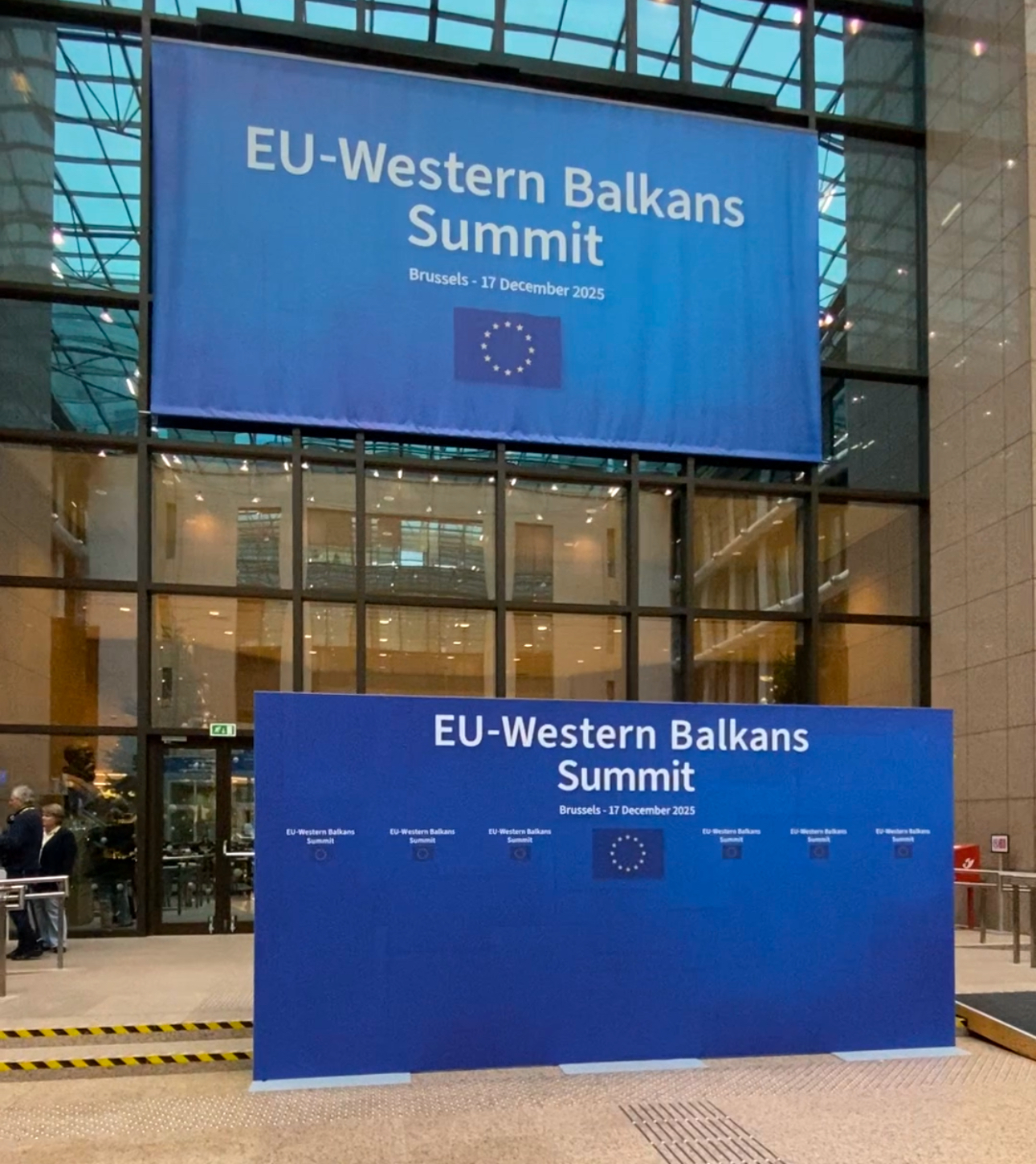
BRUSSELS – The European Union reaffirmed its strong commitment to the Western Balkans’ membership perspective, emphasizing that the region’s future lies within the Union. This was highlighted in the Declaration adopted during the EU–Western Balkans summit in Brussels. EU leaders and member states, together with partners from the Western Balkans, agreed that the summit showcased the strength of their relationships and the benefits provided to citizens. They noted that Russia’s aggression against Ukraine and rising geopolitical challenges underline the necessity for stronger ties between the EU and the Western Balkans. This summit is viewed as a critical opportunity to reaffirm the strategic partnership between the EU and the Western Balkans. The Brussels Declaration acknowledges the new momentum and progress achieved since the last summit, stating that speeding up the accession process—dependent on credible partner reforms, fair conditions, and merit—serves mutual interests.
The Declaration pointed out that the lack of normalized relations between Pristina and Belgrade continues to impede their European aspirations and stressed that all agreements from their dialogue, especially the normalization Agreement and its Annex, must be implemented. It emphasized that support under the Western Balkans Reform and Growth Facility requires constructive engagement and measurable progress in normalizing relations. Enlargement is described as a strategic investment in peace, security, stability, and prosperity, highlighting the need for sustainable momentum and increased reform efforts from aspiring member countries, while the EU must also strengthen its internal foundations. “The EU appreciates the commitment of Western Balkans partners to uphold European values and principles, in line with international law, democracy, fundamental rights, and the rule of law, and expects them to demonstrate this through actions and necessary reforms, especially concerning freedom of expression, independent media, gender equality, and civil society involvement,” the Declaration states.
It further emphasizes that inclusive regional cooperation, reconciliation, and good-neighborly relations are crucial for a shared future and the implementation of international agreements, including the Prespa Agreement with Greece and the Treaty of Friendship, Good-Neighbourliness and Cooperation with Bulgaria. It notes that more efforts are needed to promote reconciliation and regional stability, and to resolve bilateral disputes rooted in historical legacies based on international law and established principles, including succession issues and the handling of war crimes. “We stand united in our unwavering support for Ukraine as it defends its sovereignty against Russian aggression. We reaffirm our commitment to achieving a comprehensive, just, and lasting peace in Ukraine in accordance with the UN Charter and international law,” the document states. It reiterates that alignment with the EU’s Common Foreign and Security Policy, including the adoption of EU restrictive measures, is a significant indicator of partners’ strategic choices, commending those partners already aligned and urging others to follow suit. “We remain dedicated to integrating Western Balkans partners closer to the EU throughout the enlargement process. Gradual integration in several policy areas is underway, providing immediate benefits to citizens and paving the way for accession, with further proposals on gradual integration aligned with EU law,” the Declaration asserts. The EU welcomes progress in integrating Western Balkans partners into the EU single market, including initiatives like the “Single Market Road,” enhanced border crossing financing, integration into the Single Euro Payments Area (SEPA), and initiatives aimed at reducing data roaming costs as of October 1, 2023. The Growth Plan is set to enhance socio-economic convergence between the Western Balkans and the EU, contingent on partners implementing EU-related reforms, with the Common Regional Market acting as a catalyst for deeper integration.
The EU will also continue to support enhanced connectivity in energy, transport, and digital realms within the region and with the EU, as well as ongoing efforts to diversify energy supply routes. Migration management remains a common challenge, with a call for further action from Western Balkans partners to combat human trafficking and strengthen border management. The Declaration underscores the need for ongoing collaboration to address corruption, drug trafficking, organized crime, and terrorism, in line with the recently signed Joint Action Plan. It concludes by stressing the importance of mutual efforts in strategic communication regarding the advantages of enlargement and gradual integration while fostering trust and understanding among societies. “We expect our Western Balkans partners to communicate to their public that the EU remains their closest ally, main donor, investor, and trade partner, showcasing their commitment to EU values and reforms. We anticipate the next EU–Western Balkans summit in Montenegro in June 2026,” the text concludes, noting that Serbia did not align itself with the Declaration. (17 December)









Leave a Reply