EU Escalates Efforts to Strengthen Control Over Tobacco and Nicotine Policy

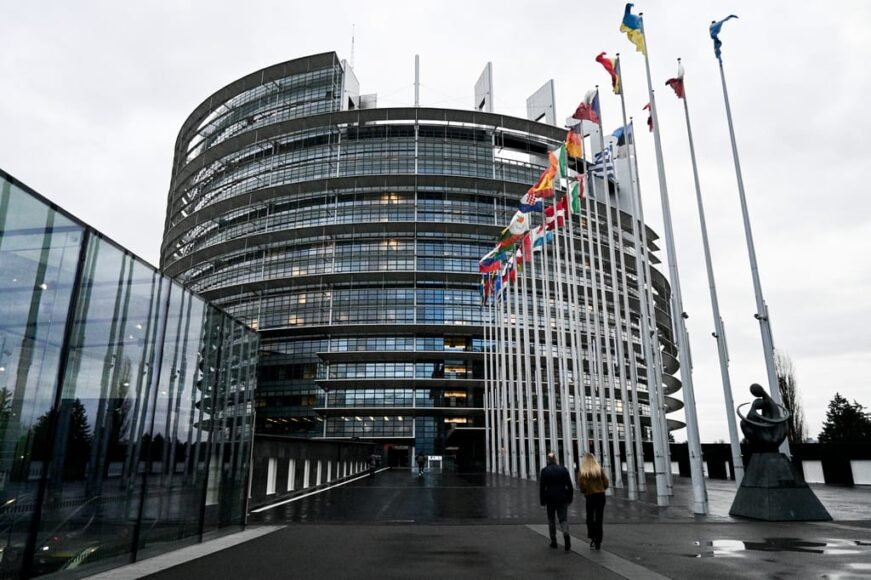
European institutions are intensifying their efforts to extend regulatory control over tobacco and nicotine products. Developments in Brussels and at the World Health Organization’s COP11 meeting demonstrate the European Union’s readiness to utilize every available method to influence policy across the continent. The combination of tax reform, product regulation, and participation in global negotiations reflects an approach that extends beyond traditional EU frameworks.

Within the Union, two significant initiatives are driving the current debate. The revision of the Tobacco Excise Directive and the introduction of the Tobacco Excise Duty on Raw Tobacco aim to raise minimum excise rates on cigarettes and impose new tax obligations on heated tobacco, vaping liquids, and nicotine pouches. Raw tobacco, previously governed mainly by national rules, would fall under an EU-level system through TEDOR. Governments in Italy, Greece, Spain, and Poland have expressed concerns about the impact on agricultural regions and small businesses involved in processing and distribution. Several capitals have questioned whether the reforms restrict domestic flexibility in tax policy, an area historically under national control.

This internal legislative agenda has coincided with an assertive EU role in international negotiations. At COP11 in Geneva, which gathered 160 parties to the WHO Framework Convention on Tobacco Control, the EU delegation was active in discussions on emerging nicotine products. WHO officials and supporting NGOs advocated for extensive restrictions on vapes, heated tobacco, and nicotine pouches, including proposals related to flavors, packaging requirements, environmental rules on filters and device components, and expanded liability tools.

A leaked internal document later disclosed that EU officials had encouraged the delegation to support language promoting prohibitions or strict limitations on all novel nicotine products. The text called for restrictions on manufacturing, importation, sale, distribution, and use. Similar proposals had been excluded from the EU’s official mandate during preparatory discussions in Brussels. Once the document circulated among delegations, several member states described it as a procedural breach and questioned whether the Commission and the Danish EU Council Presidency were seeking outcomes in Geneva that lacked consensus among governments at home.

The incident exposed existing divisions within the EU. Some governments advocated for maintaining space for harm reduction strategies, citing national success with regulated alternatives to smoking. Sweden’s near elimination of smoking through smokeless products was frequently referenced. Greece and Czechia highlighted reductions in smoking after adopting policies incorporating lower-risk products. Other member states supported more restrictive positions, noting concerns about youth uptake and environmental risks associated with disposable devices and filter waste.

As the week progressed, many ambitious elements of the COP11 proposals were scaled back. Several provisions were reframed as voluntary measures rather than binding commitments under the convention. A proposed filter ban was withdrawn. The final decisions focused on environmental objectives, funding for tobacco control programs, and liability mechanisms under Article 19, while broader regulatory proposals were postponed to COP12 in 2027.

Even with these changes, the EU’s approach continued to prompt debate. Critics argued that the Commission’s willingness to support restrictive language internationally, despite objections from several member states, reflected a readiness to pursue regulatory change through external forums when progress in Brussels is more challenging. Observers also noted the influence of Brussels-based public health organizations active in both EU policymaking and WHO consultations, which receive funding from EU programs.

The next phase of Europe’s tobacco and nicotine policy will be shaped by the interplay between domestic legislation and international commitments. As work continues on TED, TEDOR, and planned updates to product regulations, governments will need to decide how much authority should reside with EU institutions and how much flexibility should remain at the national level. The direction of EU policy will depend on whether member states reinforce the trend toward centralization or opt to maintain a more diverse regulatory landscape across the region.


Comments

One response to “EU Escalates Efforts to Strengthen Control Over Tobacco and Nicotine Policy”

  1. FlyGuardX Avatar

    Oh great, just what we needed—more EU red tape to wrap our smokes in! Guess they think we’re all too simple to make our own choices without a Brussels-style babysitter. 😂

  2. Oh great, just what we needed—more EU meddling in our smoking habits. Can’t wait for the next round of taxes on my morning espresso while they’re at it! 😏🍵

Leave a Reply

Your email address will not be published. Required fields are marked *

Last News

Brunner observes tangible outcomes in Brussels’ migration strategy

Brunner observes tangible outcomes in Brussels’ migration strategy

Rome (APA) – Austrian EU Migration Commissioner Magnus Brunner asserts that the EU’s migration strategy is yielding tangible results. “Irregular migrant arrivals have dropped by 35 percent in the past year. Our efforts are effective, but we must do more. Addressing illegal migration is essential to restoring public confidence and preventing division on this issue,” Brunner state

Read More

EU Escalates Efforts to Strengthen Control Over Tobacco and Nicotine Policy

EU Escalates Efforts to Strengthen Control Over Tobacco and Nicotine Policy

European institutions are intensifying their efforts to extend regulatory control over tobacco and nicotine products. Developments in Brussels and at the World Health Organization’s COP11 meeting demonstrate the European Union’s readiness to utilize every available method to influence policy across the continent. The combination of tax reform, product regulation, and participation in global

Read More

WHO Advocates for Universal Access to Ozempic-Style Drugs, Not Just for the Wealthy

WHO Advocates for Universal Access to Ozempic-Style Drugs, Not Just for the Wealthy

The World Health Organization (WHO) is urging pharmaceutical companies to adopt tiered pricing, allowing for lower prices in low-income countries, and to consider voluntary licensing of patents and technology. This would enable producers worldwide to manufacture GLP-1s, thus expanding access to these medications.
Jeremy Farrar, an assistant director general at the WHO, mentioned to POLITICO that u

Read More

Cinema Sphinx in Ghent Scheduled for Major Renovation in 2027

Cinema Sphinx in Ghent Scheduled for Major Renovation in 2027

Ghent (Brussels Morning Newspaper) – Cinema Sphinx in Ghent, co-owned since 2021, will undergo major renovations from March 2027 to October 2028, modernising 5 screens, expanding the café, and preserving its historic arthouse cinema role.
As VRT News reported, major renovations will begin at Cinema Sphinx in Ghent in March 2027.

“We’re preparing this building for the future, so that many genera

Read More

Twenty-two European and International Summits During Costa’s First Year in Brussels

Twenty-two European and International Summits During Costa’s First Year in Brussels

António Costa, President of the European Council, has presided over 22 European and international summits during his first year in office, with the goal of “actively engaging with global partners” to foster peace.This assessment was published by the European Council, which convenes the heads of government and state of the European Union (EU) to outline political guidelines and priorit

Read More

Cyclone Ditwah Causes Decades-High Flooding in Sri Lanka, Hundreds Dead

Cyclone Ditwah Causes Decades-High Flooding in Sri Lanka, Hundreds Dead

The UN relief coordination office, OCHA, reports that 998,918 people in Sri Lanka’s 25 districts have been affected by Tropical Cyclone Ditwah, with 212 deaths and 218 people missing. Over 180,000 individuals from more than 51,000 families are taking refuge in 1,094 government-run safety centers as search and rescue efforts continue.
Cyclone Ditwah struck on 28 November, causing severe floo

Read More

Keir Explains the Budget: Will the PM Step In?

Keir Explains the Budget: Will the PM Step In?

The budget controversy persists, raising concerns about whether the prime minister and chancellor overstated the deficit’s magnitude. Sam and Anne ponder if Sir Keir Starmer and Rachel Reeves misinformed the cabinet and nation to rationalize the array of tax increases amid growing political tension. Meanwhile, have negotiations to reset relations with the European Union stalled over defense

Read More

Discovering Witchcraft and Magic at the Brugge Witch Museum

Discovering Witchcraft and Magic at the Brugge Witch Museum

The Museum of Witchcraft in Bruges, known locally as the Bruges witchcraft museum or witch museum Brugge, offers an intriguing look into the history and cultural perceptions of witchcraft through the ages. Situated at Wollestraat 29 in Bruges, this museum immerses visitors in a world of witches, wizards, and magic, tracing the evolution of witchcraft from ancient practices to the modern-day arts

Read More

European Parliament Proposes Ban on Social Media for Under-16s

European Parliament Proposes Ban on Social Media for Under-16s

The European Parliament members approved a report with 483 votes in favor, 92 against, and 86 abstentions, advocating for a minimum age of 16 for access to social media, video-sharing platforms, and AI assistants. This age could be reduced to 13 with parental consent.
The report was authored by Danish social democrat Christel Schaldemose, whose government is already working on a ban for social me

Read More

Q&A: Leveling the Playing Field for Europe’s Cement Producers

Q&A: Leveling the Playing Field for Europe’s Cement Producers

High energy prices, challenges in CBAM enforcement and promotion of lead markets, and rising carbon costs are impacting competitiveness against non-EU producers.
The cement industry is crucial to Europe’s construction value chain, accounting for about 9% of the EU’s GDP. Its production processes contribute to 4% of EU emissions and are investing in measures to achieve climate neutrality by 2050, a

Read More