


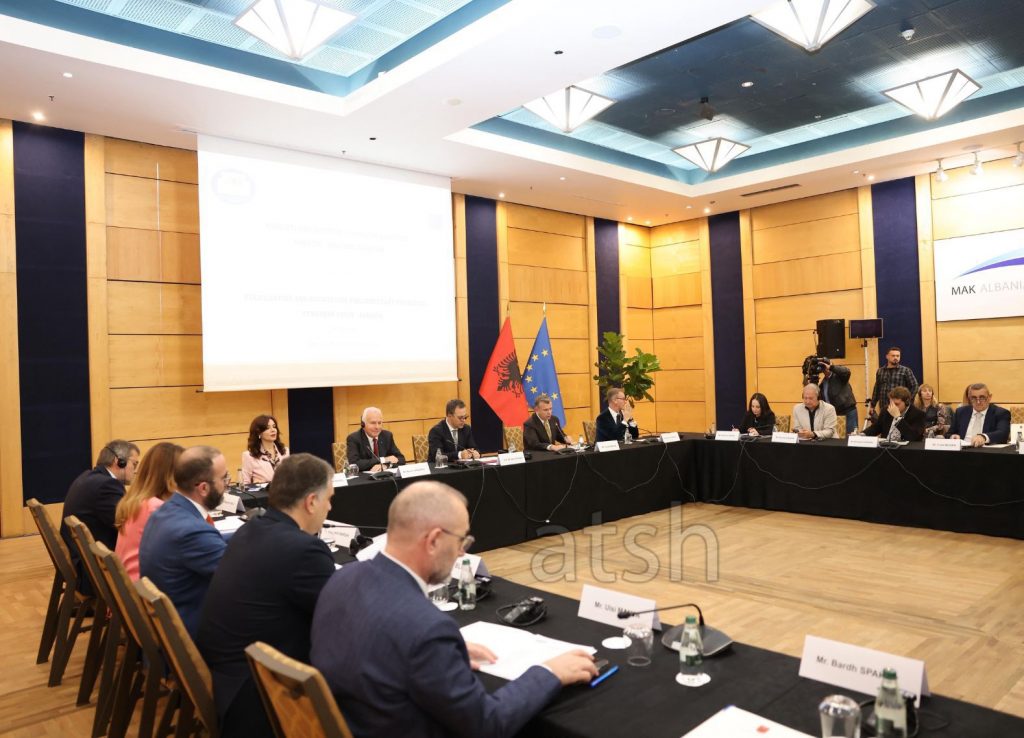
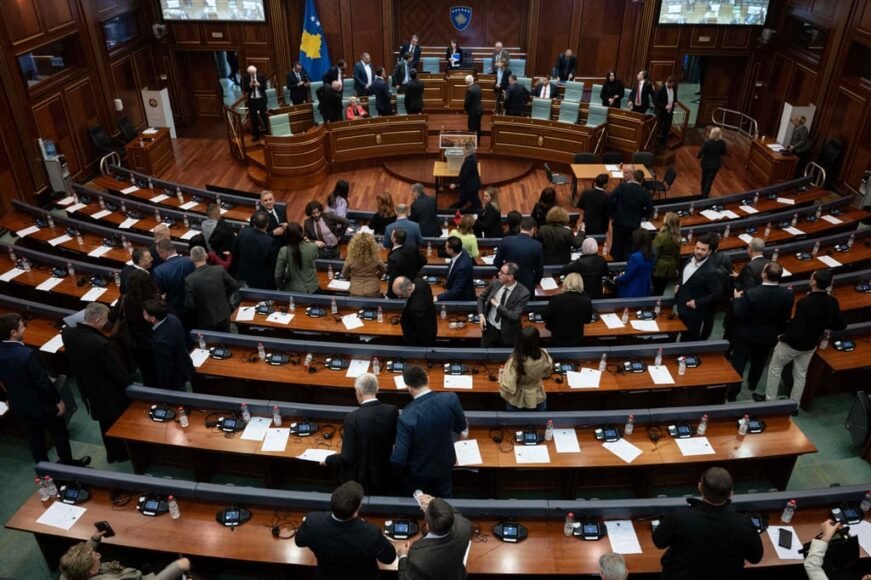
Tirana hosts the 20th meeting of the Parliamentary Committee on Stabilization-Association over two days, co-chaired by Taulant Balla, head of the Socialist Party parliamentary group, and Marco Tarquinio, leader of the European Parliament delegation.
Nine European Parliament members are in Albania to evaluate the nation’s progress toward EU membership.
In his opening remarks, Tarquinio affirmed the European Parliament’s ongoing support for the Assembly of Albania, noting that the country is nearing the final stages of its EU membership journey. He emphasized the need for continued collaboration, stating, “The European Parliament has decided to establish the Western Balkans antenna in Tirana, in this excellent capital of this part of Europe,” and highlighted that membership will result from collective efforts.
Co-chair Taulant Balla pointed out that Albania is at a crucial juncture in its EU membership path. He remarked, “Three years after the official opening of negotiations, Albania stands at the most advanced stage of its integration process. Within less than a year, we’ve opened five out of six negotiation chapters, including areas such as the rule of law, internal market, competitiveness, green agenda, and foreign policies. This progress is rarely seen in EU enlargement history and distinctly shows Albania’s readiness to advance swiftly, responsibly, and reliably.”
EU Ambassador Silvio Gonzato underscored the Albanian government’s ambitious agenda for EU integration during the meeting. He stated, “Both parties share this ambition, and EU membership remains a common national objective that receives widespread support across the political spectrum. This matter is critical, as membership is a transformative process requiring commitment and dedication from all societal sectors and their elected representatives.”
Opposition Democratic Party member Jorida Tabaku, deputy chair of the Albanian delegation, emphasized the significance of Albania’s integration into the EU, asserting that the country’s future lies within the EU. However, she stressed the need for improvements in the development process. Tabaku raised concerns about transparency and opposition inclusion, arguing that while Albania may have opened chapters on paper, the actual process lacks extensive discussion and involvement, excluding parliament, civil society, businesses, and interest groups. She insisted that integration should not merely be about statistics or chapter openings but must result in real changes and reforms impacting citizens’ lives.
The Parliamentary Committee on Stabilization Association EU-Albania (KPSA) was established pursuant to the decisions made by the European Parliament’s Conference of Presidents on January 21, 2010, and the Assembly of Albania on March 26, 2010.
This committee’s responsibilities include reviewing all facets of EU-Albania relations and particularly the execution of the Stabilization Association Agreement.
The committee convenes biannually: once in Tirana and once in Brussels or Strasbourg. Members from both sides discuss themes relating to the rule of law, corruption, and aligning foreign policy with that of the EU, and they adopt recommendations. Recommendations pass if they secure majority support from both the European Parliament and the Albanian Parliament delegations present at the meeting. (October 28)






Leave a Reply