


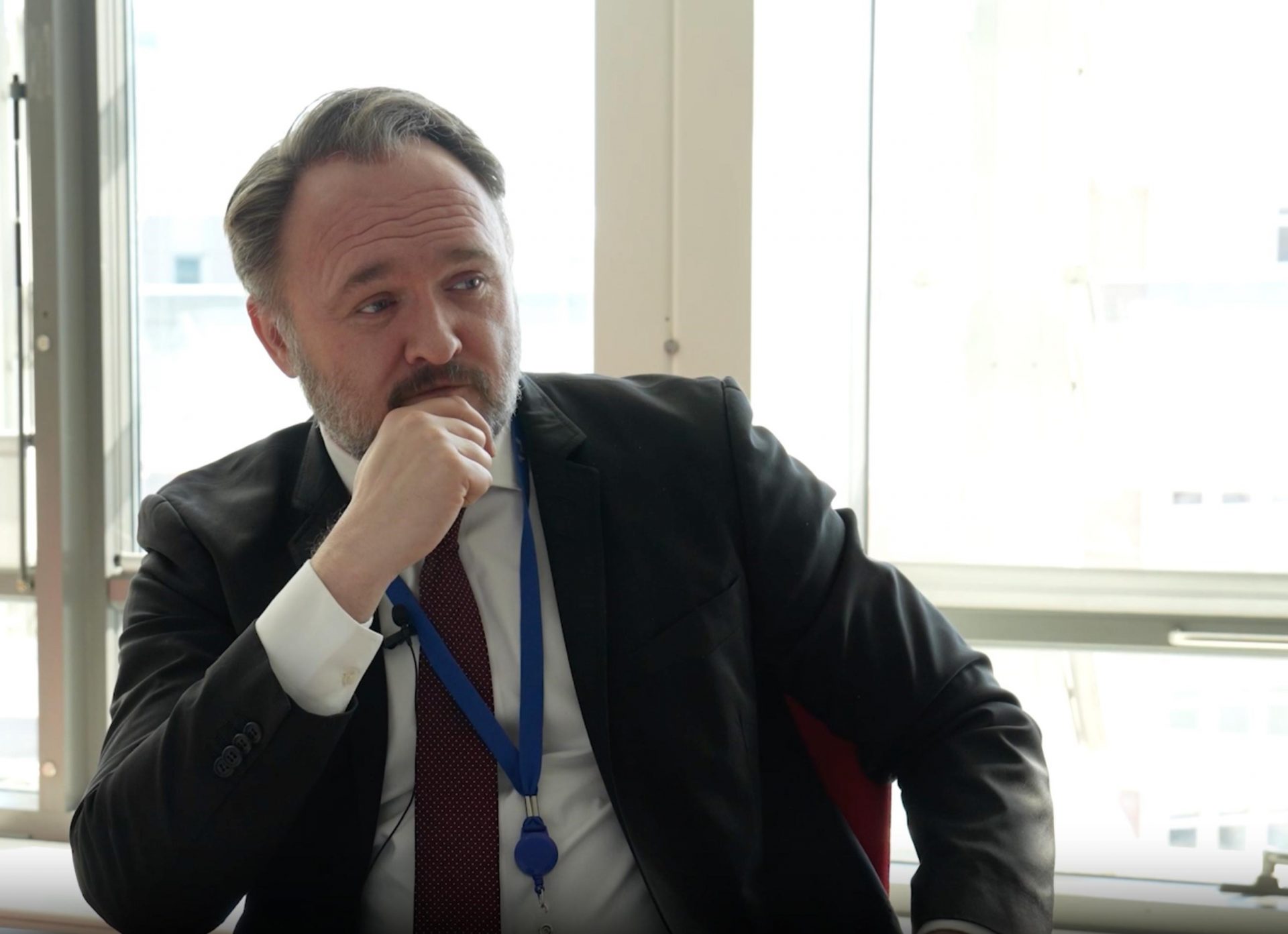
EU Commissioner for Energy and Housing, Dan Jørgensen, is working towards reaching an agreement on the permanent phase-out of Russian fossil fuels during Denmark’s EU presidency.
He made this remark upon arriving at an informal meeting of energy ministers in Copenhagen on Friday.
“I hope we can come to an agreement that includes all member states. However, I am aware that some countries have reservations,” stated Dan Jørgensen.
This comes after Austria recently proposed that the EU should resume Russian gas purchases if a peace deal is reached with Ukraine.
Like Hungary and Slovakia, Austria lacks direct access to the sea, making it one of the EU nations most reliant on Russian gas supplied via pipelines, unlike countries such as Germany, which can import gas more easily by ship.
Nevertheless, the EU Commission is committed to ensuring that no member state lacks alternatives during the transition away from Russian fossil energy, according to Dan Jørgensen.
“My role is to support these countries to avoid jeopardizing their energy security. I am confident we can achieve this,” he said.
A portion of this energy is expected to come from the USA, following a trade agreement with President Donald Trump, which commits the EU to purchase American energy worth $750 billion over three years.
This equates to nearly 4.8 trillion kroner.
If it proves difficult to gain the support of skeptical countries, the EU could still decide to phase out Russian oil and gas, which can be done by a qualified majority, Jørgensen emphasized.
“A united EU would send a strong message to Russia. However, this legislation does not require unanimous approval,” he noted.
“I am optimistic that the Danish EU presidency is doing everything possible to find a solution in the coming months. It is crucial that this occurs swiftly, with the intention of implementation by January 1,” Jørgensen added.
The EU Commission has proposed that all member states cease using Russian gas from short-term contracts by January 1, 2026.
Furthermore, it suggests that member states should exit their long-term Russian gas contracts by the end of 2027, allowing for a ban on Russian gas to be implemented on January 1, 2028.
In June, the EU Commission reported that member states were still purchasing Russian gas at a rate of nearly two billion euros per month, totaling about 15 billion kroner monthly or nearly 180 billion kroner annually.
This revenue can be utilized by Russia to fund the war in Ukraine.






Leave a Reply