


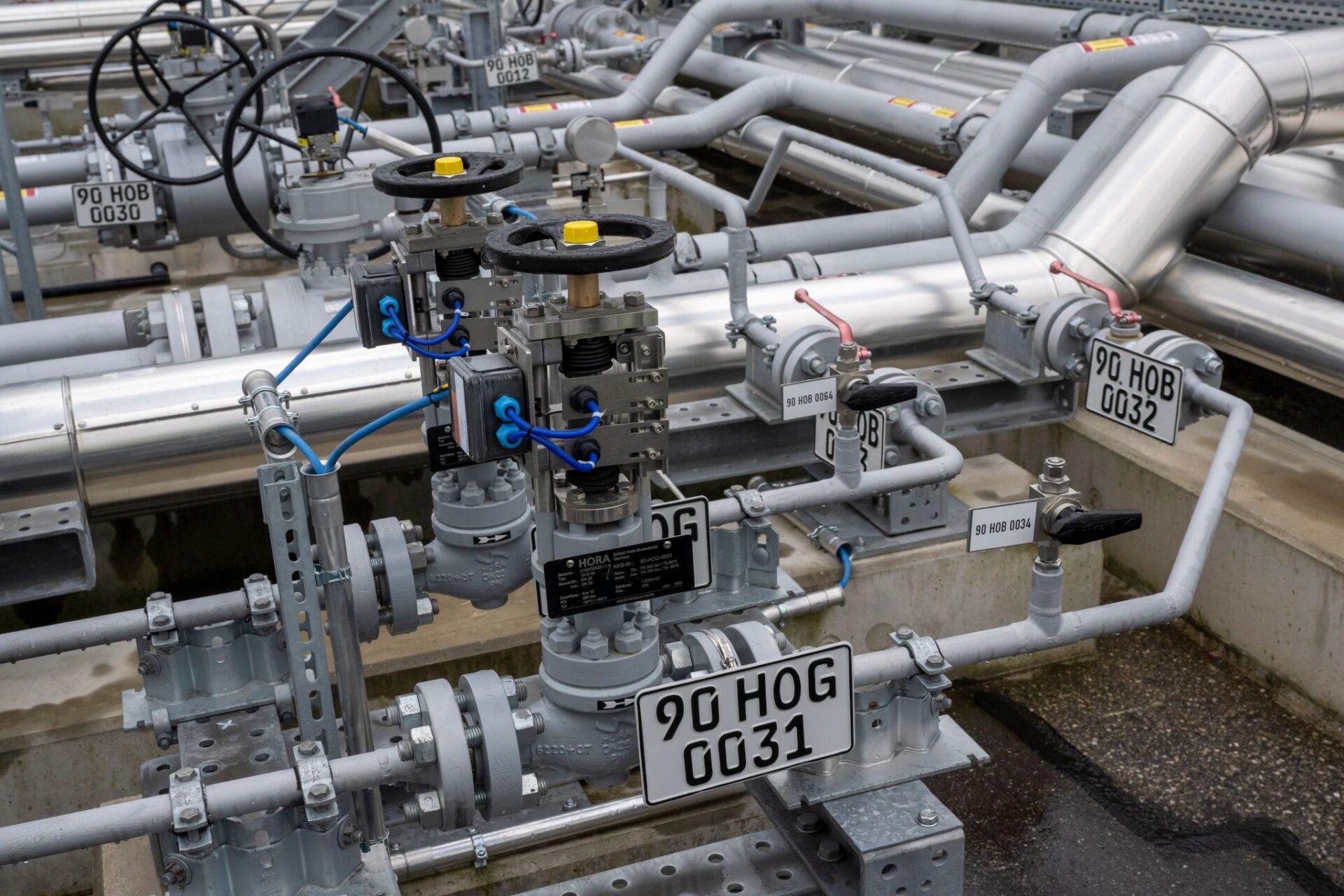
The European Commission has announced a funding allocation of €35.5 million to enhance hydrogen interconnections on the Iberian Peninsula. This includes €7.2 million for the Celorico da Beira-Zamora connection, while the remaining funds will support an interconnector between Spain and France.
This announcement was made in Brussels, where the Commission disclosed a total fund of €1.25 billion earmarked for 41 cross-border energy infrastructure projects deemed of common interest under the Connecting Europe Mechanism. Among these projects is H2med, a transnational initiative aimed at linking the hydrogen networks of the Iberian Peninsula with Northern and Central Europe.
The recently released list of grant proposals indicates that H2med is set to receive €35.5 million, specifically allocated as follows: €7.2 million for the H2Med CelZa interconnection and €28.3 million for the Barcelona-Marseille connection.
Additionally, another project benefiting Portugal has been selected for funding to conduct studies supporting the European Hydrogen Backbone initiative, which aims to develop a trans-European hydrogen network of approximately 28,000 kilometers by 2030, with €2.8 million allocated for this purpose.
The H2med project focuses on establishing energy interconnections between Portugal, Spain, and France.
According to information on its website, H2med is backed by five European partners, including REN – Redes Energéticas Nacionais, and boasts a total budget of €2.5 billion. The project aims to supply affordable green hydrogen to Europe by 2030, with an anticipated annual transport capacity of two million tons, which would account for 10% of Europe’s projected hydrogen consumption by that time.
In October 2022, Portugal, France, and Spain reached a consensus to expedite interconnections on the Iberian Peninsula, shifting from a gas-only project to one that includes a maritime pipeline capable of initially transporting natural gas and later transitioning to green hydrogen.
The three nations also committed to developing a “Green Energy Corridor” by sea between Barcelona and Marseille (referred to as BarMar), while emphasizing the importance of completing renewable gas interconnections between Portugal and Spain, particularly the Celorico da Beira-Zamora link.
At that time, officials acknowledged that the project could be fully financed through European funding under the Connecting Europe Mechanism.
In January 2023, Germany expressed its support and joined the hydrogen corridor initiative.
The goal of these new infrastructures on the Iberian Peninsula is to facilitate the distribution of green hydrogen, with the capability to transport other renewable gases as well.
Currently, hydrogen accounts for approximately 2% of the EU’s energy mix, with about 95% of production derived from fossil fuels, leading to the annual emission of 70 to 100 million tons of carbon dioxide (CO2).
In contrast, green hydrogen is produced from renewable sources, resulting in no CO2 emissions and minimal atmospheric pollutants. It serves various purposes, such as a raw material, fuel, and a means of energy transport or storage, and is applicable across several sectors, including industry, transportation, energy, and construction.










Leave a Reply