


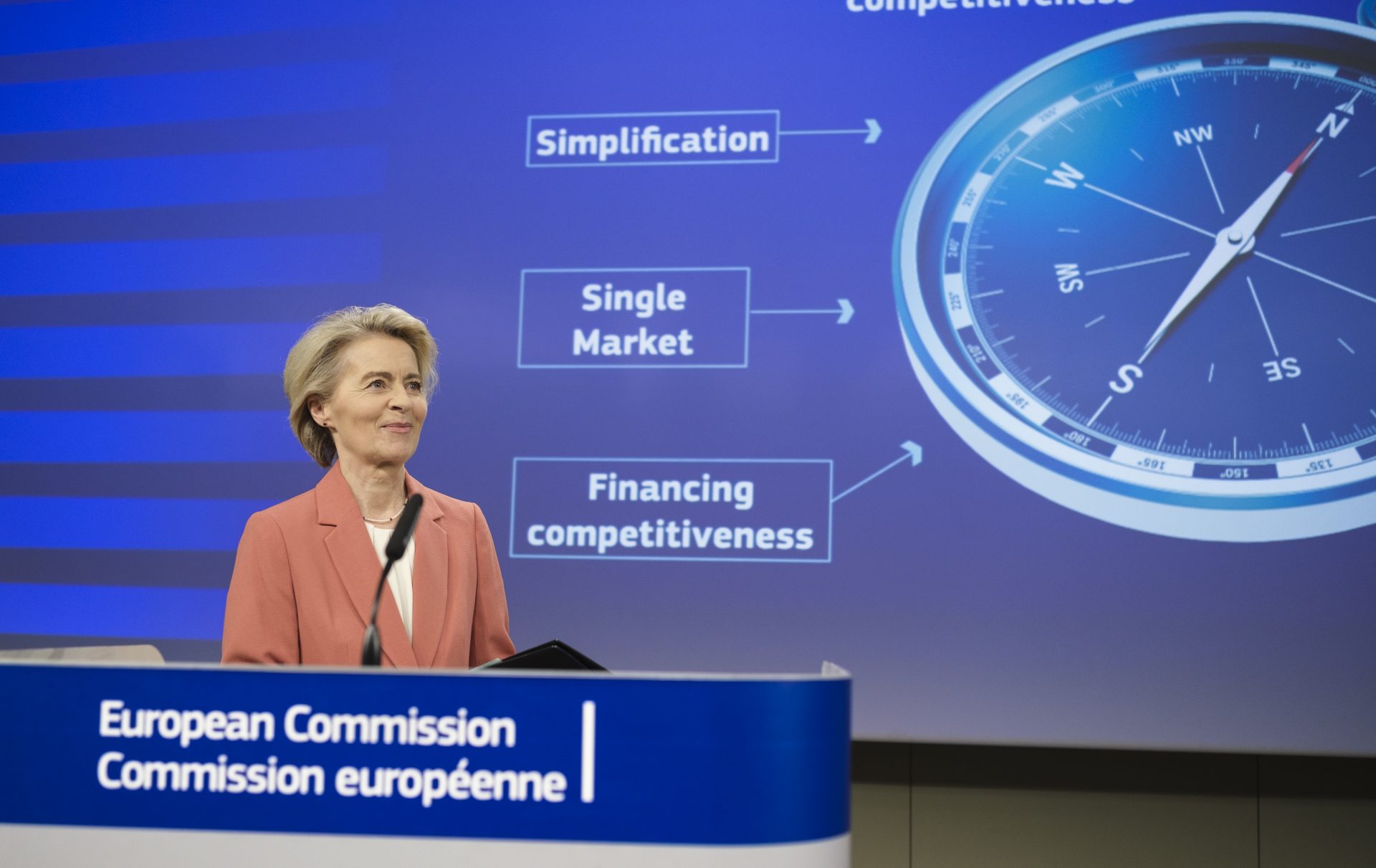
Ljubljana – The effective and prompt implementation of measures outlined in the EU’s competitiveness compass, introduced this week, will be essential for enhancing the economic competitiveness of the union. This was a key take away from a recent discussion organized by the European Parliament on the subject.
Slovenian MEP Matej Tonin (EPP/NSi), who also serves on the European Parliament’s Committee on Industry, Research and Energy, expressed that while the forecasts appear promising, they currently exist only on paper. He stressed the importance of translating these plans into tangible actions in the coming years.
Sonja Šmuc, the deputy president for strategic projects at the Zasavian technology firms Dewesoft and openDAQ, remarked that the compass provides an insightful analysis of Europe’s challenges in keeping pace with other global players. However, she pointed out that the current leadership has been in place for five years, during which the gap has widened.
According to Gregor Anderluh, director of the Chemical Institute, the compass serves as a valuable document outlining necessary initiatives; however, he called for greater proactivity and expedited actions.
Simon Savšek, head of the European Investment Bank’s representation in Slovenia, emphasized that the EU’s situation is not as dire as it is sometimes portrayed. He highlighted that, despite comprising about six percent of the global population, the EU accounts for 20 percent of worldwide research and development spending, as well as 20 percent of high-tech patents.
The European Commission unveiled the EU’s economic competitiveness compass this week, which will serve as a foundation for a series of more detailed strategies and legislative proposals forthcoming in the next months. The compass is structured around three main pillars: a plan for decarbonization and economic competitiveness, closing the innovation gap with the USA and China, and enhancing economic security. (January 31)










Leave a Reply