


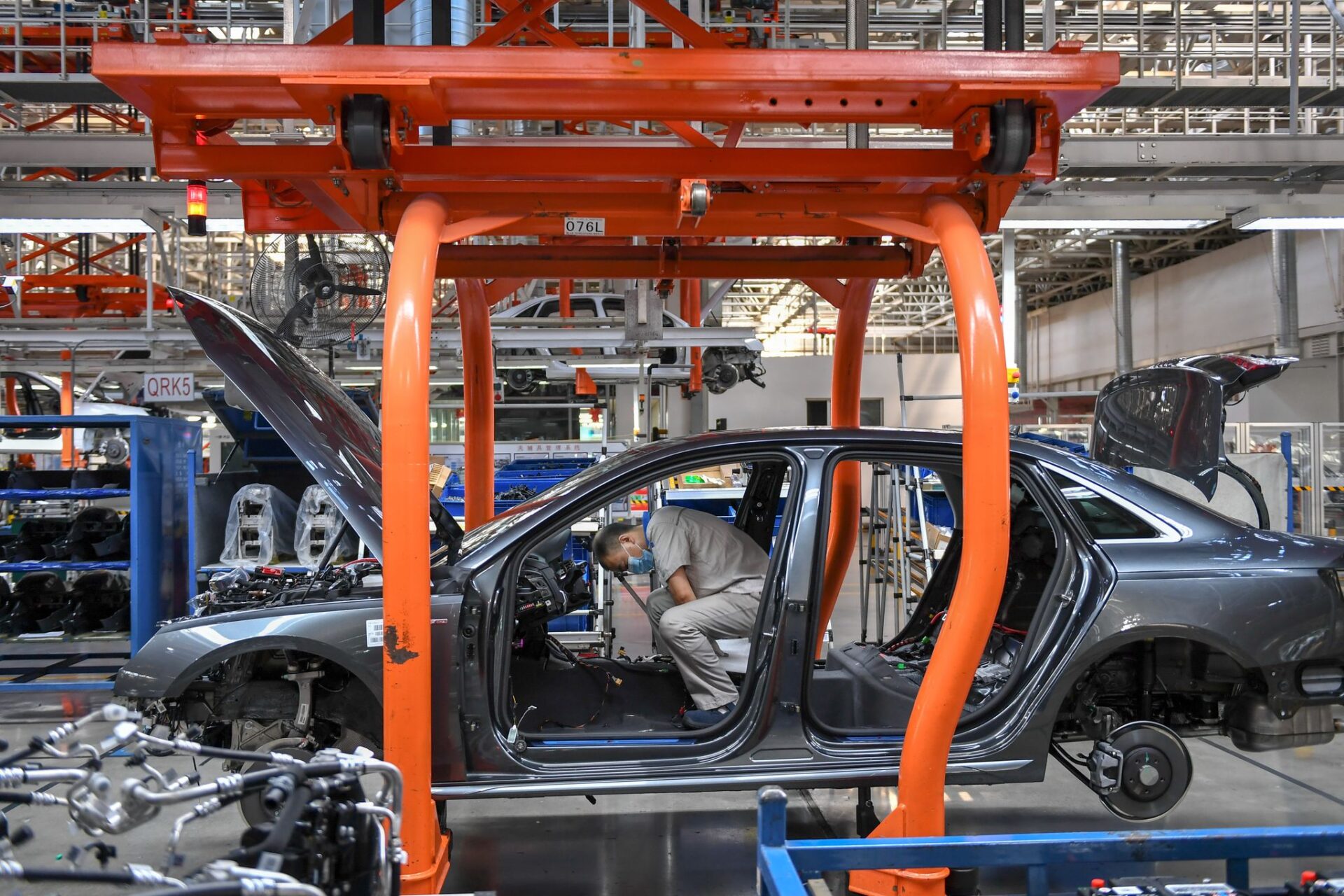
Prague – Škoda Auto is advocating for a regulatory framework in the automotive sector that allows for the inclusion of plug-in hybrids and alternative fuels in the shift towards electric vehicles. This sentiment was expressed by Škoda Auto’s chairman, Klaus Zellmer, following a meeting with the Minister of Industry and Trade, Lukáš Vlček (STAN). The current European Union plan outlines a strategy to gradually reduce emission limits for new vehicles, culminating in a full ban on internal combustion engines by 2035.
“Our data indicates that customers still prefer a variety of driving options. To maintain our economic viability, we must honor these preferences and keep technological avenues open as we pursue the decarbonization of the European vehicle fleet. To achieve this, it is essential that we explore alternative solutions, such as plug-in hybrids and alternative fuels, which should be incorporated into the regulatory framework,” Zellmer stated in a press release.
At the end of last year, the Czech Republic and Italy urged the EU to expedite the assessment of the feasibility regarding the 2035 ban on the sale of internal combustion engine vehicles. Additionally, their joint proposal emphasized the urgent need to consider the potential fines for not meeting the 2025 emission targets. “Delaying the revision of emission limits to 2025 (from 2026) and temporarily relaxing penalties would provide European manufacturers the necessary time to adapt and foster investments in innovation and sustainable technologies. Our objective is to ensure that the transition to greener mobility does not jeopardize competitiveness or jobs,” remarked Štěpán Hofman, Deputy Minister of Industry and Trade.
Martin Jahn, a Škoda board member and president of the Automotive Industry Association, emphasized that CO₂ regulations were established under different circumstances and that manufacturers have worked diligently to comply. “The year 2025 will be particularly challenging, and we must seek flexibility to avert penalties that could hinder the transformation. Furthermore, we need to reconsider industrial policy to lower production costs, particularly energy prices, stimulate market demand, and encourage car manufacturers to invest in new technologies, especially in light of foreign competition,” Jahn added.
The Czech automotive sector employs nearly half a million people, representing 24 percent of the country’s exports and contributing nine percent to its GDP. This industry is also vital to the European economy, employing over 13 million individuals and accounting for 6.8 percent of total employment in the EU. (January 10)










Leave a Reply