


Iran executed at least 31 women in 2024, marking the highest number since the non-governmental organization Iran Human Rights (IHR) began tracking the country’s use of capital punishment in 2008, according to a report released on January 6. The alarming figure has drawn significant concern from human rights advocates and was highlighted in a statement from Agence France-Presse (AFP).
Mahmoud Amiri-Moghaddam, director of IHR, condemned the executions, stating, “The execution of women in Iran reveals the brutal and inhumane nature of the death penalty and underscores the deep-rooted gender discrimination and inequality within the Iranian justice system.”
IHR, headquartered in Norway, documented 241 executions of women in Iran between 2010 and 2024. Among these cases, 114 women were executed for murder, while 107 faced the death penalty for drug-related offenses. The organization emphasized that many women sentenced to death for murder were victims of domestic violence or sexual abuse, often acting in self-defense or out of desperation.
Iran’s judiciary operates under the Islamic principle of qisas, or retributive justice, which mandates that a murder must be avenged by the loss of another life unless the victim’s family chooses to forgive or accept compensation instead. According to IHR, this legal framework frequently fails to take domestic violence into account as a mitigating factor in sentencing.
The rise in executions has sparked widespread concern among human rights groups, with many suspecting that Iran’s Islamic authorities are leveraging the death penalty to sow fear and suppress dissent, particularly in response to the 2022–2023 nationwide protests.
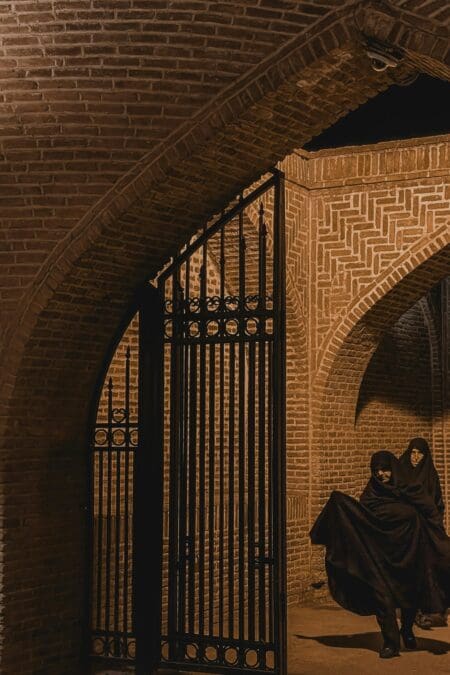
For illustrative purposes, a photo by Peyvand Pezeshki from the Ghazvin Grand Bazaar was noted, but the gravity of the situation continues to eclipse such imagery.







Leave a Reply