


The UN High Commissioner for Human Rights, Volker Türk, addressed the United Nations Human Rights Council on February 26, 2026, focusing attention on the ongoing crisis in Sudan. As the conflict nears its third year, civilians remain severely impacted by continuous atrocities and a worsening humanitarian situation.
In 2025, major attacks occurred, including the Rapid Support Forces’ assault on the Zamzam camp in North Darfur in April, followed by their siege on El Fasher, ongoing for 18 months. The conflict’s escalation prompted the Human Rights Council to adopt resolution S-38/1, initiating an urgent investigation into alleged human rights and international humanitarian law violations in El Fasher on October 26-27, 2025.
On February 19, 2026, the investigation report confirmed evidence of three acts of genocide: killing members of a protected ethnic group, causing bodily and mental harm, and imposing conditions aimed at the group’s destruction. The crimes in El Fasher signify a continuation and intensification of violence patterns, as noted by Mohamed Chande Othman, Chair of the Independent International Fact-Finding Mission for the Sudan. Türk expressed concern that as the conflict shifts to Kordofan, similar crimes might recur due to established patterns of brutality.
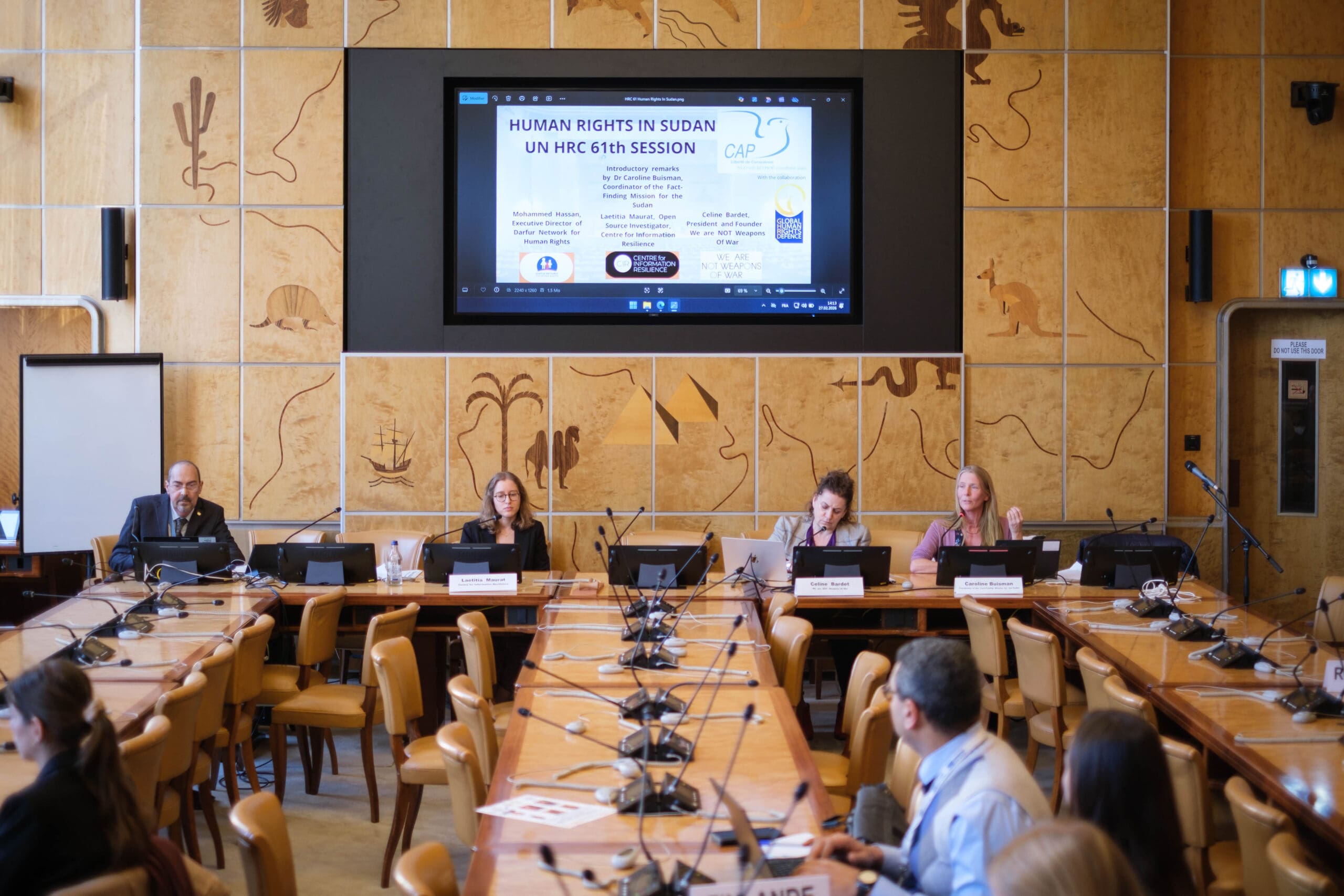
Following the report, the US Department of the Treasury imposed sanctions on Rapid Support Forces commanders for human rights abuses, echoed by UN Security Council sanctions on February 24, 2026. These actions were discussed by CAP Freedom of Conscience President Thierry Valle during a Human Rights Council side event.
Civil society groups endorsed the sanctions, urging further measures. The Darfur Network for Human Rights supports extending sanctions throughout the command structure. Human Rights Watch emphasized targeted sanctions as crucial for accountability, calling for the EU and UK to enact similar measures and investigate the involvement of external actors, especially the UAE, accused of supplying financial support and arms.
High Commissioner Türk condemned external support, criticizing those profiting from the conflict. He urged regional actors and arms suppliers to help end the war. Kenneth Roth, former Human Rights Watch Executive Director, questioned why UAE officials were not sanctioned, despite allegations of arms support.
Concluding the Human Rights Council side event, speakers stressed addressing the conflict and its external support, highlighting the role of foreign actors in fueling the violence.





Leave a Reply