


Zeebrugge – Eurotoday – The Port of Zeebrugge has reached a significant milestone in its maritime history by accommodating a vessel with a draft of 16.40 meters, affirming its status as a strategic gateway capable of handling some of the world’s largest ships.
The MSC Mina, one of the largest container ships globally with a capacity of 23,656 containers and a length of 400 meters, docked at Zeebrugge, setting a new record for the deepest draft ever recorded at the Belgian port. This achievement surpasses the previous record held by the Ever Greet by 10 centimeters.
This development positions Zeebrugge as a pivotal player in the competition among Europe’s deep-water ports, demonstrating its readiness to host ultra-large container vessels (ULCVs) and reinforcing its relevance in global maritime logistics.
Recent dredging operations have enhanced the port’s depth capacity to accommodate ships requiring up to 16.50 meters of draft. Plans are underway to further extend this depth to 16.80 meters. CSP Zeebrugge terminal operator Nancy Van Osselaer emphasized that even minimal increases in available draft offer considerable advantages for cargo operations. With a current edge over the Port of Antwerp, which allows drafts of up to 16.00 meters, Zeebrugge is emerging as the preferred location for mega-vessels.
“As a port, it is important to be able to offer sufficient depth,” said Van Osselaer. “Then you can receive ships that would otherwise go to other ports. The extensive dredging in Zeebrugge has enabled vessels with a draft of up to 16.50 meters to dock here. The long-term goal is 16.80 meters, though that remains an aspiration for now. In contrast, Antwerp’s current maximum depth is 16 meters.”
The Port of Antwerp-Bruges, of which Zeebrugge is a part, also expressed satisfaction with this milestone. Operational Director Rob Smeets credited the achievement to unified efforts across the port’s stakeholders.
“It is the result of close cooperation between all partners in maritime traffic—from pilots to shipping companies and terminal operators,” said Smeets. “Together, we show what Zeebrugge is capable of.”
Strategic Significance of Zeebrugge’s Deep-Water Advantage
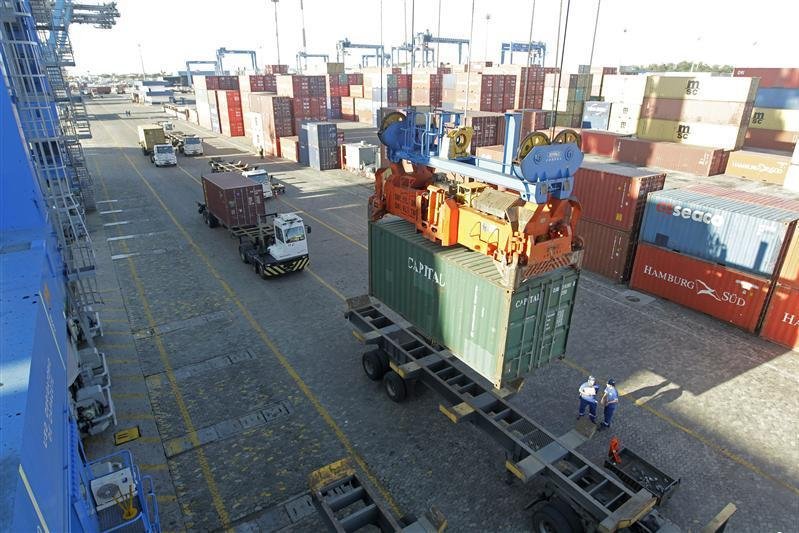
The Port of Zeebrugge, operating under the Port of Antwerp-Bruges framework, has become a central container hub in Europe, handling over 2.8 million TEUs (twenty-foot equivalent units) in 2022. Its strategic North Sea location connects Europe with Asia, the Americas, and other major global trade routes.
Thanks to its 16.50-meter draft capacity, Zeebrugge can accommodate vessels as massive as the MSC Mina, with only a few ports in Europe, such as Rotterdam’s Maasvlakte terminals (17.50 meters), surpassing its capability. Zeebrugge’s recent deepening project, which cost €200 million, plus ongoing dredging, have further reinforced its readiness for next-generation ULCVs, which are growing to sizes of 24,000 TEUs and beyond.
Zeebrugge is also vital for transshipment operations, with 45% of its traffic originating from short-sea shipping and 55% from deep-sea routes. Major global shipping alliances, including 2M and THE Alliance, count Zeebrugge as a regular port of call due to its deep draft, operational reliability, and seamless hinterland connectivity.
MSC Mina’s landmark arrival underscores Zeebrugge’s growing competitiveness against other major European ports such as Le Havre (16.15 meters maximum draft) and Hamburg (15.90 meters). These capabilities have put Zeebrugge at the forefront of European maritime logistics and positioned it as a gateway for mega-ships navigating the continent’s expanding trade flows.
Eurotoday is a daily online publication offering independent reporting on European and international affairs. With an EU-wide focus, Eurotoday delivers in-depth coverage of policy, politics, and key developments across Member States, while examining global trends through a European lens.










Leave a Reply