



“Children are dying and it’s going to get worse,” warned Julien Harneis, UN Resident and Humanitarian Coordinator in Yemen. He expressed concern that the severity of the crisis might only gain attention as mortality and morbidity rise significantly over the next year.
This warning follows efforts by Southern Transitional Council (STC) forces to expand in the eastern governorates of Hadramout and Al Mahra, a move reportedly reversed by Government-aligned forces supported by Saudi Arabia.
The crisis has escalated after more than a decade of conflict between Houthi-led forces, controlling Sana’a, and the internationally recognized government in Aden, supported by a Saudi-led coalition.
Complex operating environment
“It’s an extraordinarily complicated situation,” Harneis stated in Geneva. He described a recent occurrence in Aden where control shifted between the Government of Yemen and the Southern Transitional Council over 48 hours.
Four weeks later, the STC announced in Riyadh that they had “dissolved” their movement, allowing the Yemeni Government to regain control. However, demonstrations in Aden insisted they were still present, Harneis noted.
UN Special Envoy for Yemen Hans Grundberg told the Security Council that recent political and security upheavals highlight the fragile stability without a credible, inclusive political process to resolve the war.
Securing peace and aid delivery is hindered by the ongoing detention of UN staff and diplomatic workers by Houthi rebels, supported by Iran and controlling Sana’a.
Harneis described the distress for families of the 69 detained staff: “It’s terrible for them; some families haven’t seen their loved ones in five years. They don’t know the conditions of their detention.”
Millions going hungry
Latest UN data indicates that over 20 million Yemenis, about half the population, will face acute food insecurity next month, with tens of thousands possibly facing famine conditions.
“We are expecting things to be much worse in 2026,” Harneis said.
A young boy is carried by his mother through a neighborhood in Al Hawtah, Lahj Governate in Yemen.
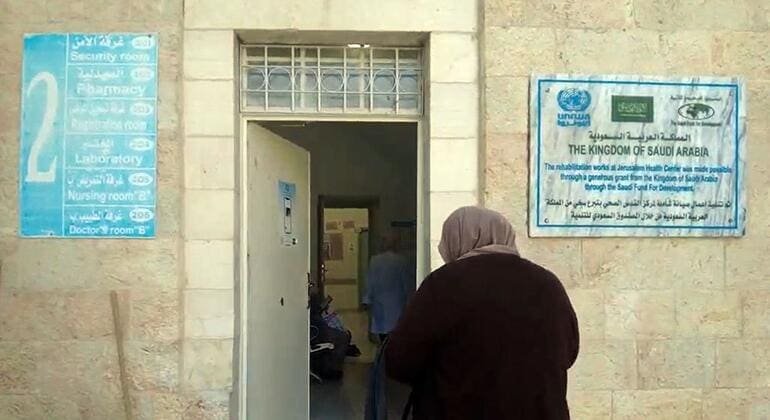
Yemen’s health system is collapsing. Over 450 facilities have closed, and thousands more risk losing funding. Vaccination programs are threatened, with only two-thirds of children fully immunized due to limited access in the north.
“Economic and political decisions are worsening food insecurity,” the UN official stated. “The health system won’t be supported as before.”
Despite access issues, UN partners reached 3.4 million people with food assistance last year, along with emergency support during floods and disease outbreaks.
The UN, active in Yemen since the 1960s, has worked to protect the country’s most vulnerable. Harneis remarked on the recent breakdown: “That has a terrifying effect on humanitarian workers.”









Leave a Reply