Why the World Continues to Distrust Saudi Arabia

Saudi Arabia leaves a strong impression.

Arriving in Riyadh today reveals a country transformed from fifteen years ago. Construction projects are ubiquitous, with giant screens showcasing visions of futuristic cities. International conferences are frequent, and world leaders, including American CEOs, European investors, and Asian officials, regularly visit the capital.

The Kingdom is intent on change, and change is happening.

With the launch of Vision 2030, Mohammed bin Salman has initiated a rare transformation in the region. It’s not just about skyscrapers or cinemas; it’s redefining an economic model that heavily relied on oil revenue for decades.

The statistics are telling: non-oil growth is up, women’s workforce participation has nearly doubled, unemployment has decreased, and the Public Investment Fund now manages hundreds of billions. NEOM, The Line, and the Mukaab have become global ambition symbols.

Yet, despite these changes, billions in investments, and diplomatic visits, international trust remains cautious. The world engages with Riyadh but does not fully commit.

Why?

Because two Saudi Arabias exist.

The first is the Saudi Arabia of futuristic models and global summits. The second is the one of concentrated power, lacking institutional checks, and a judiciary rooted in a strict religious framework.

This paradox has the economy opening rapidly while political power remains centralized.

Domestically, modernization comes at a cost. In Riyadh, rents have soared, prompting the government to freeze increases. VAT is at 15%, and subsidies have been reduced. The Saudi social contract, once based on redistribution and stability, is shifting toward a more competitive model.

This bold transition might succeed, but it also disrupts longstanding balances.

Meanwhile, the Kingdom employs sophisticated image diplomacy. Prince William’s visit wasn’t coincidental but part of a broader strategy with European heads of state, American executives, global sports figures, climate forums, and international competitions.

These images are powerful: young Saudis with Western royalty, women entrepreneurs at public events, and cheering crowds in stadiums. It portrays a modern, open, and engaging country.

But imagery doesn’t erase memory.

Jamal Khashoggi’s 2018 assassination left a deep mark. It wasn’t just a crime but a symbol of the potential deadly consequences of dissent and power that transcends borders. This event still haunts diplomatic discussions, even if unspoken.

Human rights remain a concern, with international reports highlighting severe sentences for social media activity, restrictions on freedom of expression, and significant use of the death penalty. Authorities cite security and stability, while critics see repression.

There’s also the religious aspect. For decades, Saudi Arabia funded the global spread of conservative Islam. Today, Mohammed bin Salman promotes a more moderate national Islam, confronting some Islamist movements and reducing the religious police’s authority.

History, however, doesn’t vanish overnight. Decades-long ideological networks can’t dissolve in a few years. This memory persists in Europe.

Another recent issue involves antisemitism accusations from Israeli media and political figures. Riyadh denies this, distinguishing political criticism from religious hatred. Yet, this debate underscores the fragility of the Kingdom’s international reputation.

Saudi Arabia’s challenge isn’t resistance to change; it’s that economic change is outpacing political change.

It invests heavily and engages with Washington, Brussels, Beijing, and Moscow, positioning itself as a key player in the 21st century.

However, international trust isn’t built on financial power or modern architecture alone. It depends on coherence, predictability, and the protection of fundamental freedoms.

The world doesn’t reject Saudi Arabia; it watches.

The central question remains: is the dramatic modernization the start of deep institutional transformation or merely a strategic adaptation to globalization?

Saudi Arabia can build cities in the desert.

The real question is whether it can build lasting trust.


Comments

2 responses to “Why the World Continues to Distrust Saudi Arabia”

  1. Desert Haze Avatar
    Desert Haze

    Incredible how they’re building glitzy skyscrapers while the foundations of trust are still a bit shaky, innit? Maybe if they swap a few oil barrels for a dash of transparency, they’d be onto something. 😂

  2. Isn’t it charming how they’ve transformed into a futuristic model while the old ways still haunt every corner? Like a posh hotel with a dodgy basement—great for show, but no one wants to linger too long! 😏🏙️

  3. Oh, what a delightful juxtaposition: a shiny new skyline hiding the dusty old power play beneath! Who knew that building futuristic cities could be the world’s most extravagant game of hide and seek? 😂🏙️

Leave a Reply

Your email address will not be published. Required fields are marked *

Last News

US Inflation Prices Continue to Influence Economic Reality in Washington

US Inflation Prices Continue to Influence Economic Reality in Washington

Washington, February 7, 2026 — Eurotoday Newspaper notes that economic pressure remains a dominant concern across the United States as US inflation prices continue to influence how households, businesses, and policymakers evaluate the nation’s financial trajectory. Although inflation growth has slowed compared with earlier peaks, everyday costs remain high enough to shape public sentiment and poli

Read More

Why the World Continues to Distrust Saudi Arabia

Why the World Continues to Distrust Saudi Arabia

Saudi Arabia leaves a strong impression.
Arriving in Riyadh today reveals a country transformed from fifteen years ago. Construction projects are ubiquitous, with giant screens showcasing visions of futuristic cities. International conferences are frequent, and world leaders, including American CEOs, European investors, and Asian officials, regularly visit the capital.
The Kingdom is intent on ch

Read More

Top US official calls for ‘NATO 3.0’

Top US official calls for ‘NATO 3.0’

The concept of a “NATO 3.0” suggests Europeans should contribute more to their own defense, focusing NATO’s role on defending alliance territory.
This idea received quick endorsement from some allies. Norwegian Defense Minister Tore Sandvik described NATO 3.0 as “a good way to explain his point, which we totally agree on,” in a statement to POLITICO.
Sandvik noted the necessity for the U.S.

Read More

Advocates Intensify Animal Welfare Efforts

Advocates Intensify Animal Welfare Efforts

Campaign group Compassion in World Farming (CWF) has welcomed the Court of Justice of the European Union’s reported decision to grant a hearing to the EtCA Citizens’ Committee and other intervening NGOs on 5 March in Luxembourg.
The landmark case stems from the successful End the Cage Age European Citizens’ Initiative (ECI) – signed by over 1.4 million EU citizens and supported by 170 NGOs led b

Read More

Scientists Hunt Dark Matter ‘Stars’ That Mimic Black Holes

Scientists Hunt Dark Matter ‘Stars’ That Mimic Black Holes

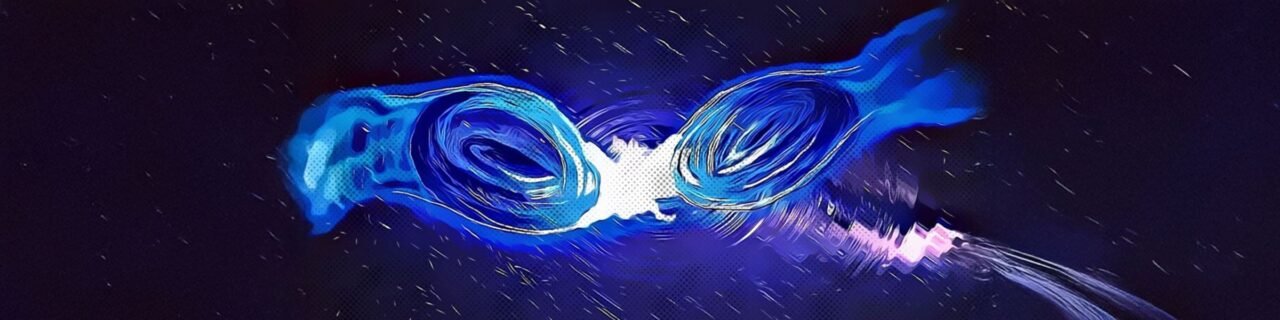
In 2019, an unusual phenomenon was detected in deep space. Known as GW190521, this event generated gravitational waves – unseen ripples in the cosmos – that were detected on Earth. Initially, these waves were thought to signal the collision and merger of two massive black holes, each with masses several times that of the Sun.
However, another possibility exists. Physicist Carlos Herdeiro from t

Read More

Wie Rüstungs-CEOs um die Milliarden kämpfen

Wie Rüstungs-CEOs um die Milliarden kämpfen

Deutschland erlebt einen historischen Wendepunkt in der Verteidigungspolitik mit einem Wehretat von über 108 Milliarden Euro. Kanzler Friedrich Merz verbindet Wirtschaftswende, Wettbewerbsfähigkeit und Rüstung. Doch stellt sich die Frage, ob die sogenannte „Zeitenwende“ auch in der Realwirtschaft spürbar sein wird. Wo hinderliche Bürokratie, europäische Konflikte und politische Kontrolle den Forts

Read More

Toronto School Attack Leaves Ten Dead

Toronto School Attack Leaves Ten Dead

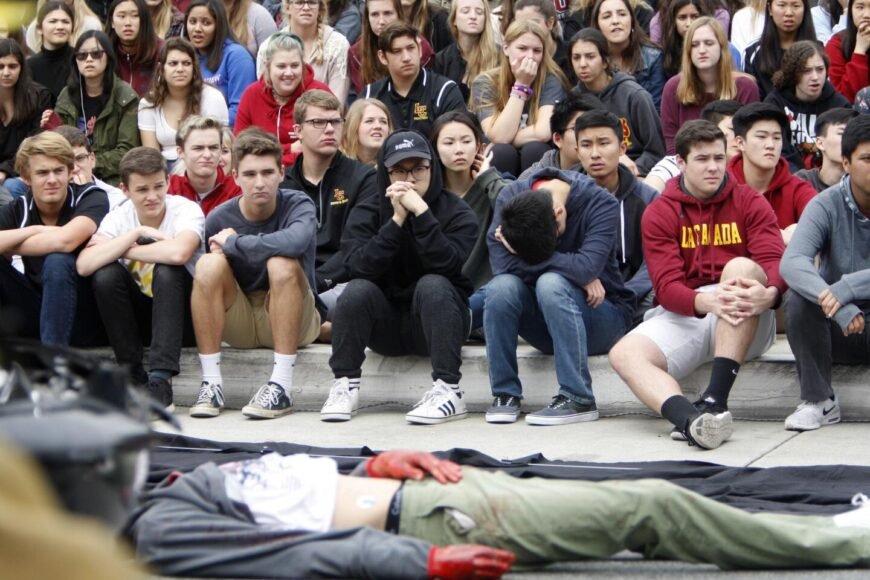
Toronto, Canada, February 11, 2026 — Eurotoday Newspaper — A devastating Canada school attack has left ten people dead and several others injured after a gunman opened fire inside a Toronto high school during morning classes. The tragedy has shaken the nation, prompting an intensive police investigation and renewed debate over school safety measures across the country.
Authorities confirmed that e

Read More

300 Scientology Volunteers Distribute Half a Million Drug-Prevention Booklets at Winter Olympics

300 Scientology Volunteers Distribute Half a Million Drug-Prevention Booklets at Winter Olympics

KINGNEWSWIRE / PRESS RELEASE / MILAN, Italy — 12 February 2026 — A growing network of approximately 300 volunteers has been engaged in a national drug-prevention campaign in Italy since January, distributing educational booklets titled “The Truth About Drugs.” Reports indicate that over 500,000 pamphlets have been distributed so far, with Milan spearheading the initiative and other It

Read More

The Conflict at Alden Biesen

The Conflict at Alden Biesen

EU leaders convene at Alden Biesen castle to discuss reviving Europe’s economy and the viability of “strategic autonomy” amidst internal discord. POLITICO’s Zoya Sheftalovich and Sarah Wheaton explore the competitiveness retreat.
Additionally: The Hungary funds case approaches a pivotal moment in Luxembourg as an important opinion is expected from the Court of Justice of the Euro

Read More

Record Heat in Southern Hemisphere Sparks Fire Crisis in Australia and South America

Record Heat in Southern Hemisphere Sparks Fire Crisis in Australia and South America

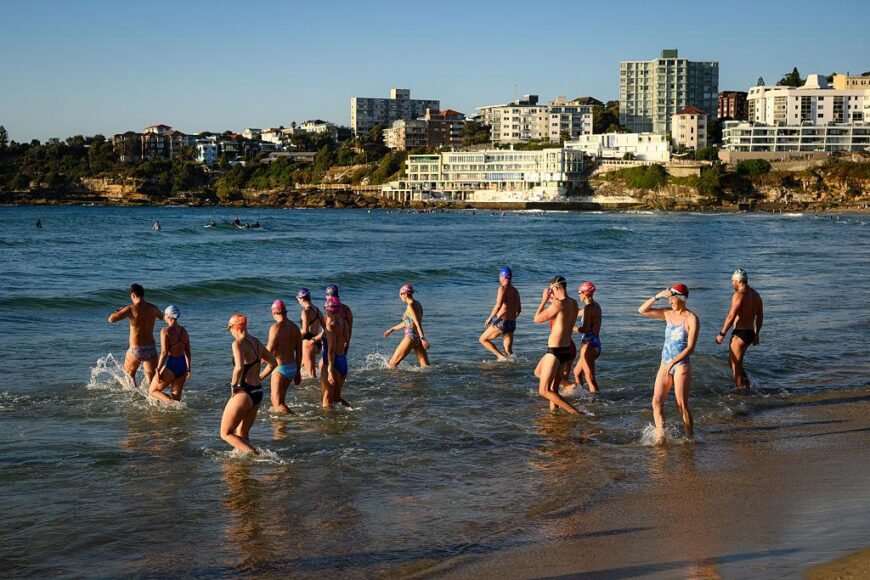
Sydney, Australia — February 11, 2026 — Eurotoday Newspaper — Record heat Southern Hemisphere conditions are intensifying across Australia, South America and parts of southern Africa as 2026 begins with historic temperature highs and widespread wildfire emergencies. Meteorological authorities confirmed that multiple regions have recorded some of their warmest January readings on record, triggering

Read More