


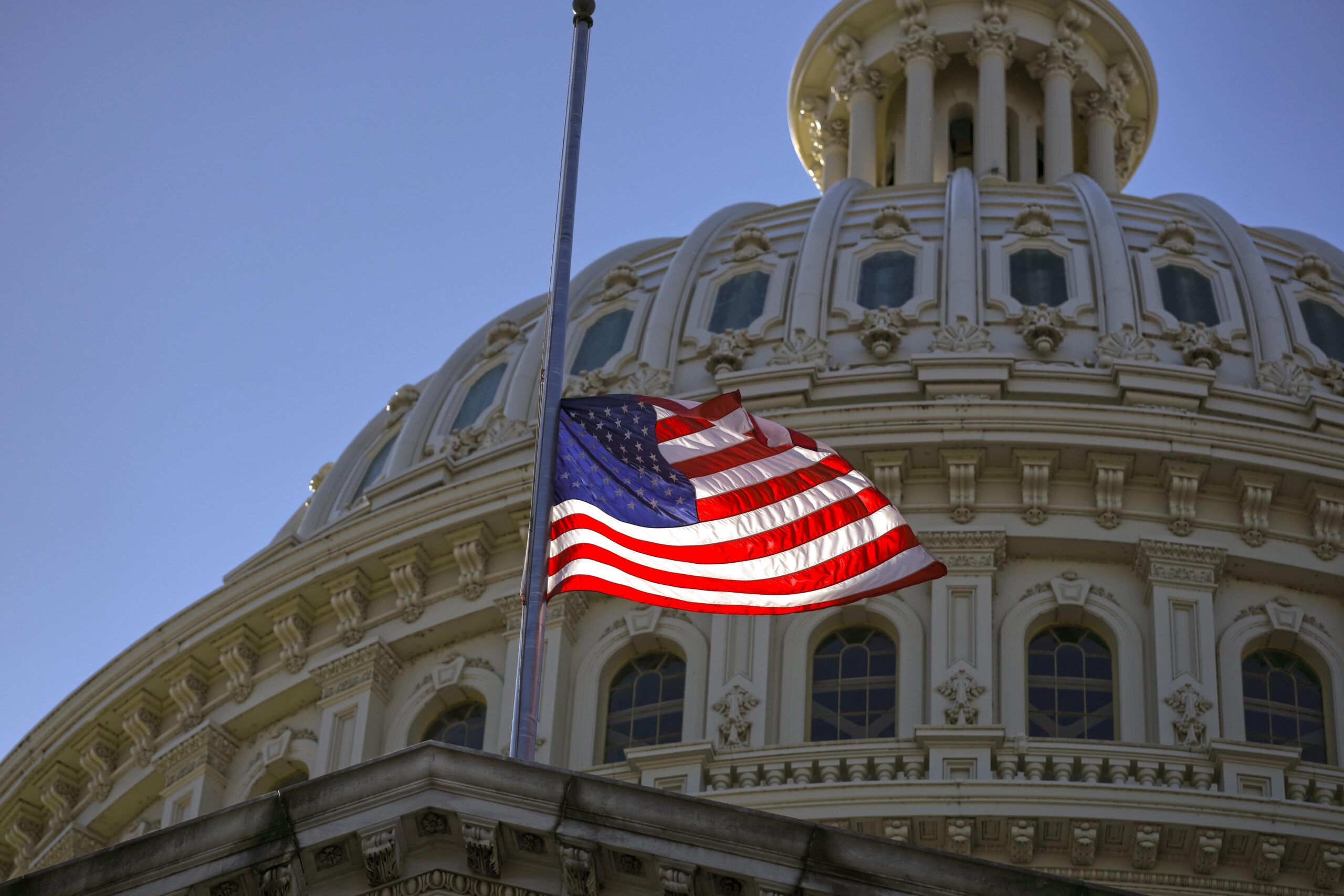
Washington, February 12, 2026 — Eurotoday — A sharp escalation in the Washington budget deadlock has pushed federal funding negotiations to the brink, increasing concerns about a potential partial government shutdown. Lawmakers in the United States Senate failed to advance a key appropriations package this week, exposing widening divisions over immigration policy, federal spending priorities, and national security allocations.
The standoff underscores broader fiscal tensions as Congress struggles to finalize spending agreements before statutory deadlines expire.
The latest Senate vote failed to secure sufficient bipartisan support, halting progress on funding legislation tied to the Department of Homeland Security and other federal agencies. While temporary funding measures remain possible, lawmakers remain divided over policy amendments attached to the spending bill.
The Washington budget deadlock has become the focal point of negotiations, with senators debating whether policy changes should be linked directly to annual appropriations. Some lawmakers argue the funding bill must include stronger enforcement provisions, while others insist that broader reforms should be debated separately.
Without resolution, agencies face uncertainty over long term operational planning.
What Is at Stake for Federal Agencies
Federal funding bills are not simply accounting documents. They determine the operational capacity of agencies responsible for border enforcement, cybersecurity, disaster response, and transportation security.
If the Washington budget deadlock persists, agencies may be forced to rely on short term continuing resolutions. Essential services such as airport security screening and emergency management would likely continue, but nonessential programs could face delays or temporary suspension.
Federal employees and contractors are closely watching developments. In previous shutdown scenarios, thousands of workers were furloughed, while others continued working without immediate compensation.
Immigration policy remains central to the disagreement. Several senators sought to link funding approval to stricter border enforcement measures. Others opposed attaching policy changes to essential funding, arguing that national security operations should not be leveraged for political negotiations.
The Washington budget deadlock reflects deeper ideological divisions over immigration reform and enforcement priorities. As debate intensified, neither side appeared willing to compromise quickly.
The issue has drawn national attention, particularly in border states where funding stability is essential for operational readiness.
Shutdown Risk and Economic Impact
Financial markets often respond cautiously when budget negotiations stall. The Washington budget deadlock has already sparked concerns among investors who monitor federal spending stability as a signal of economic confidence.
Historically, short term shutdown threats have limited long term impact, but prolonged disruptions can reduce consumer sentiment and delay government contracts. Infrastructure planning and disaster preparedness initiatives may also be affected.
Economic analysts emphasize that uncertainty itself can be disruptive, even before any formal shutdown occurs.
As the Washington budget deadlock unfolds, political stakes are increasing ahead of upcoming legislative deadlines and campaign activity. Budget debates frequently serve as leverage points in broader policy disputes.
Public opinion remains divided. Some voters support using spending negotiations to push for reform, while others prioritize maintaining uninterrupted government operations.
One senior senator remarked, “We cannot compromise









Leave a Reply