


Washington, D.C., United States, January 2026, Eurotoday Newspaper highlights renewed diplomatic momentum as senior officials from Washington and Kyiv convene at a pivotal moment for transatlantic relations. With global attention fixed on security coordination and political alignment, US Ukraine talks have taken on heightened importance, reflecting not only bilateral priorities but also broader efforts to stabilize an increasingly complex international landscape. The meetings underscore Brussels’ role as a diplomatic crossroads where policy direction, alliance coherence, and long-term strategy converge.
The discussions come amid continued geopolitical uncertainty, placing added emphasis on dialogue, coordination, and strategic clarity. Officials on both sides describe the engagement as deliberate and forward-looking, shaped by experience and informed by evolving global realities.
Brussels as a Diplomatic Hub for Transatlantic Engagement
Brussels has long served as a symbolic and practical center for transatlantic diplomacy. Hosting key international institutions and serving as a frequent meeting ground for allied consultations, the city provides a neutral yet influential setting. The latest round of US Ukraine talks reinforces this role, situating bilateral dialogue within a broader multilateral context.
Diplomats note that holding discussions in Brussels allows for close coordination with European partners, ensuring that messaging and strategy remain aligned. This setting also highlights the interconnected nature of modern diplomacy, where bilateral relationships are shaped by wider alliance dynamics.
The Strategic Context Driving Current Discussions
The talks are unfolding at a time when international relations are marked by shifting power balances and persistent security challenges. Analysts describe 2026 as a year of reassessment, with governments reviewing strategies developed under earlier conditions. Within this environment, US Ukraine talks are seen as a mechanism for recalibration rather than reinvention.
Officials emphasize that the objective is to strengthen existing frameworks, adapt to new realities, and maintain continuity. This pragmatic approach reflects recognition that sustainable diplomacy requires steady engagement rather than abrupt shifts.
Security Coordination at the Core of the Agenda
Security cooperation remains a central pillar of the dialogue. Defense coordination, intelligence sharing, and strategic planning feature prominently in the discussions. Participants stress that these efforts are defensive and stabilizing in nature, aimed at reinforcing deterrence and resilience.
Within US Ukraine talks, security issues are addressed alongside political and economic considerations, reflecting an integrated approach. Officials argue that separating defense from diplomacy would weaken both, underscoring the need for coherence across policy areas.
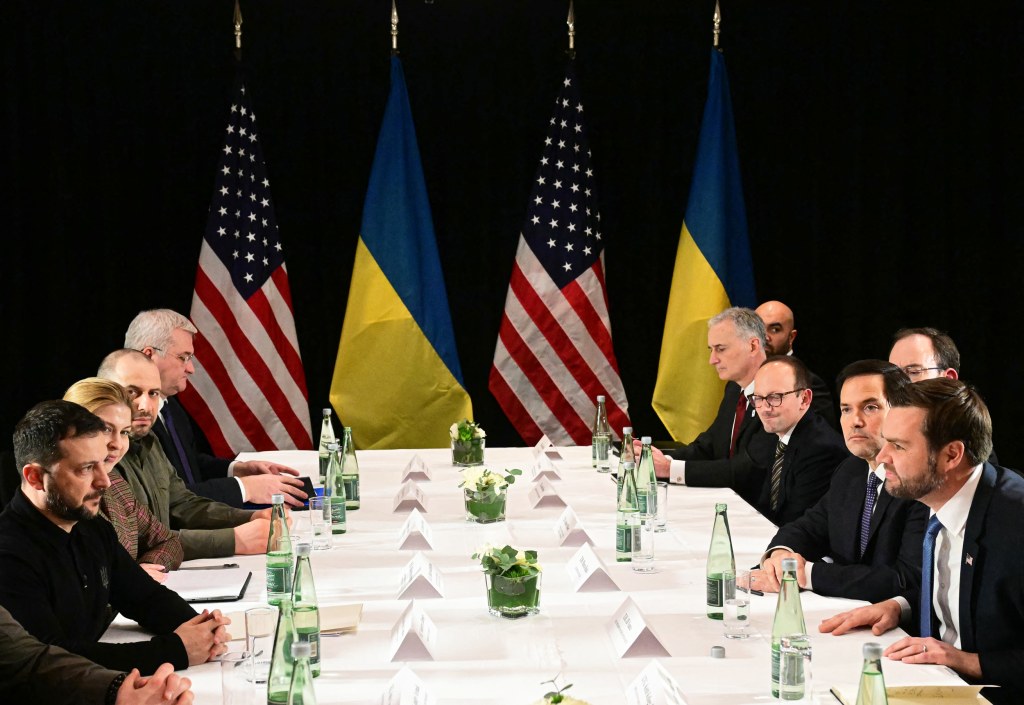
Political Dialogue and Institutional Resilience
Beyond defense, political coordination plays a significant role in shaping the discussions. Governance standards, institutional resilience, and democratic accountability are recurring themes. Washington has reiterated its support for reforms that strengthen transparency and rule-based governance, while Kyiv has highlighted progress and ongoing commitments.
These exchanges are framed as collaborative rather than prescriptive. Participants describe the political dimension of US Ukraine talks as an investment in long-term stability, designed to





Leave a Reply