The War That Was Inevitable, Yet Europe Barely Notices

Bashy Quraishy
Secretary General – European Muslim Initiative for Social Cohesion – Strasbourg
Thierry Valle
Coordination des Associations et des Particuliers pour la Liberté de Conscience, CAP Freedom of Conscience

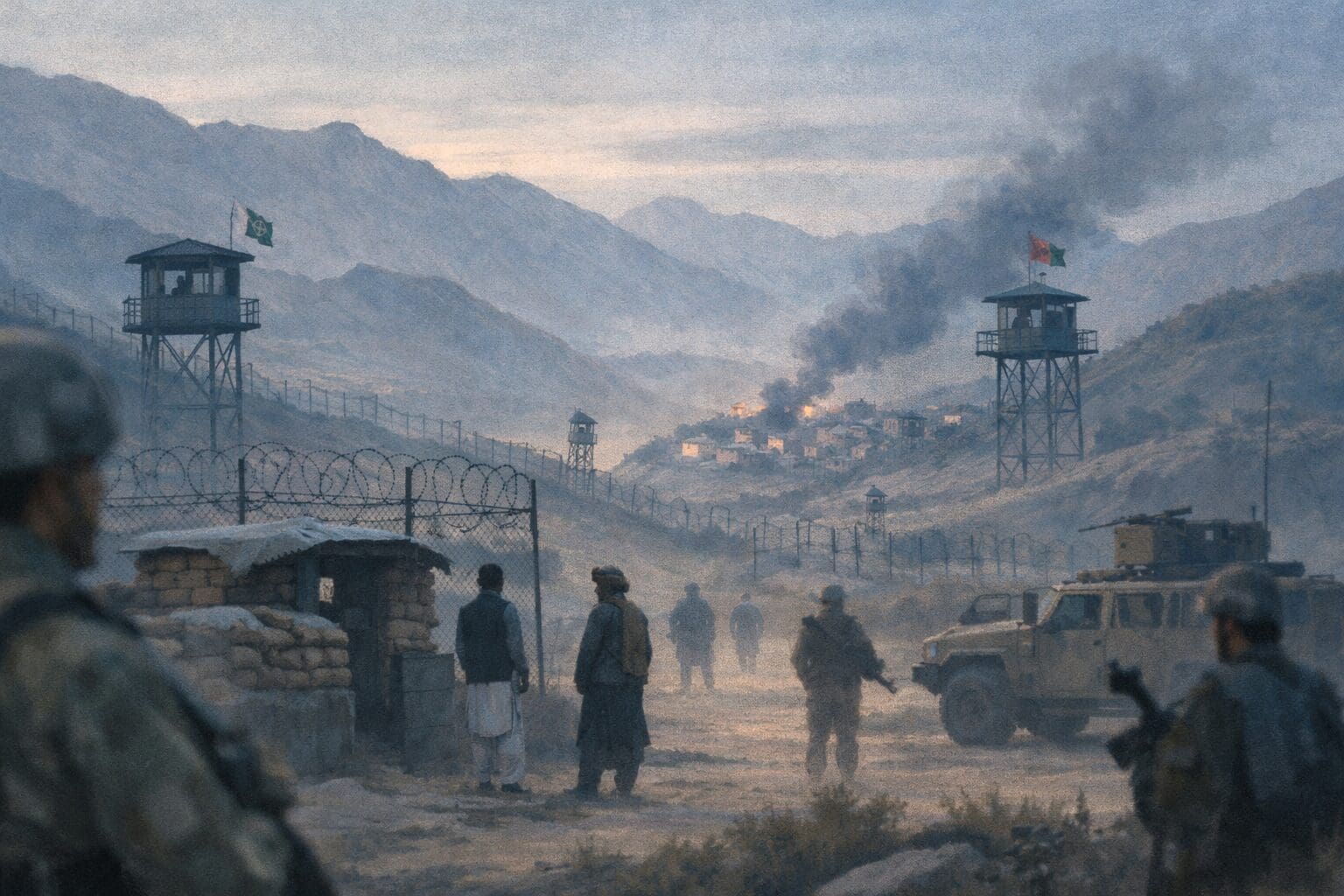
Over a century after the Durand Line was established by British imperial authorities, the contested border between Pakistan and Afghanistan has again erupted into conflict. The appearance of a sudden war is actually the result of decades of unresolved issues—colonial borders, militant movements, regional rivalries, and a fragile state system unable to manage them.

When hostilities broke out between Pakistan and Taliban-ruled Afghanistan on 27 February 2026, many saw it as a shocking escalation. In fact, it was anything but sudden. At the heart of it all is a colonial boundary on the map.

For decades, the frontier between the two countries has been one of the world’s most volatile borders. It is a line drawn by empire, challenged by nationalism, exploited by militant groups, and caught in the rivalries of regional powers. The present conflict is less a new war and more the violent return of a century-old dispute.

The British Border That Never Settled

The crisis dates back to 1893, when the British Empire sought to secure its north-western frontier in India. British diplomat Mortimer Durand negotiated a border agreement with Afghan ruler Abdur Rahman Khan.

The line they drew—now known as the Durand Line—cut through the traditional lands of the Pashtun tribes, dividing communities between Afghanistan and what was then British India. For the British, the line served as a strategic buffer against imperial rivals. For the tribes it separated, it held no significance. And for Afghanistan, it would later symbolize colonial injustice.

When Pakistan was created from the partition of British India in 1947, it inherited the Durand Line as its international border. However, Afghanistan never fully recognized it. Kabul claimed that the agreement was imposed by a colonial power and that the Pashtuns along the frontier should decide their own political future.

The dispute tainted relations from the start. Afghanistan was the only country to vote against Pakistan’s entry into the United Nations in 1947—a symbolic act foreshadowing decades of mistrust.

Cold War Alliances and the Refugee State

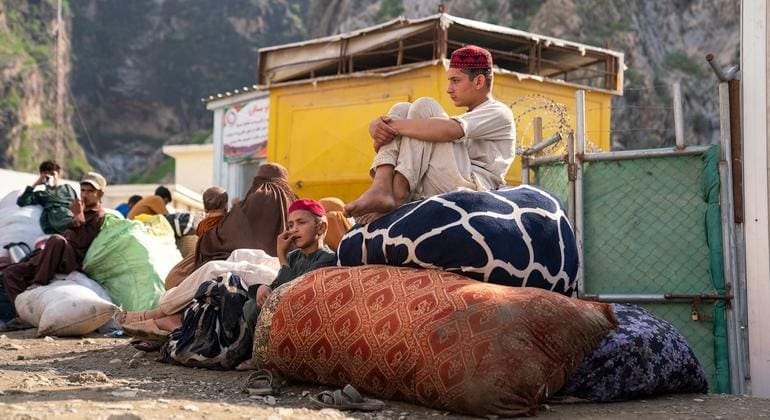
Despite the hostility, Pakistan soon became Afghanistan’s lifeline. When the Soviet Union invaded Afghanistan in 1979, millions of Afghans fled across the border. Pakistan suddenly became the center of one of modern history’s largest refugee crises. At its peak, around three million Afghans lived in Pakistan. Many stayed for decades. Entire generations were born and raised in refugee camps and cities like Peshawar and Quetta.

Pakistan also became the logistical heart of the anti-Soviet resistance. With support from the Central Intelligence Agency and funding from Saudi Arabia, Pakistan aided the Afghan mujahideen. However, the infrastructure created for that war—training camps, militant networks, ideological madrassas—did not vanish post-Soviet withdrawal. Instead, they evolved. From this environment emerged the movement that would later dominate Afghanistan.

The Rise of the Taliban

In the chaos of Afghanistan’s civil war during the 1990s, a new force emerged: the Taliban. The group was largely made up of Afghan students educated in religious schools in Pakistan’s border regions. Offering order after years of warlord violence, they seized Kabul in 1996 and established an Islamic emirate. Pakistan was among the few countries to recognize the Taliban government. The relationship was driven by strategic calculations: Islamabad hoped a friendly government in Kabul would provide strategic depth in its longstanding rivalry with India. However, regional geopolitics soon complicated this scenario.

India’s Quiet Battlefield

For decades, Afghanistan has also been a stage for the rivalry between India and Pakistan. During the Afghan republic set up after the 2001 overthrow of the Taliban, India heavily invested in Afghan infrastructure, diplomacy, and development projects. New highways, the Afghan parliament building, and numerous hospitals and schools were built with Indian aid. Pakistan viewed this growing presence with deep suspicion, fearing India could use Afghan territory to support separatist or militant groups within Pakistan.

Islamabad repeatedly accused Indian intelligence of backing insurgent networks in Pakistan’s western provinces—allegations India consistently denied. Whether exaggerated or not, the perception of encirclement shaped Pakistan’s security thinking. Afghanistan was never just a neighbor; it was part of the broader strategic contest between South Asia’s two nuclear-armed rivals.

When Allies Become Adversaries

When the Taliban reclaimed power in 2021 after NATO’s withdrawal from Afghanistan, many in Pakistan expected relations to improve. Instead, the opposite occurred. The central issue was the rise of Tehrik‑i‑Taliban Pakistan, known as TTP. Though ideologically aligned with the Afghan Taliban, TTP focuses on overthrowing the Pakistani

Comments

3 responses to “The War That Was Inevitable, Yet Europe Barely Notices”

  1. Moonflower Avatar
    Moonflower

    Isn’t it charming how a century-old border dispute can turn into a sudden war? Makes you wonder what the real estate agents were thinking when they drew that line, eh? 😏

  2. Seal Snake Avatar
    Seal Snake

    Right, because nothing screams “stability” like a century-old border dispute flaring up in 2026—who knew history could be so… predictable? 🤷‍♂️ It’s almost as if drawing lines on maps without considering the locals might lead to a bit of bother, innit?

  3. Lucky Aurora Avatar
    Lucky Aurora

    Oh, of course, yet another “unexpected” war sparked by a line on a map drawn by someone who probably couldn’t find it on a globe. You’d think by now, they might have figured out that history isn’t just a dusty old book, eh? 😏

  4. Racy Lady Avatar
    Racy Lady

    Isn’t it just delightful how centuries-old colonial messes keep giving us fresh headlines? One would think we’d learn to read a map by now, but apparently, that’s asking too much! 😂

Leave a Reply

Your email address will not be published. Required fields are marked *

Last News

The War That Was Inevitable, Yet Europe Barely Notices

The War That Was Inevitable, Yet Europe Barely Notices

Bashy Quraishy
Secretary General – European Muslim Initiative for Social Cohesion – Strasbourg
Thierry Valle
Coordination des Associations et des Particuliers pour la Liberté de Conscience, CAP Freedom of Conscience
Over a century after the Durand Line was established by British imperial authorities, the contested border between Pakistan and Afghanistan has again erupted into conflict. The appear

Read More

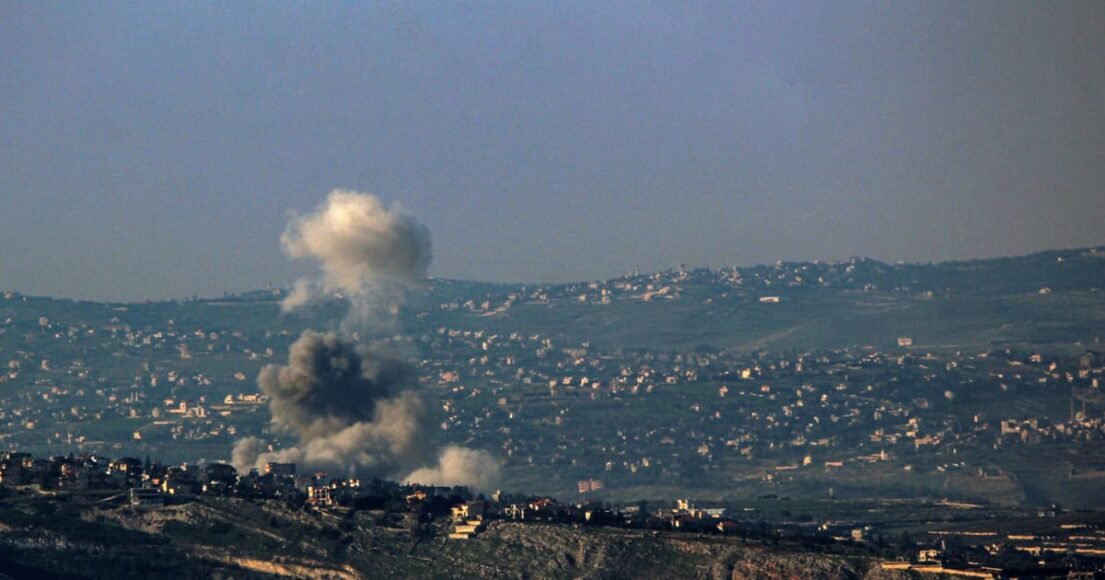
Israel Expands Mideast Conflict with Strikes on Lebanon

Israel Expands Mideast Conflict with Strikes on Lebanon

Israel advised residents of several villages in southern and eastern Lebanon to evacuate, citing actions by Hezbollah that compel a response from the Israeli Defense Forces. “For your safety, evacuate your homes immediately,” stated Israeli army spokesperson Ella Waweya on X.
Lebanese Prime Minister Nawaf Salam labeled the rocket fire as “irresponsible,” cautioning that it

Read More

Spanish City Named Europe’s Best Destination for 2026

Spanish City Named Europe’s Best Destination for 2026

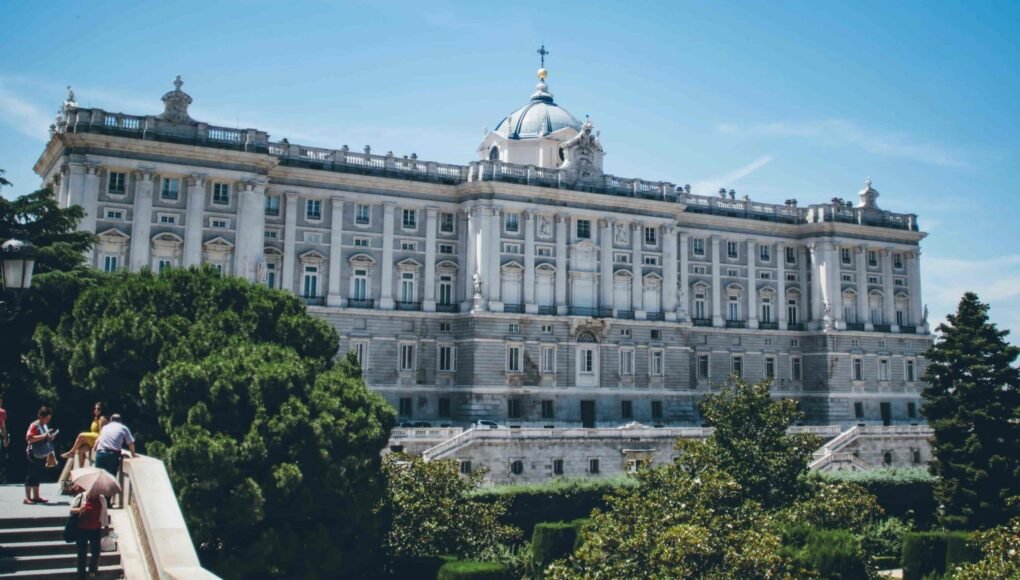
The Spanish capital, Madrid, has been named the top destination in Europe for 2026 by European Best Destinations, known for its annual rankings of cities across the continent since 2009. After an initial assessment that considered factors like tourism growth and demand, 42 destinations were voted on by travelers to identify the top 20 places to visit next year.
“Madrid is a capital where heritage

Read More

Europe’s Delicate Balance on Iran

Europe’s Delicate Balance on Iran

Following a weekend of U.S. and Israeli strikes on Iran — including the killing of Supreme Leader Ali Khamenei — Brussels is coordinating its diplomatic response. EU ambassadors gathered, foreign ministers held an online meeting, and Ursula von der Leyen contacted the Defense College. With rising tensions in the region, is Europe influencing events or simply reacting?
Zoya Sheftalovich and Nick V

Read More

Rising Concerns for Ordinary Afghans Amid Ongoing Clashes with Pakistan

Rising Concerns for Ordinary Afghans Amid Ongoing Clashes with Pakistan

The UN Secretary-General António Guterres expressed deep concern over the escalation and its impact on civilians. He urged for an immediate ceasefire and encouraged the two countries to resolve differences through diplomacy. Richard Bennett, a Human Rights Council independent expert on Afghanistan, echoed this call for dialogue, noting that increasing tensions have heightened risks for Afghans re

Read More

France to Strengthen Military Presence in the Middle East

France to Strengthen Military Presence in the Middle East

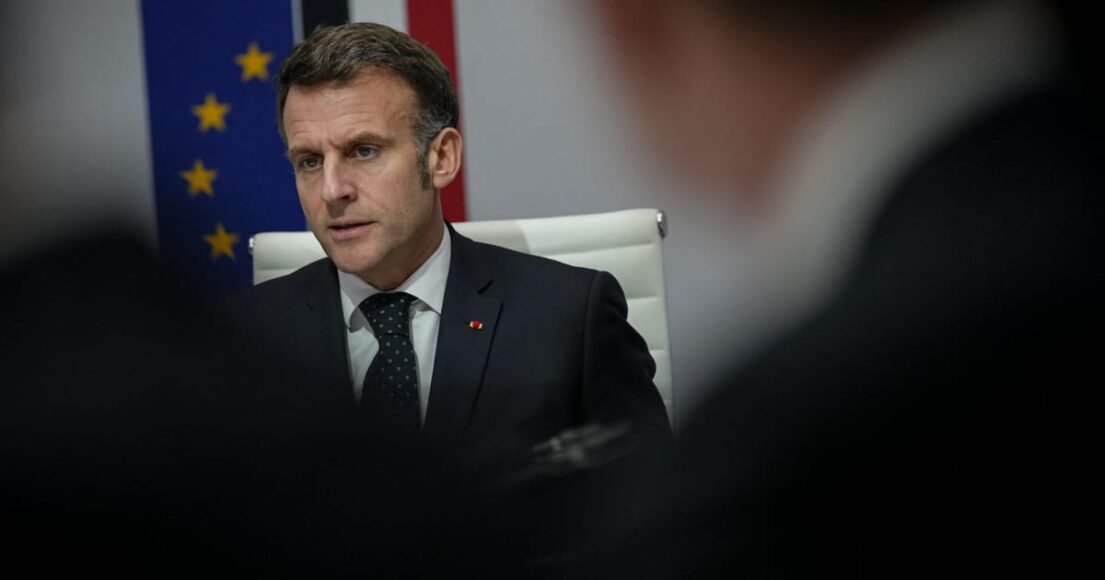
PARIS — France plans to increase its military presence in the Middle East following an Iranian counterattack on a French naval base in the area.
French President Emmanuel Macron, speaking before an emergency security and defense council meeting on Sunday evening, stated that France will “enhance its [military] position and defensive support to ally with those with whom we have defense treati

Read More

Berset Cautions Europe on Need for Legal Unity Amid Spreading Middle East Conflict

Berset Cautions Europe on Need for Legal Unity Amid Spreading Middle East Conflict

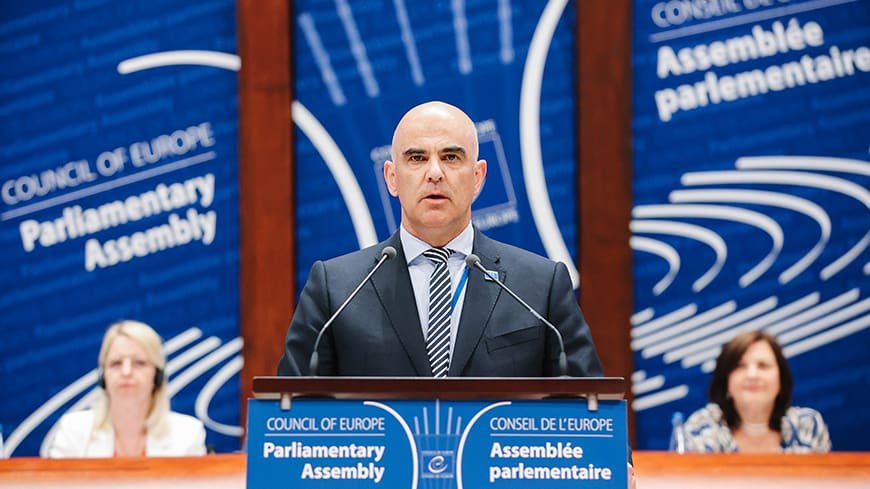
Strasbourg, 1 March 2026 — Amid rising hostilities in Iran, Israel, and the Gulf, Council of Europe Secretary General Alain Berset calls for Europe to transcend crisis diplomacy and establish a binding legal framework among the Council’s 46 member states. In a statement from Strasbourg, Berset argues that Europe’s fragmented crisis responses are unsustainable, warning that “inaction is not pruden

Read More

How Each EU Country Responded to the Strikes on Iran

How Each EU Country Responded to the Strikes on Iran

Finland
President Alexander Stubb stated, “Finland condemns Iran’s unjustifiable and indiscriminate strikes on the countries in the region.” He emphasized that even those advocating for a diplomatic solution are now being targeted and urged that the attacks must cease to protect civilians.
France
President Emmanuel Macron criticized the “disproportionate” Iranian resp

Read More

Agrellus Names Dr. Sofia Kamenidou as Field Operations and Innovation Manager to Enhance Proving Ground Trials

Agrellus Names Dr. Sofia Kamenidou as Field Operations and Innovation Manager to Enhance Proving Ground Trials

Sofia Kamenidou

Agrellus Names Dr. Sofia Kamenidou as Field Operations and Innovation Manager to Enhance Proving Ground – Farm Scale Trials.
KANSAS CITY, KS, UNITED STATES, February 27, 2026 /EINPresswire.com/ — Agrellus, Inc., a leader in agricultural technology and synergistic grower services, announces the appointment of Dr. Sofia Kamenidou as Field Operations and Innovation Manager. Dr.

Read More

Tehran Launches Retaliatory Attacks Following Khamenei’s Killing

Tehran Launches Retaliatory Attacks Following Khamenei’s Killing

Tehran has promised to retaliate for the death of Iran’s Supreme Leader Ayatollah Ali Khamenei, who was killed in airstrikes conducted by Israeli and American forces.
In response, Iran has initiated attacks on U.S. military bases in the Middle East, while Israeli airstrikes have focused on “the heart of Tehran” on Sunday.
Kaja Kallas, the EU’s top diplomat, stated “there is now an open path to a d

Read More