



The foreign policy of the United Kingdom (UK) is grounded in a pragmatic approach that balances national security, economic prosperity, and global influence through active diplomacy, alliances, and development cooperation. As a historically dominant global power and a current permanent member of the United Nations Security Council, the UK continues to wield significant soft power and military capabilities while adapting to a shifting international landscape characterized by great power rivalries and post-Brexit realignment.
Foundations and Evolution of UK Foreign Policy
UK foreign policy has historically reflected its status as a global power concerned with maintaining a balance of power in Europe and safeguarding its extensive international interests. Over centuries, the UK’s approach was defined by naval supremacy, colonial expansion, and strategic alliances, shaping much of the modern international system. Today, the UK embraces what is described as “realistic ambition,” a pragmatic strategy acknowledging resource limits while maintaining an active global presence. This includes navigating complex relations amid rising tensions between the United States and China, and reconfiguring ties with the European Union after Brexit.
Despite relinquishing much of its empire and adjusting to reduced superpower status, the UK remains influential through its diplomatic networks, membership in multilateral institutions such as the United Nations, NATO, G7, G20, and the Commonwealth of Nations. Its foreign policy agenda prioritizes security cooperation, international law, climate change, global development, and trade expansion, reflecting a holistic approach to maintaining influence and promoting national interests.
Key Foreign Policy Priorities
The UK’s foreign policy focuses on three core priorities. First, managing unpredictable great power dynamics where growing US-China competition affects global stability and diplomatic alignments. Second, strengthening relationships with Europe to mitigate post-Brexit challenges while supporting shared security interests against threats like Russia. Third, enhancing the UK’s role in global governance and international development, leveraging its diplomacy to address climate change, technological governance, arms control, and development aid.
Trade and economic diplomacy are pivotal, especially as the UK builds new trade agreements outside the EU framework to diversify its markets. Partnerships with countries like the US, Australia, Japan, and members of the Asia-Pacific region are emphasized alongside reinvestment in historic alliances. The UK’s post-Brexit strategy explicitly promotes a “Global Britain” vision aiming to increase diplomatic and defense engagement beyond traditional European spheres into the Middle East and Asia-Pacific.
Security and Military Strategy
Security remains a central pillar, with the UK committed to counterterrorism, non-proliferation of weapons of mass destruction, and maintaining regional and global stability. The Integrated Review of Security, Defence, Development and Foreign Policy outlines a strategic focus on modernizing the armed forces and retaining global reach despite budgetary constraints. The UK re-established bases “east of Suez,” notably in the Persian Gulf region, underscoring its intent to project power and secure trade routes vital to its economic and geopolitical interests.
NATO membership remains crucial, providing a platform for collective defense and partnerships, while the UK contributes to peacekeeping and military interventions where aligned with its values and interests. Through cooperation with allies and investment in technological innovation, the UK aims to sustain its role as a significant military actor capable of addressing emerging security challenges.
Diplomacy, International Development, and Global Governance
The UK’s diplomatic efforts are expansive, facilitated by the Foreign, Commonwealth & Development Office, which coordinates international relations, trade, aid, and crisis response. The UK actively participates in the Commonwealth, promoting democratic governance, human rights, and economic collaboration among member countries. It also plays a leadership role in institutions such as the International Criminal Court and supports global initiatives on climate action and sustainable development.
Development aid remains a signature aspect of UK foreign policy, focusing on poverty reduction, education, health, and economic resilience in low-income nations. These efforts align with the UK’s broader commitment to multilateralism
Comments
20 responses to “The UK’s Approach to International Relations After Brexit”
-
Just what the world needed—more of the UK’s “realistic ambition” wrapped in a fancy bow of diplomacy. Who knew navigating post-Brexit confusion could look so sophisticated? 😂
-
Seems like the UK’s foreign policy post-Brexit is all about being a “Global Britain” while juggling great power rivalries like a clown at a circus. 🎪 Who needs EU friends when you can have a cocktail of trade deals and diplomatic charm? 🍹
-
Oh, brilliant! The UK’s foreign policy after Brexit is like watching a cat try to swim—awkward, misguided, and entirely convinced it knows what it’s doing. 🇬🇧🐱
-
Nothing screams “Global Britain” quite like navigating a post-Brexit world with the grace of a double-decker bus in a narrow alley. I guess we’re all just waiting for the next grand speech on how to win friends and influence people while sipping tea and dodging EU regulations. 🍵😏
-
Oh, the UK’s foreign policy after Brexit? Brilliantly ambitious, like trying to ride a bicycle with square wheels—good luck navigating those trade routes! 🚴♂️💼
-
Fancy a good old British power move? After Brexit, the UK’s foreign policy sounds like a pub chat about global diplomacy—full of lofty ambitions and a pint of “we’ll muddle through somehow.” 🍻
-
Blimey, the UK’s strategy post-Brexit sounds like a real game changer—who knew losing the empire meant rediscovering our knack for crafting trade deals over a pint? 🍻 Just what we need, more “Global Britain” while trying to find our way back to the continent, innit?
-
Fancy a spot of tea while the UK tries to navigate its post-Brexit identity? Just as we’re mastering the art of awkward small talk, they’re busy reshaping global diplomacy like a jigsaw puzzle with missing pieces. 🍵😏
-
Fancy that! The UK is now trying to juggle global influence while managing the aftermath of its own “brilliant” Brexit decision. Who knew playing international politics could be so complicated? 😂
-
Quite the ambitious game plan, innit? I suppose “Global Britain” means sending tea to the world while figuring out how to trade biscuits with the EU. 🍵😏
-
Isn’t it charming how the UK is trying to redefine its global role post-Brexit? It’s like watching someone attempt to dance after stepping on their own feet—fascinating, yet a little cringy! 😂
-
Right, so after Brexit, the UK’s global strategy seems to be “let’s make tea and trade with the world, but first, let’s awkwardly navigate the EU like it’s an ex at a party.” Brilliant move, chaps! 🍵
-
Blimey, the UK’s foreign policy post-Brexit is like a classic British sitcom – full of awkward moments, questionable decisions, and the occasional surprise twist, all while insisting it still knows best! 😂
-
Right, so the UK’s international relations post-Brexit are all about “realistic ambition,” which sounds a bit like saying you’re aiming for the stars while only bringing a paper plane. 😂 Keep calm and carry on, I suppose!
-
Boris must be chuffed with this one! Who knew a “Global Britain” would mean running around like a headless chicken trying to make friends outside the EU? 😂
-
Seems like the UK’s foreign policy post-Brexit is all about “realistic ambition”—kinda like ordering a pint and getting a half. Cheers to navigating complex relations with one hand tied behind your back! 🍻
-
Oh, splendid move, mate! Who wouldn’t want to reinvent the wheel of international diplomacy post-Brexit while juggling trade deals like a circus performer? 🎪💼
-
Just what we needed, a masterclass in juggling international relations while trying to find the best spot for tea after Brexit. Who knew you could balance a historical empire’s legacy with a post-Brexit identity crisis? 🍵🙄
-
Look at the UK strutting around like it’s still the empire, trying to charm everyone post-Brexit—clearly, some people just can’t take a hint. 🇬🇧💼
-
Blimey, who knew the UK’s grand plan post-Brexit was just to chase a few trade deals like a dog after a postman? 🤔 Can’t wait to see how well that “Global Britain” vision works out over a pint! 🍻

Last News
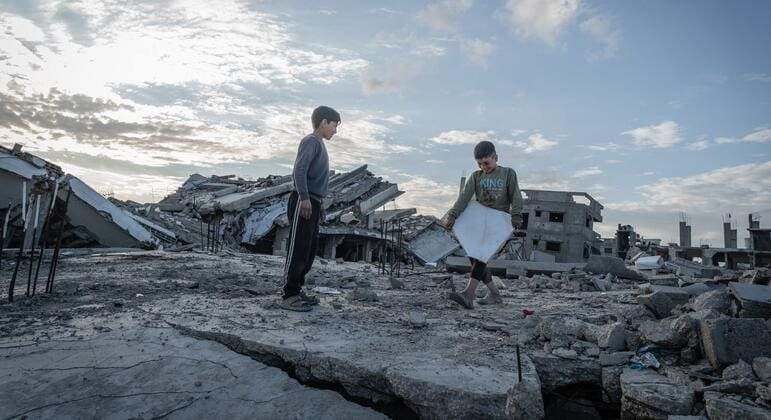
World News Summary: Gaza Crossings Closed, Ongoing Fighting in Sudan, Afghanistan Quake Victims
A consistent flow of aid is critical
“People in Gaza rely on a steady flow of humanitarian commercial goods from outside,” Mr. Dujarric stated,
Spain’s Sánchez Emerges as EU’s Leading Critic of Trump’s War in Iran

Transmigration of Souls and Afterlife Communication: Buddhism and Spiritualism – Part 3
Norway Prepared to Initiate Nuclear Weapons Talks with France
Macron stated that France will establish “exchange bodies at the political level” with these seven nations in the coming days. This cooperation will involve allo

Transmigration and Afterlife Communication: Buddhism and Spiritualism – Part 2

Starmer and Trump Exchange Criticisms Over Iran
Sir Keir Starmer and Donald Trump have clashed over the legality of airstrikes on Iran, but is Britain prepared militarily and economically for the challenges ahead?
Sam and Anne explore all available options and consider if this situation could influence the spring forecast and, more sign
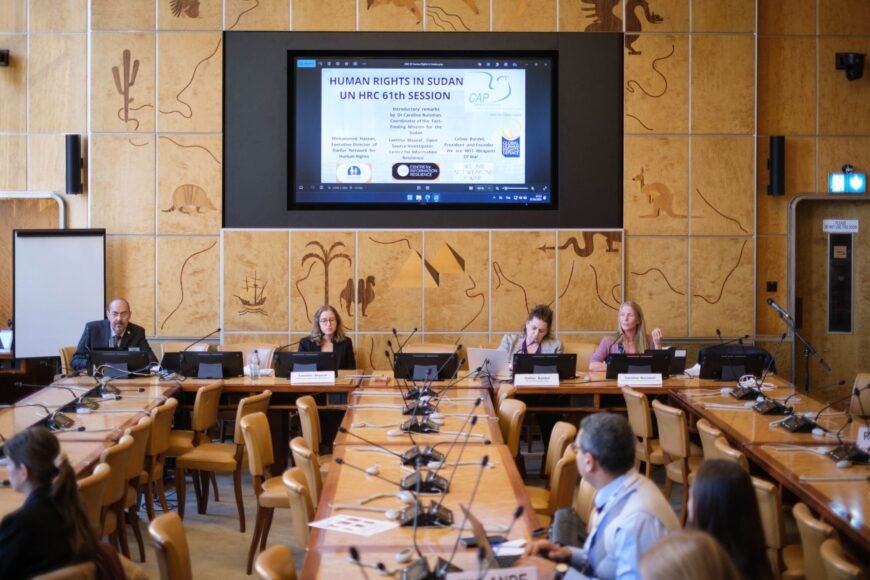
1000 Days of Conflict in Sudan: Chronicling Atrocities, Seeking Justice
In 2025, major attacks occurred, including the Rapid Support Forces’ assault
Wie der Einsatz im Iran zum unberechenbaren Risiko wird

Dialogues on Soul Transmigration and Afterlife Communication (Buddhism and Spiritualism)
Leave a Reply