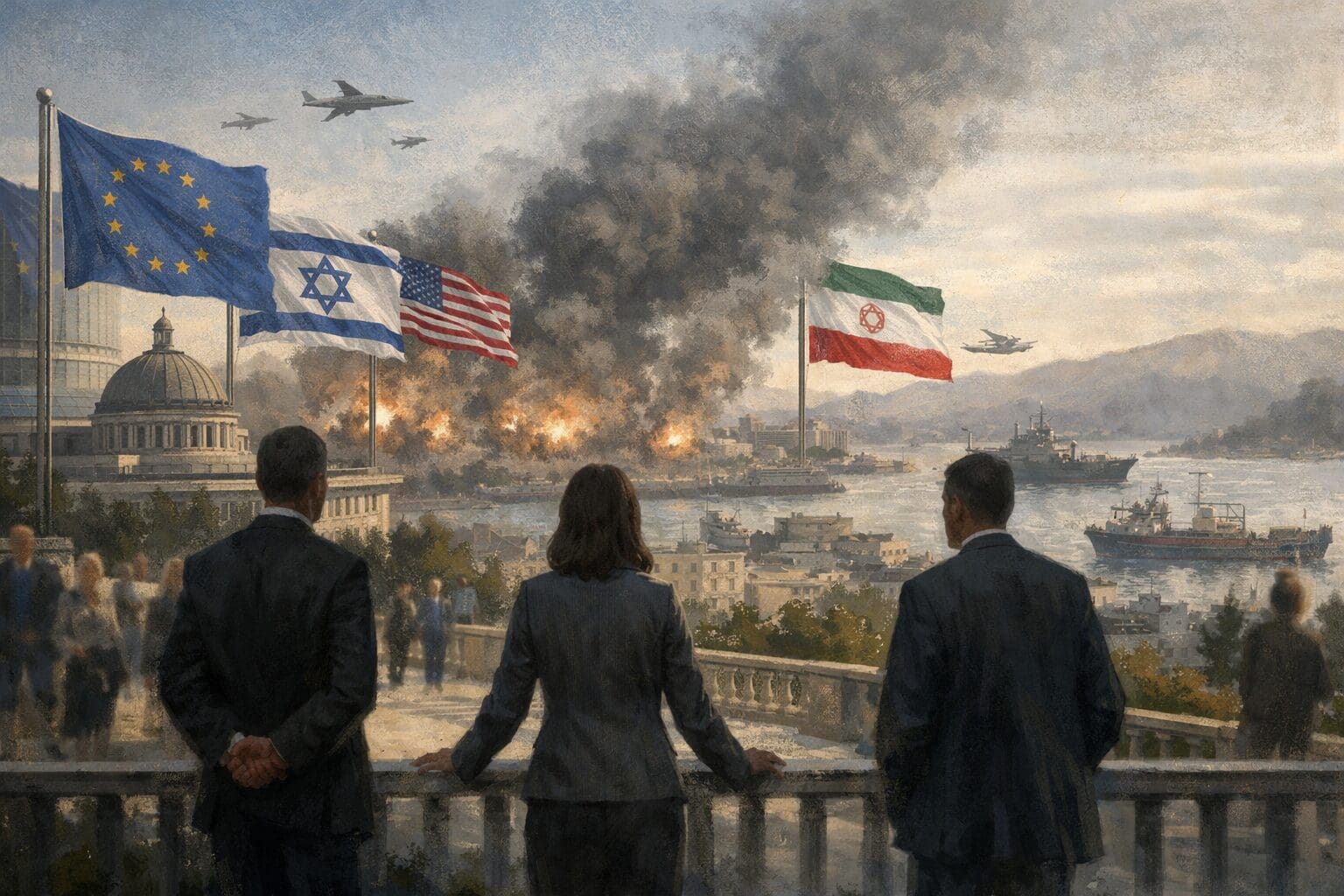
The Iran-USA-Israel War Concluded the Shadow Conflict, Leaving Europe with a Strategic Dilemma

Bashy Quraishy
Secretary General – European Muslim Initiative for Social Cohesion – Strasbourg

Thierry Valle
Coordination des Associations et des Particuliers pour la Liberté de Conscience

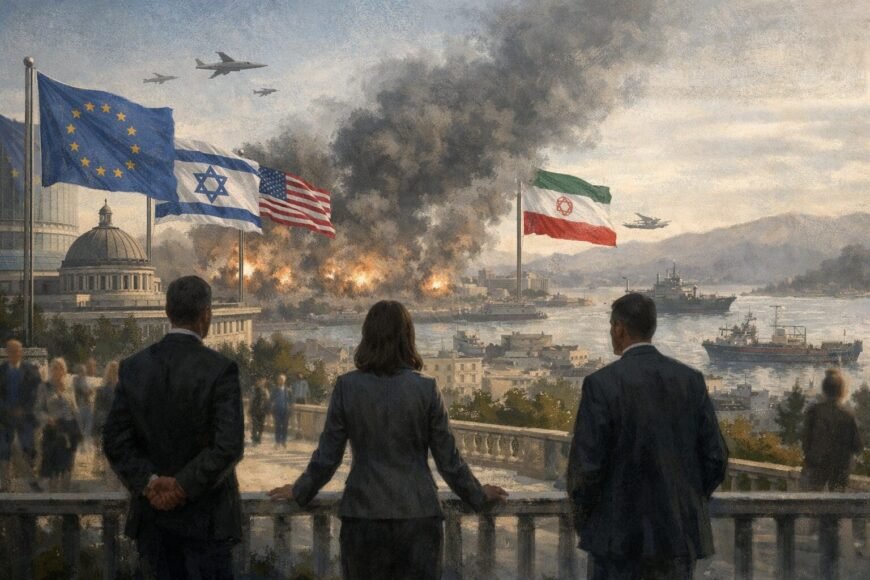
For Washington and Tel Aviv, the operation was framed as a strategic necessity to halt Iran’s nuclear ambitions. For Tehran, it was an act of aggression demanding retaliation.

But for Europe, the crisis presents something deeper: a moment of geopolitical and moral reckoning.

Before examining the latest hostilities between the USA and Israel on one side and Iran on the other, it’s crucial for Europeans to understand that today’s U.S.-Israel and Iran confrontation stems from a long history of mistrust shaped by the 1953 CIA coup, Cold War alignment with the Shah, warm relations with Israel, the revolutionary rupture of 1979, and ongoing geopolitical rivalry in the Middle East and Israel’s dominance. This strategic alliance turned into a lasting antagonism in international politics.

The modern hostility between the U.S. and Iran traces back to the 1953 overthrow of Iran’s Premier Mossadegh, who had nationalized Iran’s oil industry, challenging British and Western interests. British intelligence and the CIA orchestrated Operation Ajax, removing Mossadegh and restoring Shah Pahlavi.

After the coup, the Shah imposed authoritarian rule with U.S. support, as Iran was a key Cold War ally. Many Iranians viewed the Shah as a Western-backed autocrat, and the coup symbolized foreign interference in Iranian sovereignty.

The Shah’s Rule and Growing Resentment (1953–1979)

During the Shah’s 26-year rule post-coup, Iran received extensive American aid, aligning closely with the U.S. Yet, authoritarianism, social inequalities, and SAVAK fueled opposition. U.S. support for the Shah entrenched perceptions that Washington prioritized geopolitical interests over democracy.

The 1979 Islamic Revolution and Diplomatic Rupture

Unrest led to the 1979 Iranian Revolution, overthrowing the Shah and creating an Islamic Republic under Khomeini. Iran’s political orientation shifted from a pro-Western monarchy to a regime critical of U.S. influence.

Tensions grew when militants seized the U.S. embassy in Tehran, taking 52 hostages for 444 days, ending formal diplomatic relations and entrenching hostility.

Confrontation and Proxy Conflict (1980s–2000s)

In the 1980s, the U.S. indirectly confronted Iran, supporting Iraq during the Iran-Iraq War and clashing in the Persian Gulf, including the 1988 downing of an Iranian airliner by a U.S. ship.

Disputes over Iran’s nuclear program and support for Hezbollah and Hamas fueled tensions, with the U.S. labeling Iran part of an “axis of evil” in 2002.

The Nuclear Deal and Renewed Confrontation

A rare breakthrough came with the 2015 JCPOA, where Iran limited its nuclear program for sanctions relief. The deal collapsed after Trump withdrew in 2018, reinstating sanctions and escalating tensions.

Recent relations are marked by regional confrontation, proxy conflicts, and incidents like the U.S. killing of General Soleimani in 2020.

Iran–Israel Hostility and the Long “Shadow War”

Before the 1979 Revolution, Iran under the Shah cooperated with Israel. Post-revolution, Iran opposed Israel ideologically, viewing it as a regional adversary.

This rivalry evolved into a “shadow war” of covert operations, cyberattacks, and proxy conflicts.

Key Elements:

  • Israeli covert operations in Iran: assassinations of nuclear scientists, sabotage of facilities.
  • Iranian support for armed groups: Hezbollah and Hamas, perceived by Israel as Iranian extensions.
  • Cyberwarfare and drone sabotage: including Mossad targeting missile infrastructure.

The conflict escalated after October 7, 2023, Hamas attacks on Israel, which intensified campaigns and neared direct confrontation. By 2024–2025, it turned into open missile exchanges and airstrikes.

Strategic Logic Behind U.S. and Israeli Strikes on Iran

The 2026 U.S.–Israeli strikes, “Operation Lion’s Roar,” targeted Iranian nuclear facilities, missile infrastructure, and military sites.

Israel argues Iran’s nuclear program poses a threat, while the U.S. emphasizes nuclear proliferation concerns. Israel remains the only Middle Eastern undeclared nuclear power.

Analysts suggest the strikes aimed to:

  • Delay/destroy Iran’s nuclear capability
  • Reduce missile and drone capacity
  • Weaken Iran’s leadership/military command
  • Destabilize Iran’s political system

Some Western policymakers saw Iran’s economic crisis and protests as an opportunity for stronger pressure.

President Donald Trump’s Shifting Explanations

Public messaging varied, with initial justification on targeting


Comments

3 responses to “The Iran-USA-Israel War Concluded the Shadow Conflict, Leaving Europe with a Strategic Dilemma”

  1. Berry Succubus Avatar
    Berry Succubus

    Isn’t it charming how Europe gets to play referee in a game where the rules are written in a far-off land? 🤷‍♂️ Meanwhile, we’re stuck here trying to figure out if we should have a cappuccino or a strong export policy. 🍵💼

  2. FLAK Angel Avatar
    FLAK Angel

    Seems like Europe’s just been handed a delightful new game of geopolitical chess, where the pieces are all on fire and the rules are written in invisible ink. 🧐 Let’s see how long it takes before someone makes a move that actually counts! 🍷

  3. Europe’s strategic dilemma? More like a ‘choose your own adventure’ book where every ending leaves you stuck in a traffic jam. 🚗💨 Cheers to geopolitical chess while we sit here with our croissants! 🥐

  4. taz ringer Avatar
    taz ringer

    Europe’s just thrilled to inherit this latest geopolitical mess—who doesn’t love a strategic dilemma served with a side of chaos? 🍷🤷‍♂️ Good luck explaining that one at the next Euro summit!

Leave a Reply

Your email address will not be published. Required fields are marked *

Last News

US Patience Wears Thin as Deadline Looms to Prevent New Trade War with EU

US Patience Wears Thin as Deadline Looms to Prevent New Trade War with EU

“‘We’ll stick to the deal.’ And less than 24 hours later, they are already threatening us with new tariffs. It is impossible to work with the Trump administration like this,” the Socialist group’s vice president for trade policy, Kathleen Van Brempt, said in a post on X Thursday.
The EPP’s top trade lawmaker, Jörgen Warborn, last week pitched a “sunrise clause,” meaning the deal would only finall

Read More

The Iran-USA-Israel War Concluded the Shadow Conflict, Leaving Europe with a Strategic Dilemma

The Iran-USA-Israel War Concluded the Shadow Conflict, Leaving Europe with a Strategic Dilemma

Bashy Quraishy
Secretary General – European Muslim Initiative for Social Cohesion – Strasbourg
Thierry Valle
Coordination des Associations et des Particuliers pour la Liberté de Conscience
For Washington and Tel Aviv, the operation was framed as a strategic necessity to halt Iran’s nuclear ambitions. For Tehran, it was an act of aggression demanding retaliation.
But for Europe, the crisis present

Read More

EU Proposes Fact-Finding Mission to Ukrainian Pipeline at Center of €90B Loan Drama

EU Proposes Fact-Finding Mission to Ukrainian Pipeline at Center of €90B Loan Drama

BRUSSELS — The European Commission has suggested a fact-finding mission to a disputed Soviet-era pipeline to help settle a contentious issue between Kyiv and Budapest and release significant financial support for Ukraine.
“We have proposed a mission to inspect the pipeline to Ukraine,” Commission spokesperson Anna-Kaisa Itkonen stated to reporters on Thursday, noting that Ukraine had not yet repli

Read More

Sparing Saudi: The Back Channels and Deals That Shield Saudi Arabia from Iranian Attacks

Sparing Saudi: The Back Channels and Deals That Shield Saudi Arabia from Iranian Attacks

The US-Israel and Iran conflict has expanded regionally, with Iran targeting Gulf neighbors. Tehran has significantly reduced missile and drone strikes on Saudi Arabia, placing the Kingdom in a “third tier” behind other Gulf states in terms of the amount of fire received. The United Arab Emirates has been the most attacked.
Iran’s retaliation following late-February US-Israeli strikes has focuse

Read More

Three Factors Keeping Keir Starmer in His Position

Three Factors Keeping Keir Starmer in His Position

The release of the Mandelson files, war in the Middle East, and a new cost-of-living crisis are all creating turmoil for the prime minister, but oddly, could they be helping him?
The fallout from the initial details of Peter Mandelson’s exit from Washington has already revealed tensions between Sir Keir Starmer and some advisors. With many more emails, messages, and WhatsApps expected, this might

Read More

Romanian Patriarchate Facilitates Evacuation of Pilgrims from the Holy Land

Romanian Patriarchate Facilitates Evacuation of Pilgrims from the Holy Land

The escalating tension in the Middle East, particularly in Israel, has raised significant concerns among the many pilgrims and visitors currently in the Holy Land. The Romanian Patriarchate, known for its extensive pilgrimage initiatives, is actively aiding Romanian pilgrims affected by the conflict in Israel. In collaboration with its representation in the Holy Land and Romania’s state aut

Read More

Fiscor Expands Anew with Comprehensive Financial Platform

Fiscor Expands Anew with Comprehensive Financial Platform

With support from certified financial planners, Fiscor is creating a self-directed trading system to combine long-term financial modeling with investment execution
SAN FRANCISCO, CA, UNITED STATES, March 5, 2026 /EINPresswire.com/ — Fiscor, a contemporary financial planning platform dedicated to long-term wealth modeling, has announced the forthcoming launch of its integrated self-directed trad

Read More

From Kyiv: Zelensky’s Hope for Europe

From Kyiv: Zelensky’s Hope for Europe

Gordon Repinski interviewed Ukrainian President Volodymyr Zelenskyy at the Mariinsky Palace. Zelenskyy discusses his personal hatred for Vladimir Putin, Viktor Orbán’s “blackmail” tactics, and his concern that the Iran war could permanently shift the West’s focus.
In a 200-second interview directly from the train, Bundestag President Julia Klöckner reports on her visit to

Read More

Smart Tech Revitalizes Rural Europe: A Connected Countryside

Smart Tech Revitalizes Rural Europe: A Connected Countryside

Preparing children for school can be stressful, especially in Finnish Lapland, where winters are long, and students often travel by bus. In Lapland, a new school transport app, developed through the EU-funded AURORAL initiative, is easing this process. The app streamlines school bus pick-ups, reducing stress for parents and assisting bus drivers.
The app is part of a digital backbone created by

Read More

US Committed to EU Trade Deal, Top Trump Official Tells Brussels

US Committed to EU Trade Deal, Top Trump Official Tells Brussels

Spain, as part of the 27-country European Union which follows a unified trade policy, would encounter tensions with other member nations such as Germany, France, and Italy if there were any efforts to isolate Madrid.

Read More