



Telde, located on Gran Canaria’s east coast, is often overlooked in favor of the island’s beach resorts and the capital, Las Palmas. However, with its historic quarters, churches, museums, and literary connections, Telde is an excellent choice for specialized religious and cultural tourism, appealing to travelers interested in heritage routes, local festivals, and storytelling. From the San Juan old quarter to the San Francisco historic-artistic complex, Telde provides a compact and walkable introduction to Canarian history that can be covered in a day and explored in depth over a weekend.
San Juan and San Francisco: a two-quarter heritage itinerary
Telde’s cultural offerings are notably clear: many of its most iconic sites are located within or between two historic areas—San Juan and San Francisco—each boasting its own architectural style and religious landmarks.
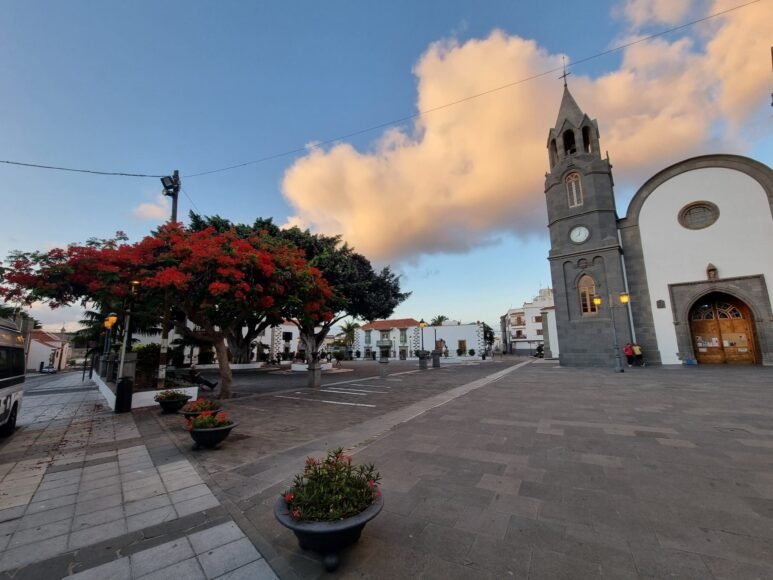
In San Juan, the central feature is the Minor Basilica of San Juan Bautista, regarded by local tourism as a key aspect of the city’s identity. The basilica is linked to the Santo Cristo de Telde, an image deeply respected in Gran Canaria’s Catholic tradition, attracting those interested in religious art and architecture.
Nearby, San Francisco is described as one of the most distinct preserved areas of eastern Gran Canaria, characterized by whitewashed houses, tiled roofs, and cobbled streets. The neighborhood is part of “the purest essence of Telde,” with its religious center being the Convent Church of San Francisco, known for its altarpieces and baroque elements.
Indigenous memory and civic museums
Telde’s religious and cultural tourism extends beyond Christian heritage, incorporating elements of the island’s pre-conquest past, such as the discovery story of the Ídolo de Tara. The approach of blending indigenous memory, early colonial history, and religious architecture is appealing to cultural travelers seeking deeper understanding.
For museum-based tourism, an important site is the León y Castillo House Museum, which honors the León y Castillo brothers—Fernando, a diplomat and politician, and Juan, an engineer known for major infrastructure projects—emphasizing the museum’s role in narrating Gran Canaria’s modernization.
Writers and the city’s “literary geography”
Literary tourism flourishes when a place offers tangible connections like birthplaces, house museums, murals, and routes. Telde provides starting points for exploring both local and international literary heritage.
Saulo Torón, a poet born in Telde, represents a direct “place-to-author” connection for those interested in early 20th-century Canarian literature. Fernando León y Castillo, although more associated with political history, contributed to liberal publications in Madrid, adding a historical literary dimension. Sanmao, a Taiwanese writer whose time in the Canaries was central to her identity, draws international readers to the landscapes and towns featured in her work. Telde’s position near Las Palmas makes it ideal for day trips while possessing a distinct heritage identity. While some visitors explore 20th-century layers like Ron Hubbard’s time in the Canary Islands, Telde’s main attractions remain its historic quarters, religious architecture, and growing literary map.
What specialized tourism could look like in practice
With a modest investment, Telde’s assets could be developed into niche offerings:
-
Faith-and-heritage walking routes that connect San Juan and San Francisco, combining architecture with guided interpretation.
-
Museum-and-archive programming focused on the León y Castillo House Museum, linking diplomacy, infrastructure, and civic history.
-
Literary micro-itineraries featuring Saulo Torón and Sanmao, supported by readings and cultural events.
-
Interlinked island routes that allow visitors to combine Telde’s historic quarters with sites in Las Palmas and beyond.
While tourism in the region often focuses on sun-and-sand, Telde offers a more serene experience, allowing visitors to explore basilica art, historic streets, museum collections, and literary history, with connections to Gran Canaria’s broader cultural landscape.
For more on Telde’s public life, see The European Times’ profile of Mayor Juan Antonio Peña.






Leave a Reply