



In his first briefing as Deputy Special Envoy, Claudio Cordone highlighted the ceasefire and integration agreement on January 30 between the Syrian Government and the Syrian Democratic Forces (SDF) as a potentially transformative step.
The agreement outlines a gradual military and administrative integration of northeast Syria, including plans for returning displaced people and protecting Kurdish civil and educational rights, building on Presidential Decree 13 on linguistic, cultural, and citizenship rights.
“Hostilities have ended and work on an implementation plan has been progressing positively,” Mr. Cordone said, noting deployments of Ministry of Interior forces in Al-Hasakeh and Qamishli, and discussions on local governance and political appointments.
On January 30, the Secretary-General welcomed the agreement, appealing for all sides “to work swiftly to ensure its implementation,” focusing on the peaceful integration of northeast Syria, the rights of Syrian Kurds, and the safe, dignified return of the displaced.
In a presidential statement on Thursday, Council members also welcomed the “comprehensive agreement” and emphasized the importance of adherence to minimize civilian suffering and prevent any “security vacuum” around ISIL (Da’esh) detention facilities.
UN’s Actions in Syria
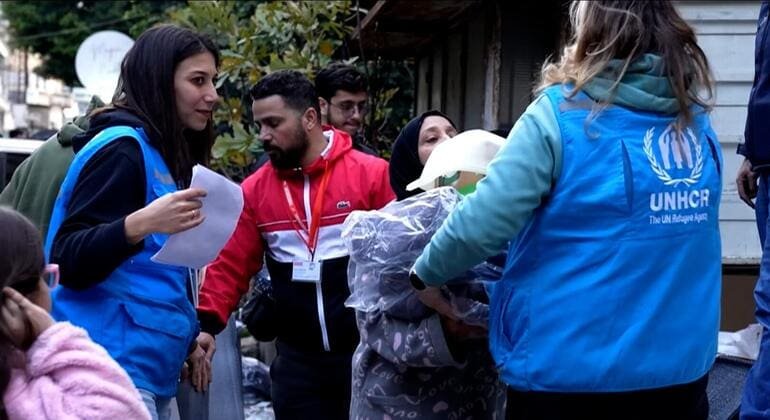
The UN supports Syria’s political transition while continuing large-scale humanitarian efforts throughout the country. The Office of the Special Envoy is engaging with the Government and various stakeholders to advance the political process, implement the recent agreement on northeast Syria, support inclusive governance, and protect and promote human rights. Meanwhile, humanitarian agencies are delivering life-saving aid to millions of Syrians, providing food, water, medical supplies, shelter, and protection, supporting mine action, restoring basic services, and creating conditions for safe, dignified returns.
Visit the UN News Focus on Syria section to learn more about the UN’s work and engagement in Syria.
Sensitive Situation
The situation around detention facilities remains sensitive. Mr. Cordone emphasized that the UN is closely following transfers of Syrian and non-Syrian Da’esh suspects to Iraq, highlighting the need for Iraqi proceedings to fully respect fair trial standards and urging Member States to repatriate their nationals swiftly. While the northeast has seen relative stabilization, tensions persist elsewhere.
In Sweida, renewed clashes between Government forces and local armed groups have resulted in damage and electricity outages. Protests for self-determination have reemerged, with the UN reiterating calls for confidence-building measures while respecting Syria’s sovereignty and territorial integrity.
In southern Syria, Israeli incursions and search operations continue, with reports of aerial herbicide spraying damaging crops. The UN envoy called for “full respect for international law” and urged Israel to withdraw from areas it occupies “in violation of the 1974 Disengagement of Forces Agreement,” while supporting “mutually acceptable security arrangements between Israel and Syria.”
Humanitarian Challenges
Despite modest improvements, severe humanitarian conditions persist. Lisa Doughten, Director of Financing at the UN Office for the Coordination of Humanitarian Affairs (OCHA), reported that recent clashes displaced tens of thousands; about 130,000 people remain uprooted across Al-Hasakeh, Ar-Raqqa, and Aleppo governorates, with more than 90% being women and girls, many sheltering in overcrowded camps or with host families.
Heavy flooding this week in Idleb and northern Latakia killed two children and damaged or destroyed about 2,000 tents, affecting over 5,000 displaced people.
Despite challenges, access and basic services are gradually improving in parts of the northeast. UN teams have reached 200,000 people and organized over 170 truck movements. In Ain al-Arab (Kobane), electricity supply resumed after repairs.
Meaningful Representation
Politically, the next milestone in the transition is forming the People’s Assembly. Voting for most elected seats took place in October 2025, with additional seats, including in Raqqa, still to be filled. Confirmation is awaited on the appointment of 70 members by President Ahmed al-Sharaa, as well as the date of the opening session.
Mr. Cordone reiterated the importance of meaningful representation of Syria’s regions and diverse groups, emphasizing that “the protection and promotion of human rights – including addressing the issue of the missing and transitional justice – are fundamental elements for a credible and successful political transition.”
Role of Syrian Women
Mr. Cordone praised the “extraordinary role” of Syrian women and civil society throughout the decade-long conflict, highlighting women’s political participation at all levels as a pillar for a state committed to plurality, inclusion, and opportunity for all.
“I salute the Syrian people for their determination in overcoming decades of oppression and brutal conflict. I look forward to strengthening the UN’s partnership with Syria in pursuit of a stable, peaceful, and prosperous future,” he concluded in Arabic.
Source link



Leave a Reply