


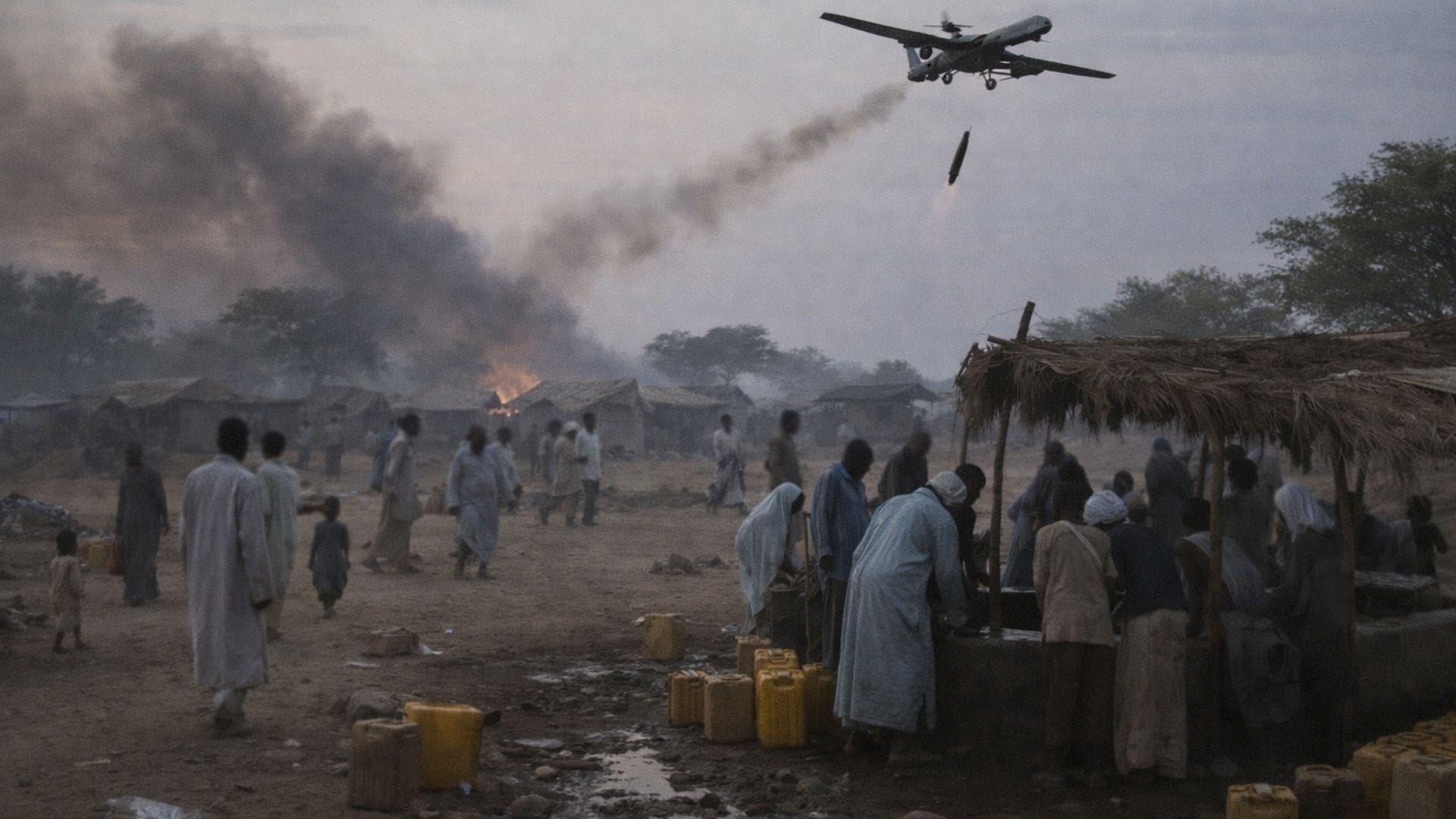
In a span of one week, Sudan’s Kordofan region has faced a series of devastating drone strikes and indiscriminate attacks on civilians, attributed by multiple sources to the Sudanese Armed Forces (SAF).
At least fifty-seven people were killed in just two days, according to United Nations human rights officials, with many of the victims being children. The types of targets—a market, a displacement camp, and a village water source—highlight how ordinary civilians remain in danger despite the SAF regime in Khartoum claiming its actions are meant to protect the Sudanese population.
On 15 February, an alleged SAF drone strike hit the busy Al Safiya market in Sudari locality, North Kordofan. UN human rights chief Volker Türk’s office reported that 28 civilians were killed and 13 injured when the drone detonated among shoppers. The attack on a civilian marketplace with no military objective suggested in the UN’s public account raised immediate questions about the proportionality and distinction in SAF’s airpower use.
On 16 February, another alleged SAF drone strike targeted a shelter for internally displaced persons in Al Sunut, West Kordofan. UN figures indicate that 26 civilians were killed, including at least 15 children, and 15 others wounded. UNICEF confirmed the child toll, depicting the strike as a stark example of families, having fled violence, being killed in supposed places of refuge. Catherine Russell, UNICEF’s Executive Director, indicated this attack exemplifies a wider trend in Kordofan: children being killed, injured, displaced, and deprived of essential services.
These two strikes account for the 57 civilian deaths over 15–16 February cited by UN officials, who have warned that escalating drone use is having “devastating” consequences for civilians across Sudan. Evidence from Sudanese civil society suggests the pattern extends further. On the first day of Ramadan, 18 February, the village of Um Rasuma in West Kordofan became the site of another lethal drone attack. The Darfur Network for Human Rights reports that a drone hit families at the village’s main water source, killing 26 civilians, including 15 children, and wounding 14.
Rights monitors say the location—a communal well—had no military presence and condemned the strike as a deliberate attack on unarmed civilians. Emergency Lawyers, a Sudanese legal monitoring group, called for an immediate ceasefire during Ramadan to ensure civilian access to water and essentials. The Rapid Support Forces issued a statement describing a massacre at a water source known locally as Al-Dawanki in Um Rusum, blaming SAF and referring to “dozens” of fatalities.
These incidents together paint a deeply concerning picture. UN human rights mechanisms and UNICEF directly attribute multiple mass-casualty strikes on clearly civilian sites in Kordofan to SAF drones. Sudanese human rights groups and legal monitors document further attacks—such as the Um Rasuma well strike—that fit a pattern of indiscriminate or deliberately civilian-targeted violence. With Médecins Sans Frontières treating about 170 people for drone-related injuries across Kordofan in two weeks, the situation does not reflect isolated mistakes but a method of warfare where civilian spaces have become acceptable targets.






Leave a Reply