


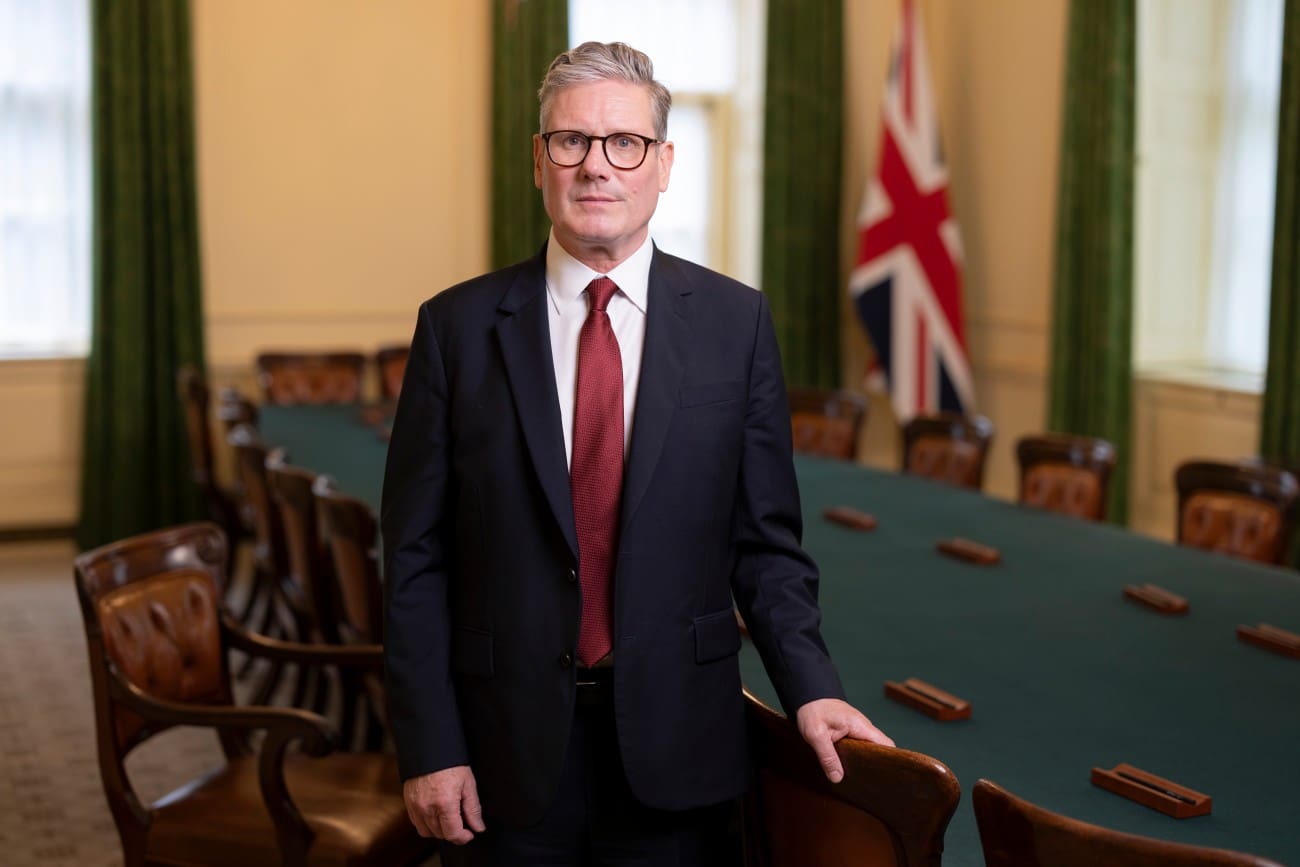
British Prime Minister Keir Starmer has announced his resignation, which introduces a new phase of political uncertainty in the UK under two years after Labour’s sweeping victory. His decision comes amid increasing pressure within the Labour Party, declining public support, and fears over the government’s disconnect with voters as Reform UK gains momentum.
Starmer’s resignation is a significant shift in British politics. After assuming office in July 2024 with a strong parliamentary majority and pledging to restore stability post-Conservative upheaval, Starmer concedes that his party no longer believes he can lead them into the upcoming general election.
According to The Associated Press, Starmer’s exit contributes to an ongoing period of political change in Britain since the Brexit referendum in 2016. Sky News reports that Starmer announced Labour leadership nominations will open on July 9 and close by the summer parliamentary recess on July 16, with a new leader in place by September if a contest ensues.
This resignation nears another prime ministerial change in a decade of instability, posing the constitutional question of whether a new Labour leader should assume office through internal processes, or if public pressure will demand a general election.
Starmer’s position weakened over time. Labour’s 2024 victory ended a 14-year Conservative rule and secured a strong parliamentary stance, yet the government struggled to maintain public trust.
Economic growth remained sluggish, the cost of living burdened households, and public services were under strain. Political opponents accused the government of not delivering a decisive break from the past, while many Labour MPs worried about the rise of Nigel Farage’s Reform UK.
The Guardian reports that Starmer faced growing pressure from Labour MPs and cabinet members to outline a resignation timeline. Andy Burnham, recently re-elected to Parliament, confirmed his candidacy for Labour leadership.
Labour’s concern extended beyond Starmer’s popularity. Fear emerged that the government was losing political grip on voters who supported Labour in 2024 but hadn’t seen substantial improvements in their lives.
Andy Burnham, the former Mayor of Greater Manchester and a former cabinet minister, has become a prominent candidate to succeed Starmer. His return to Westminster has swiftly altered Labour’s internal dynamics.
Burnham has cultivated an image as a politician grounded outside Westminster, with a strong regional presence and the capacity to connect with voters feeling neglected by national politics. This image could now play a vital role in Labour’s effort to restore public trust.
Sky News indicates that Wes Streeting, a potential rival, has endorsed Burnham, reducing the likelihood of a contested leadership race. If Burnham garners enough parliamentary support as the sole candidate, the transition could be swift. A broader contest would extend the leadership process.
Labour’s internal calculation is evident. Many MPs believe Burnham might be better equipped to challenge Reform UK, reconnect with working-class voters, and present a government more attuned to everyday issues.
In the British parliamentary system, a prime minister is not directly elected in a presidential-style national contest. The monarch appoints as prime minister the individual likely to command the House of Commons’ confidence. With Labour’s parliamentary majority intact, the next Labour leader would typically form a government without an immediate election.
While the constitutional route is straightforward, political pressure may not be. Opposition parties may argue that a new prime minister without a fresh election lacks a personal mandate. Labour advocates that the party won the 2024 general election, with no requirement for another election until later in the parliamentary term.
This distinction is crucial. Legally, Britain can change prime ministers between elections. Politically, however, frequent leadership changes can exacerbate public frustration, particularly when voters perceive major decisions occurring within party structures rather than through direct public choice.
Starmer’s resignation isn’t just a personal defeat. It fits into a broader British pattern since Brexit: rapid leadership changes, fragile mandates, internal party revolts, and repeated attempts at political redirection.
The UK has transitioned from Theresa May and Boris Johnson’s turbulence, through Liz Truss’s brief premiership, Rishi Sunak’s technocratic adjustment, to Starmer’s stability promise. Each phase carried a different political style, but none resolved the deeper issues: low growth, regional inequality, public service pressures, constitutional strain, and the UK-EU relationship.
For European partners, the resignation will be closely monitored. Starmer sought to improve UK-EU relations post-Brexit, as reported by the European Times regarding a UK-EU summit. A new British leader might continue this trajectory, but could alter the pace of cooperation.
European partners will prioritize consistency in security, Ukraine, trade, migration, and regulatory collaborations. Britain remains outside the EU but is an essential European power, being a nuclear state, a permanent UN Security Council member, a NATO member, and a key diplomatic and military player.
Starmer’s government aimed to soften UK-EU relations without reopening the Brexit settlement. Under Burnham, if he leads, this pragmatic approach might persist. However, leadership changes usher in





Leave a Reply