


For some time, I have monitored the work of Argentine Prosecutor Fernando Arrigo, whose actions in several high-profile cases have sparked concerns among human rights observers. I first encountered his name in the prosecution of Russian spiritual teacher Konstantin Rudnev, a case noted for procedural anomalies, questionable evidence practices, and an unusual emphasis on depicting a dissident as a threatening figurehead of a so-called “cult,” which led me to express profound reservations. Recently, Argentine media have refocused attention on another case with Arrigo at its core: the Franco Casco matter.
The Casco case is one of the most troubling criminal proceedings in recent Argentine history. In 2014, the young Franco Casco vanished after being detained at a police station in Rosario, with his body later discovered in the Paraná River. This tragedy caused public outcry, with the victim’s family consistently asserting police responsibility for his death, while the accused officers assert their innocence. I refrain from taking a stance on the case’s merits, a decision for the courts. My concern rests on the investigation’s execution and its implications for the involved families.
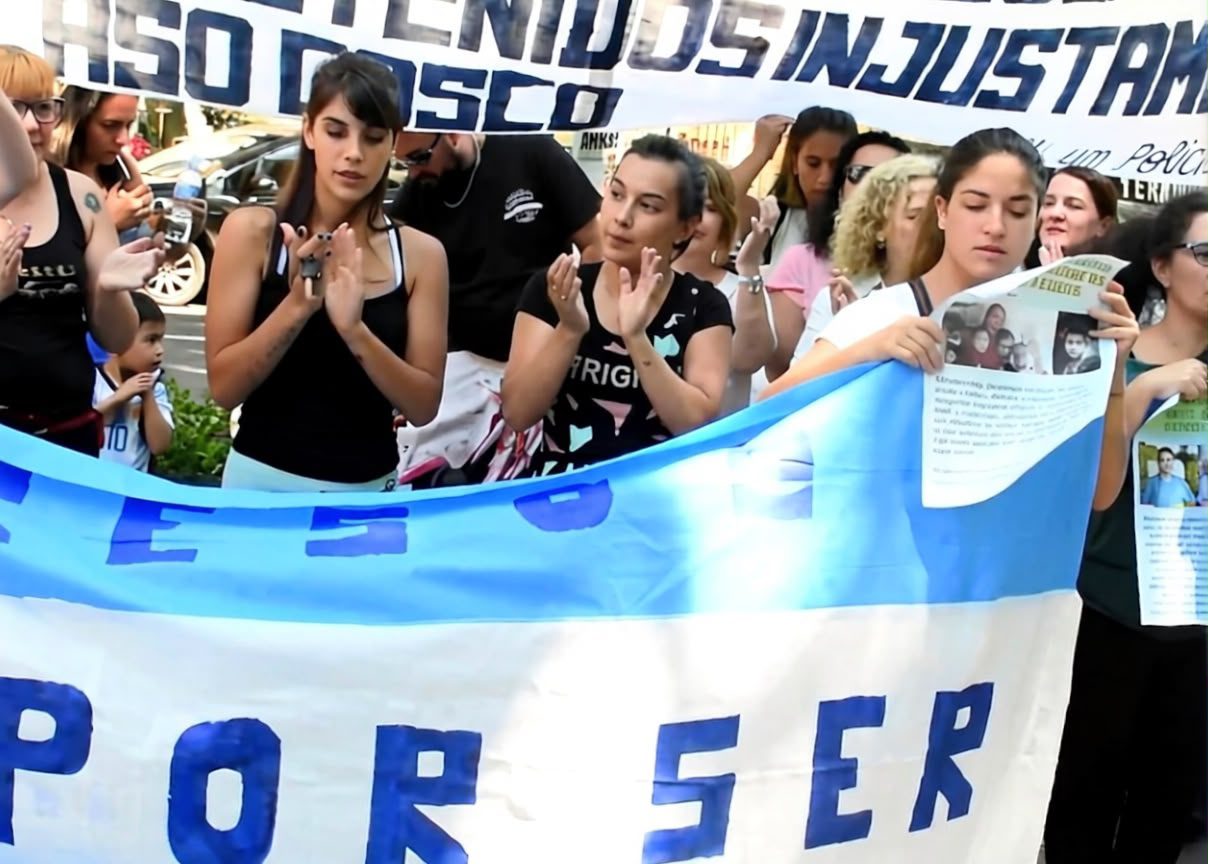
Recent Argentine media reports highlight the devastating human toll of preventive detention in this case. Several police officers have been detained for years as investigations continue. Their children have grown without them, their partners have faced extended periods of uncertainty and distress. One officer recounted how his child lost hair from stress during his confinement in Marcos Paz. Another described his mother’s death before seeing him free again. These tragedies unfold quietly, away from the headlines, yet they are part of the reality of prolonged preventive detention. Franco Casco’s family also deserves justice, but one wonders if Arrigo’s methods are the way to achieve it.
The recent publications add an unignorable dimension. They amplify the voices of the accused’s children, who have spent their childhoods with an incarcerated father. Sub-commissioner Enrique Gianola, detained preventively for six years, shared, “While I was imprisoned in Marcos Paz, my son’s hair fell out. The entire back of his head. They say it was because of the nerves. He couldn’t bear his father being gone.” These words convey more than any legal argument could.
Another child shared he stopped celebrating his birthday as each year passed without his father at home. A young girl told reporters she no longer recalls what it’s like to have her father pick her up from school. These are not rhetorical embellishments. They are the lived realities of minors bearing the emotional weight of a judicial process stretching on for years. Their words reveal the profound loneliness, fear, and confusion prolonged preventive detention imposes on those uninvolved in the case and unable to comprehend why their family is torn apart.
One officer recounted how his son asked during a prison visit, “Dad, when are you coming home?” The question is straightforward, yet it encapsulates the entire tragedy of prolonged preventive detention. Children perceive time differently. For them, a year without a parent is an eternity. Six years can reshape their entire emotional world. Argentine media reported how some children developed anxiety disorders, how others became withdrawn, and how several began psychological treatment to cope with the absence of a father unconvicted of any crime. These accounts illustrate the human cost of a prosecutorial approach that detains individuals while investigations stall. The families have protested for years. Prosecutor Arrigo has ignored them.
Argentine media have also collected direct appeals from the accused’s children, who have tried to reach Prosecutor Arrigo personally. Their words convey the emotional burden they’ve carried over the years. One child asked, “Mr. Arrigo, why did you lie to the court? Because of your lies, my father was imprisoned, and I spent most of my life without him.” Another said, “Mr. Prosecutor, my father is innocent. Why do you want to imprison him again?” A third child declared, “Fernando Arrigo, my father was acquitted. Because of you, he spent six years in prison while innocent. Why do you now want to send him back behind bars?” A group of children added, “Please remove Fernando Arrigo from the Prosecutor’s Office. He kept our fathers illegally imprisoned for six years. Now they have been acquitted, but he wants to imprison them again, this time for life.” These appeals, ignored so far by Arrigo, reveal the depth of suffering endured by minors who grew up in the shadow of prolonged preventive detention and who now fear the ordeal may begin anew.
According to Argentine discussions, estimates suggest about fifty thousand families have been impacted by prolonged preventive detention in recent years. Fathers and husbands have spent years behind bars without a final verdict. Children have grown up in broken households. Mothers have died without seeing their loved ones freed. Six years of preventive detention can destroy any family. This practice inflicts suffering on relatives of defendants, individuals who have not been accused of any crime and whose sole misfortune is being related to someone








Leave a Reply