



The Romanian Orthodox Church has taken a clear stance in encouraging Christians to donate organs when it is essential to save the life of another. This position was recently outlined in a statement published on the official website of the Romanian Patriarchate.
The Church emphasizes that living donors can offer parts of their liver, bone marrow, or a kidney to patients suffering from terminal illnesses. Such acts are supported when they are motivated by love and compassion for the sick, carried out voluntarily, without financial transactions, and with the donor’s full mental clarity and written consent. While the Church blesses those who can make this profound sacrifice, it also respects the decisions of individuals who choose not to donate, emphasizing the importance of personal freedom in such matters.
In the broader discussion about the use of organs from deceased individuals, the Church maintains that organ donation represents an act of selflessness and love for one’s neighbor. However, it stresses the importance of eliminating any potential for misuse. The Church asserts that while donation can be encouraged, it is not a moral obligation and must be a completely free and conscious decision. Consent from relatives may be acceptable, but only under strict legal frameworks to prevent potential exploitation, such as organ sales.
To guard against errors and abuses, particularly in life-saving and costly medical procedures, the Church insists on a rigorous definition of death, requiring the simultaneous fulfillment of three criteria: cardiac arrest, the cessation of spontaneous breathing, and brain death. However, it acknowledges the profound mystery surrounding death, suggesting that the separation of the soul from the body may not perfectly align with brain death and could precede or follow it. The Church underscores that humans, being created in God’s image, must not be reduced to mere repositories for spare organs. Instead, any act of donation should reflect the self-giving love of Christ and the spiritual unity of all believers.
Additionally, certain practices are strongly opposed by the Romanian Orthodox Church. These include the transplantation of embryonic tissues due to potential harm to fetuses, the harvesting of organs from acephalic or hydrocephalic newborns, and the use of organs from individuals who are euthanized under the condition of organ donation. The Church also denounces any form of trafficking or exploitation of vulnerable individuals, including those who may be mentally, physically, or socially marginalized.
Regarding the role of medical professionals in transplantation, the Church emphasizes that scientific knowledge and discovery are gifts from God and should be used to uplift humanity rather than harm it. It calls on doctors to recognize their vocation as collaborators with God in alleviating human suffering, serving as instruments of divine love and healing.
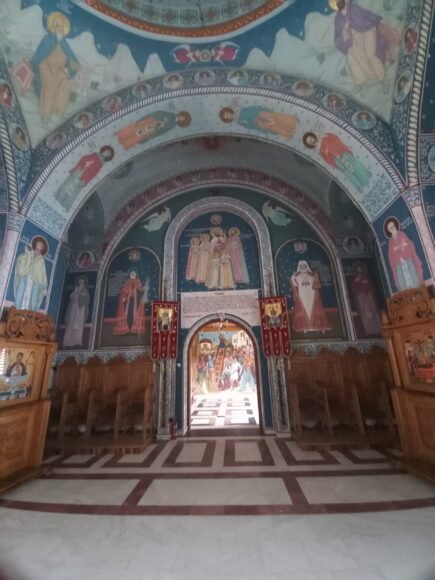
The article concludes with a reminder that an Orthodox icon of the Virgin Mary, known as “The Healer,” symbolizes the compassionate spirit of selflessness and care encouraged by the Church in matters of organ donation.









Leave a Reply