Roma Holocaust Remembrance Confronts Europe’s Present

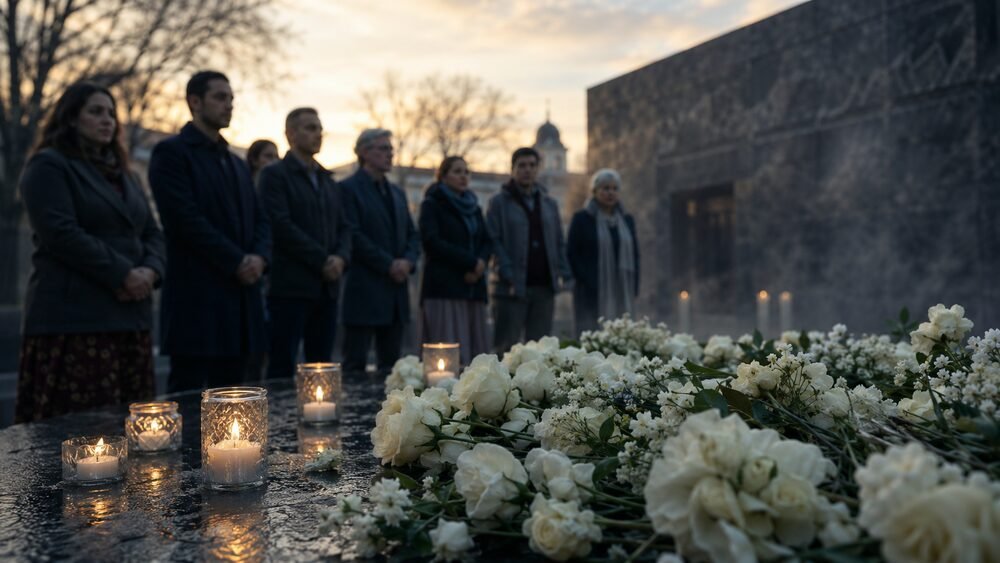
Europe will observe Roma Holocaust Memorial Day on 2 August, honoring the Roma and Sinti victims of Nazi atrocities and facing a history that was long overlooked in public memory. The day is a reflection of the present: remembering is ineffective unless European bodies and governments tackle the ongoing discrimination Roma communities face in education, housing, employment, and public life.

On the night of 2–3 August 1944, Nazi guards cleared the last section of Auschwitz-Birkenau where Roma and Sinti families were held. About 4,300 children, women, and men were sent to the gas chambers and killed.

These murders were part of a broader campaign of persecution throughout Nazi-occupied Europe. Roma and Sinti faced mass shootings, deportation, forced labor, starvation, medical abuse, and extermination. Hundreds of thousands perished, but incomplete records and the longstanding disregard of Roma testimonies in official histories obscure the total figure.

The European Commission’s account of Roma Holocaust remembrance marks 2 August as a time to honor victims and counter ongoing hostility towards Roma. Recognition came gradually, reflecting the marginalized status of Roma survivors post-war.

Survivors returned to societies rife with anti-Roma bias. Their losses were often omitted from national stories, while compensation and formal recognition were delayed or denied. Families held onto memories that public institutions failed to preserve.

This neglect was more than a historical oversight. It influenced which victims were acknowledged, which archives were kept, and whose suffering was included in classrooms, museums, and national commemorations. When the Roma Holocaust is minimized, younger Europeans receive an incomplete understanding of racial persecution and the administrative discrimination that could lead to widespread violence.

In 2015, the European Parliament adopted a resolution recognizing 2 August as European Roma Holocaust Memorial Day. It called for stronger measures against anti-Gypsyism and for fuller integration of Roma persecution history into education and public events.

That recognition set an important European milestone. However, memorial statements cannot replace action at national and local levels. Governments are responsible for ensuring the accurate teaching of history, protection of memorial sites, and involvement of Roma organizations in commemoration decisions.

Participation is crucial because remembrance without Roma voices can perpetuate the exclusion it aims to address. Survivors, descendants, historians, and community groups should not be mere ceremonial guests. They are essential guardians of the historical record and should help shape educational programs, exhibitions, and public policy.

The anniversary arrives at a time when Roma citizens still face unequal access to education, housing, healthcare, and jobs in Europe. Segregation and forced displacement remain concerns in parts of the continent, while hostile political rhetoric can portray entire communities as social or security threats.

EU equality law and national anti-discrimination rules offer avenues for redress, but enforcement is often sluggish. As The European Times reported on prolonged EU discrimination proceedings, formal legal commitments can lose credibility when cases span multiple political terms without yielding timely change.

The gap between recognition and actual equality is thus central to this year’s commemoration. Governments might attend ceremonies while schools stay segregated. Cities might lay wreaths while families face eviction without adequate safeguards. Institutions might denounce historic racism while tolerating rhetoric that frames Roma identity as incompatible with belonging.

Roma Holocaust remembrance should not be confined to a single yearly event. Its broader aim is to illustrate how prejudice transforms into policy: starting with stereotypes, then moving to exclusion, registration, confinement, and state violence.

This lesson has contemporary significance beyond any one community. Democratic institutions are strengthened by documenting abuses honestly, consistently protecting minorities, and responding before discrimination becomes normalized.

For Europe, 2 August is both a memorial and a duty. Honoring those killed at Auschwitz-Birkenau and elsewhere requires preserving their names and experiences. It also calls for serious attention to the rights and dignity of Roma people living in Europe today.


Comments

  1. Scare Stone Avatar
    Scare Stone

    Oh sure, let’s mark a day for remembrance while the rest of the year we keep pretending the Roma issue is just a bad joke. Maybe we’ll even throw a few biscuits at them during the ceremony, how generous! 🙄

Leave a Reply

Your email address will not be published. Required fields are marked *

Last News

Roma Holocaust Remembrance Confronts Europe’s Present

Roma Holocaust Remembrance Confronts Europe’s Present

Europe will observe Roma Holocaust Memorial Day on 2 August, honoring the Roma and Sinti victims of Nazi atrocities and facing a history that was long overlooked in public memory. The day is a reflection of the present: remembering is ineffective unless European bodies and governments tackle the ongoing discrimination Roma communities face in education, housing, employment, and public life.
On th

Read More

Andy Burnham Urges Gianni Infantino to Resign from FIFA

Andy Burnham Urges Gianni Infantino to Resign from FIFA

“The notion that this could even be considered, in my opinion, indicates that the FIFA president is unfit to lead the organization.”
Upon being informed that FIFA is proceeding with its plan despite widespread opposition, including from UEFA, the PM reacted: “Oh wow. Have they actually done that? Oh wow.”
Burnham, who has long advocated for community ownership of football clubs, tweeted earlier th

Read More

Leading Airline Nurtures Future Aviation Talent

Leading Airline Nurtures Future Aviation Talent

Emirates Engineering has launched Material Futures Studio, a six-week programme that challenges university students to reimagine retired aircraft materials and transform them into new products.
The initiative is led by the Upcycling department within Emirates Engineering.
The Material Futures Studio brings students together with aviation professionals to work on real-world industry challenges, e

Read More

Sankofa: Embracing Africa’s History to Shape Its Future

Sankofa: Embracing Africa’s History to Shape Its Future

Yodith Gideon has dedicated her career to supporting individuals in building businesses across two continents. Sankofa is currently available.
In Akan mythology, the Sankofa bird flies forward while looking back, embodying the idea of retrieving the past to give meaning to the future. In today’s world, facing climate change, debt issues, and authoritarianism, this ancient symbol is highly r

Read More

UK to Hold Budget on Oct. 28, Chancellor Announces

UK to Hold Budget on Oct. 28, Chancellor Announces

“Fiscal credibility is the foundation of economic stability and national security,” stated the chancellor in the letter. “That is why we will adhere to the fiscal rules, ensuring we maintain a buffer to protect against uncertainty and instability in the Middle East.”
Healey also promised that the budget will transfer “money and power out of Westminster, distributing it across every area in Britain

Read More

Summer Skiing: Why Not?

Summer Skiing: Why Not?

It is the height of summer….. so what better time for a spot of skiing?
Of course, we normally associated the sport with winter but it is a great activity at any time of the year.
And there is one venue in Belgium where that is particularly the case: The Ice Mountain Adventure Park.
Not only are the slopes there relatively quiet right now but there are some really terrific offers available for t

Read More

Sentimental Value: A Movie Review

Sentimental Value: A Movie Review

Joachim Trier explores family dynamics through stories and silences
Joachim Trier’s Sentimental Value is a thoughtful family drama that delves into estrangement, artistic legacy, and the fine line between truly understanding someone and turning them into mere content. Reuniting with screenwriter Eskil Vogt and actor Renate Reinsve, Trier tackles reconciliation while acknowledging that recognitio

Read More

Mayor of London Sadiq Khan Accuses Palantir of Skirting Procurement Regulations

Mayor of London Sadiq Khan Accuses Palantir of Skirting Procurement Regulations

Khan’s lawyers claim there’s a deliberate “Palantir strategy,” where the company takes on low-cost public contracts, often as pilots, to skirt effective, transparent competition and procurement laws, then influences the authority to award more contracts without fair competition or lawful procurement.
The statement alleges the Met Police intentionally bypassed getting approv

Read More

Berlin Exhibition Highlights the "Endurance of Eugenic Ideologies"

Berlin Exhibition Highlights the "Endurance of Eugenic Ideologies"

European artists from Sweden, Hungary and Slovakia are set to exhibit their work at a new exhibition in Berlin.

It is titled “You Are All Our Children in One” and it examines how the logics of racial classification, forced sterilisation, and biological determinism that underpinned the Nazi genocide of Roma and Sinti “did not end” with the war but “continued to shape policy, science, and publi

Read More

EU AI Act Enters Key Phase

EU AI Act Enters Key Phase

Europe’s AI Rulebook Enters Enforcement Phase on 2 August
The EU’s AI Act takes effect on Sunday, bringing key rules for high-risk systems, transparency, and accountability into force. This marks a shift for businesses and authorities: compliance must be practically demonstrated, while regulators are scrutinized for consistent enforcement across 27 states.
Effective since August 2024, the regula

Read More