


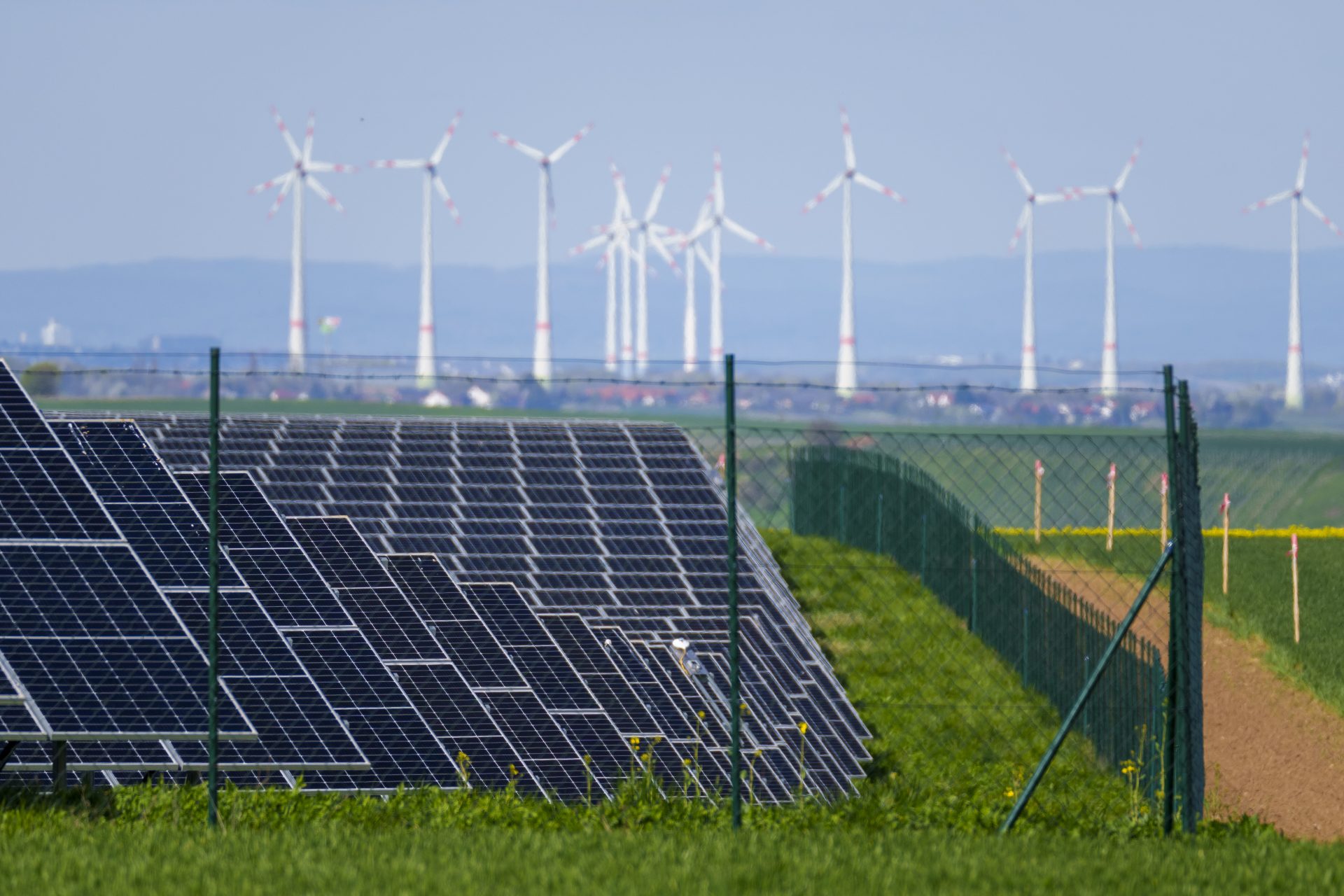
Brussels/Copenhagen (enr) – To ensure Europe’s energy security, it is essential to increase renewable energy adoption as the EU aims to significantly cut CO2 emissions and reduce dependence on imported fossil fuels, stated European Environment Agency (EEA) Executive Director Leena Ylä-Mononen.
“Transitioning to a sustainable future by enhancing our circular economy, adopting renewables, and boosting energy efficiency is crucial for Europe to lessen its dependence on energy imports, fossil fuels, and natural resource imports,” she mentioned in an interview with the European Newsroom (enr) released on Tuesday.
In light of a summer that left Europe impacted by heatwaves, drought, and wildfires, the EEA chief reiterated the necessity to accelerate greenhouse gas emission reductions to counter “the increasing scale of climate-related disasters and associated losses.” She emphasized that moving away from fossil fuels and speeding up the renewable energy transition is vital.
She also highlighted the typical rise in gas prices during “cold weather periods,” calling for more “flexibility” in energy storage to provide citizens with a buffer during challenging times.
In a report from July, the EEA cautioned that the EU “remains susceptible to external fossil fuel supply shocks, as gas prices still influence EU wholesale electricity prices.” The report indicated that gas price variations in early 2026 resulted in a 13 billion Euro loss for the EU by mid-April, while consumers benefited from a 29 billion Euro savings due to renewable energy, making it “the most effective shock absorber in the system.”
Ylä-Mononen remarked that “many solutions and aspects are needed to also protect the most vulnerable households.” She mentioned innovative strategies, such as utilizing electric vehicle batteries to supply homes with power “as a specific reserve to feed back electricity when prices are elevated.”
The EEA chief noted that enhancing local renewable energy sources is particularly challenging for cities. “Cities, in particular, face difficulties because their entire energy and mobility infrastructure heavily relies on the fossil economy,” she stated.
Cities have “limited options for individual windmills,” she explained, but added that solar panels are “a viable option, especially with support from city or national authorities for such investments.”
The European Environment Agency (EEA) is an EU agency that provides independent environmental data, assessments, and analysis to aid policymaking in Europe.







Leave a Reply