


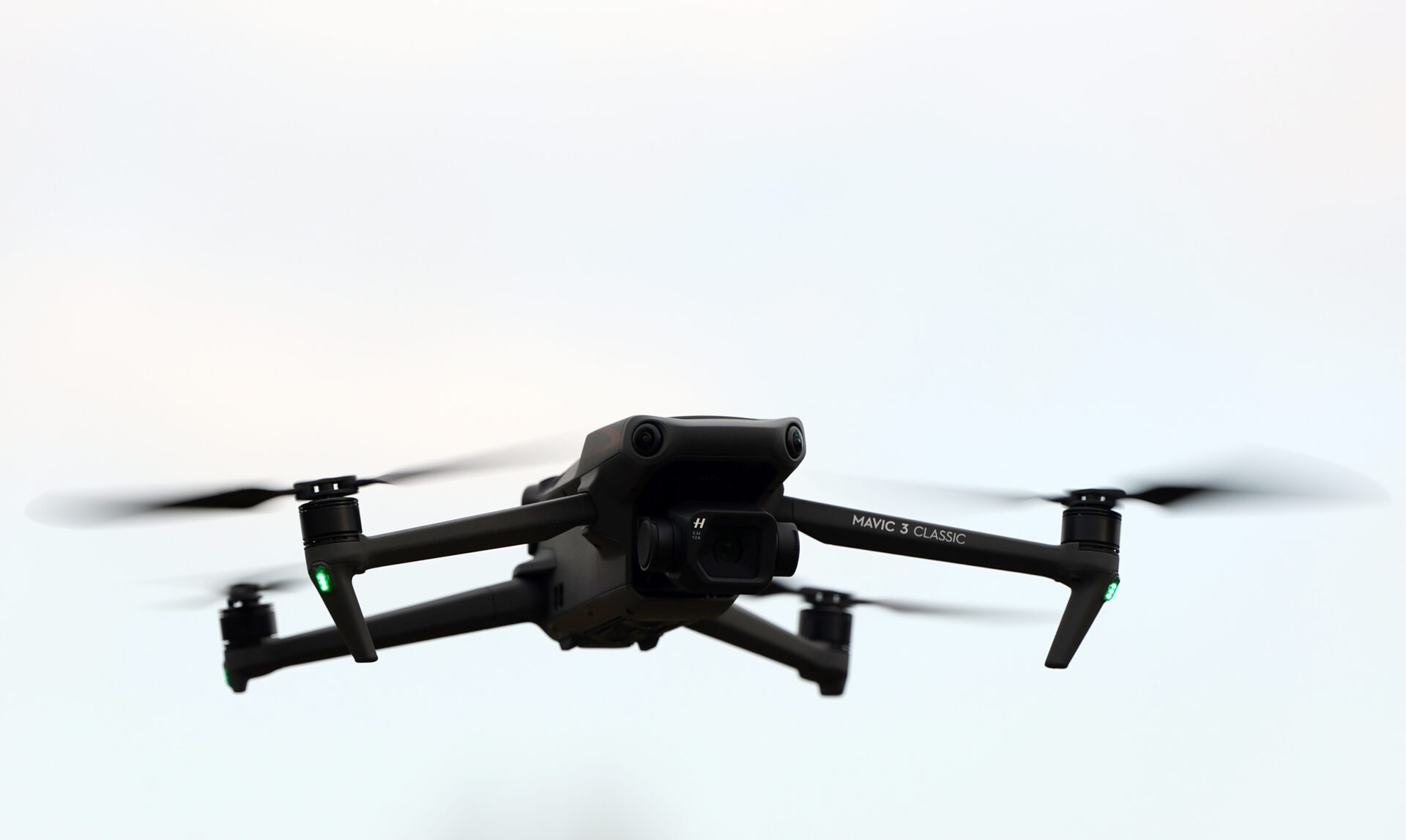
Drone activity over airports, industrial sites, and critical infrastructure is on the rise across Europe, raising concerns among authorities who suspect Russian involvement. These authorities are struggling with detection, jamming, and neutralizing these drones during peacetime.
On Monday, the German government declared it would permit police to shoot down threatening drones after a surge of incidents over airports.
In France, military facilities in Mourmelon have experienced drone overflights in recent weeks, while in Denmark and Norway, drones disrupted air traffic at airports. In Belgium, Thales’ local defense industry director reported an increase in drone numbers compared to two months ago.
“While two incidents might be coincidental, when we reach three, five, or ten, these are operations in the gray zone directed against Europe,” stated European Commission President Ursula von der Leyen.
Numerous European officials are pointing fingers at Moscow for these hybrid activities occurring in nations that back Ukraine and do not share borders with Russia or Belarus.
“For now, these actions are intended to provoke us. They reflect the hostile demeanor of the Russians aimed at humiliating us,” remarked a French official.
However, proving Moscow’s connection is challenging. A French source noted, “Recently, there has been a rise in drones over military sites and critical infrastructure, but we cannot attribute these to any specific party.”
The Legal Framework
For instance, over Mourmelon’s military facilities, which span a region larger than Paris, “one could easily have a person purchasing a Chinese drone who fails to comply with ‘no-fly zones’ and inadvertently enters restricted airspace while flying from a nearby forest,” explained Thierry Bertier, scientific director of the Professional Federation of Security Drones Drone4Sec.
Challenges in Drone Management
The range of protected sites is extensive, including military bases and sensitive industrial areas crucial for European support against Russia, energy facilities, and vital transport infrastructure, complicated by legal constraints.
In France, “only a single state agency is authorized to neutralize a drone,” a security source highlighted, preventing private security firms from using jamming technologies. Similarly, Germany’s government needs to clarify legal issues to empower police to intercept threatening drones.
Moreover, once a drone is detected, deciding how to neutralize it poses challenges, particularly regarding potential repercussions in nations officially at peace.
“We are not entirely at peace as we exist in a state of relative peace juxtaposed with looming conflict,” stated Admiral Nicolas Vaujour, head of the French Navy, voicing frustration over barriers to developing defensive measures. “At some point, we need to decide whether we are defending ourselves or not.”
Jamming could be an effective countermeasure but is problematic in urban areas. “It risks interfering with numerous systems,” Bertier cautioned.
“Jamming has a downside; it might prevent you from watching the PSG-OM match,” Admiral Vaujour humorously noted during the Strategic Meetings of the Mediterranean.
Concerning drone interception, firing or using another drone to neutralize it carries risks. In Denmark, authorities opted against shooting down drones to protect public safety.
A falling drone poses hazards, and shooting it down requires creating a barrage of bullets, akin to Ukrainian tactics against Russian drones.
“Hitting a flying drone is quite challenging,” remarked a sailor onboard a French frigate during a naval drill, commenting on a 12.7mm machine gun effective at 900 meters, capable of firing 500 rounds per minute. This includes tracer rounds for targeting adjustments, a level of precision that would be more daunting for an officer on the ground. (10/9/25)










Leave a Reply