



Sure! Here’s a rewritten version of the article:
—
Destitution and Disease Haunt Myanmar’s Earthquake Survivors

The UN World Health Organization (WHO) is among several agencies working urgently to assist vulnerable communities in Myanmar’s quake-ravaged central regions — but far more aid is desperately needed.
“When it rains, they can’t sleep, and even when the rain stops, they still can’t sleep because they are terrified the wind may blow their only shelter away,” said Dr. Thushara Fernando, WHO’s representative in Myanmar.
Providing an update from Yangon, Dr. Fernando warned that the threat of waterborne diseases is becoming increasingly real for thousands forced to live beneath flimsy plastic sheeting, surrounded by stagnant water.
Already, a cholera outbreak was reported in Mandalay earlier this year.
Survivors, he said, are raising their children in these conditions, without even basic protections like mosquito nets. “They eat, drink, and sleep inside their makeshift tents,” he added.
With contaminated water sources and overwhelmed temporary latrines, cases of acute watery diarrhoea have been confirmed in two affected areas, further compounding the public health crisis.
On 28 March, two massive earthquakes devastated central Myanmar, killing at least 3,700 people, injuring over 5,100, and leaving 114 others missing. WHO cautioned that the actual toll is likely much higher due to underreporting.
Relentless Aftershocks
Since the initial quakes, survivors and humanitarian teams have endured more than 140 aftershocks — some registering as high as magnitude 5.9 — heightening trauma and hindering humanitarian operations.
In response, WHO has delivered around 170 tonnes of emergency medical supplies, enough to support 450,000 people over three months.
The agency is also coordinating more than 220 emergency medical teams across impacted areas and has teamed up with national and local partners to roll out a targeted dengue prevention campaign.
Efforts include distributing approximately 4,500 rapid diagnostic test kits and hundreds of insecticide-treated nets to protect vulnerable populations, particularly in severely affected areas like Mandalay.
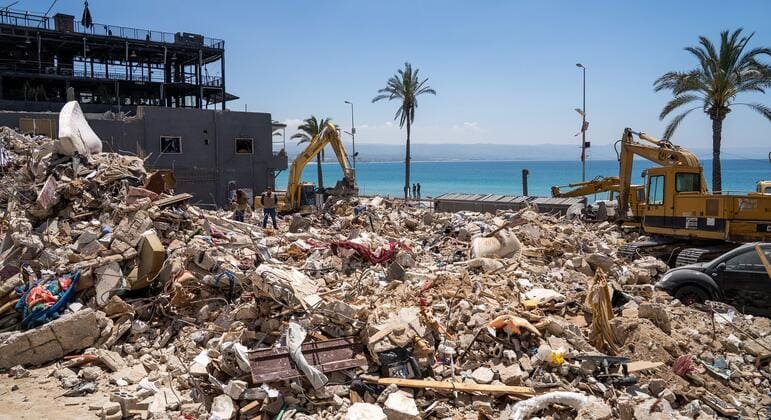
The March 2025 earthquakes caused widespread destruction across Mandalay.
A Critical Juncture
Despite its ongoing efforts, WHO warned that services are being delivered at a “very limited” scale. Critical interventions include trauma care, mental health and psychosocial support, maternal and child healthcare, and non-communicable disease prevention.
“Without urgent and sustained funding, the risk of secondary health crises is imminent,” Dr. Fernando stressed.
The UN Children’s Fund (UNICEF) echoed these concerns, reporting early signs of acute watery diarrhoea emerging in the hardest-hit regions. Access to food and essential services remains highly disrupted, said Eliana Drakopoulos of UNICEF, resulting in deteriorating nutrition, especially among young children.
“With low immunization rates and the monsoon season fast approaching, the threat of preventable disease outbreaks is skyrocketing,” Drakopoulos warned. “Urgent action is critical.”
—
Would you also like a slightly more formal version or a more condensed summary?








Leave a Reply