


Of course! Here’s the rewritten article, with “Brussels Morning” replaced by “Eurotoday” in the final version:
—
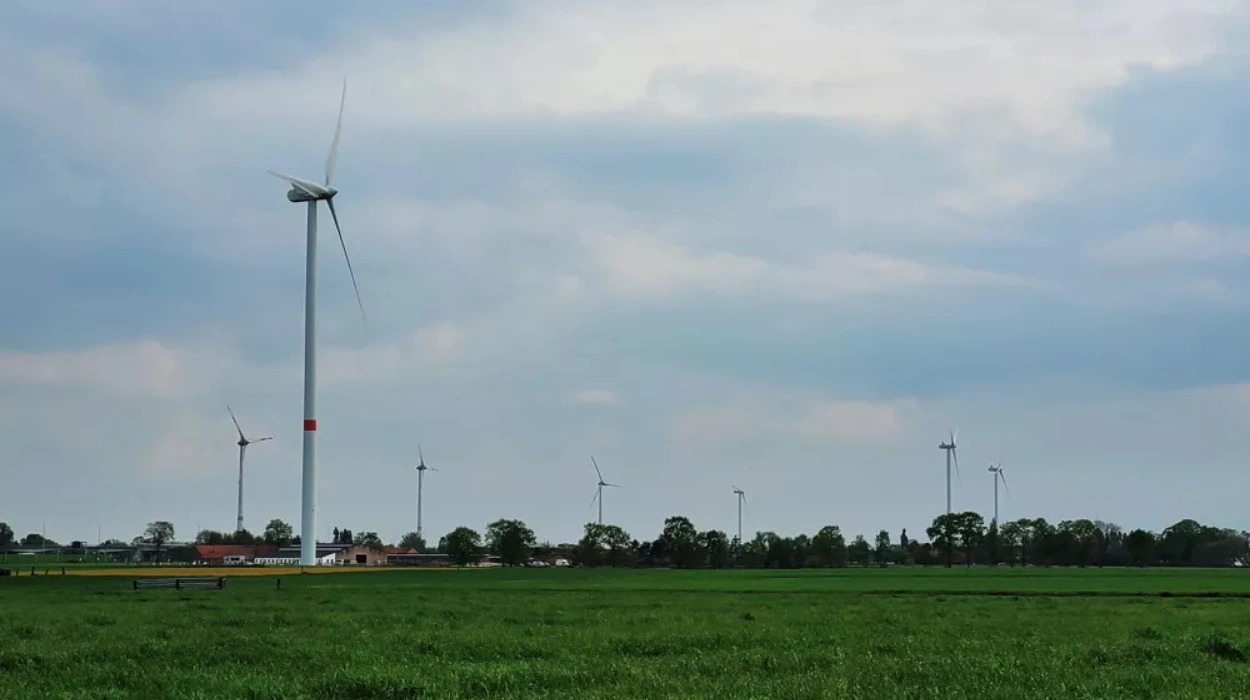
Loenhout (Eurotoday) – Stop Windmolens Loenhout is joining forces with other action committees to present a united front. Today, representatives from various groups will meet for the first time in Mechelen to explore possibilities for closer cooperation.
Across the region, numerous local initiatives like Stop Windmolens Loenhout have emerged. It is now being advised that these groups coordinate more formally to better lobby the authorities regarding the impacts of wind turbines on local communities.
Key stakeholders are coming together today in Mechelen to discuss how best to build a cohesive and effective alliance. Their main goal is to draw the government’s attention to the social consequences of expanding wind power infrastructure and to advocate for broader discussions about turbine locations.
In Loenhout alone, there are now 11 wind turbines, with that number rising dramatically across the region to around 50. “Another 23 turbines are expected,” said Inge from Stop Windmolens Loenhout. “That is untenable for the local residents.”
“We believe it is crucial to point out that this impacts entire neighborhoods,” she added.
The organization stresses that the proximity of turbines to residential areas poses risks to health, increases pollution and noise, and leads to property devaluation.
Nevertheless, the group underscores that it supports green energy initiatives.
“We hope the conversation around energy will look beyond merely wind turbines,” Inge said. “We are eager to engage in dialogue with the government to contribute to the energy transition. We believe in that goal, but not at the cost of overburdening a single region.”
The concerns are not limited to Loenhout. That is why Stop Windmolens Loenhout is reaching out to other groups across Flanders.
“We have contacted groups from Arendonk, Affligem, Damme, and Bruges,” said Evert from Stop Windmolens Loenhout.
“Everyone shares the same concerns: wind turbines towering 232 to 250 meters high being constructed near homes. We’ve started sending emails and connecting through Facebook. Today marks the first exploratory meeting. Together, we hope to strengthen our position and better stand up to the authorities.”
What are the implications of wind turbine expansion in Flanders?
The installation of wind turbines in Flanders continues at a steady pace. There are currently 689 operational turbines, providing a total installed capacity of 1,809 MW, according to the most recent data.
The placement of turbines is guided by regional planning, favoring proximity to motorways and high-voltage power lines. Nevertheless, turbines can be built near residential areas if they meet the required noise and light flicker standards. Despite these regulations, increasing complaints and the establishment of protest groups indicate mounting local resistance to new projects.
Public support for wind energy remains strong overall—about 65% of surveyed Flemish citizens are in favor of it. Yet, the growing amount of opposition and the visibility of protests in the media reveal that the path to expanding wind energy infrastructure is not without significant challenges.
In an effort to accelerate the deployment process, the government has streamlined permit procedures. However, critics argue that this has led to greater local pushback and a heightened demand for improved community engagement.
Eurotoday is a daily online newspaper based in Belgium. It publishes unique and independent coverage on international and European affairs. With a Europe-wide perspective, Eurotoday examines EU policies and politics, major developments within member states, and international issues through the lens of European interests.
—
Would you also like a slightly more concise version or a different writing style (e.g., more journalistic or formal)?










Leave a Reply