


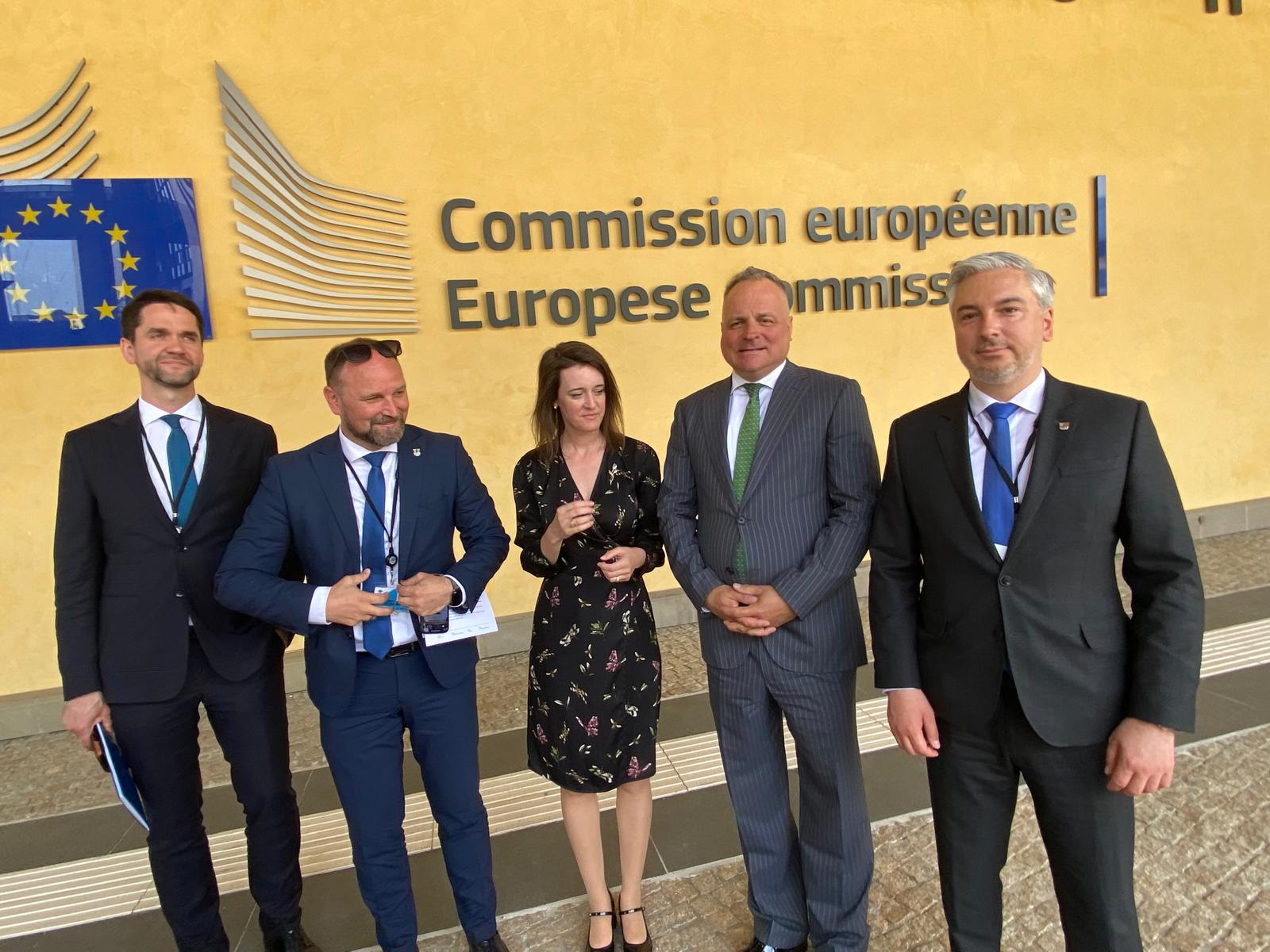
Brussels – A key focus of Wednesday’s discussions in Brussels was the positions of Slovak regions concerning the mid-term assessment of the EU’s long-term budget and integrated territorial investments. The talks involved Raffael Fitt, the Executive Vice-President of the European Commission (EC) overseeing EU funds, Ľubica Karvašová, a Member of the European Parliament (MEP), and the leaders of four Slovak self-governing regions, as reported by TASR.
Karvašová, a member of the European Parliament’s Committee on Regional Development, initiated the discussions alongside the head of the Association of Self-Governing Regions of Slovakia (SK8) during a meeting of the Committee of the Regions in Brussels. She noted that they reached out to the leaders of all eight self-governing regions. The participants included Jozef Viskupič of the Trnava region, Juraj Droba of the Bratislava region, Ondrej Lunter of the Banskobystrica region, and Rastislav Trnka of the Košice region. Milan Majerský, chairperson of the Prešov region, was unable to attend due to personal commitments.
“This meeting is timely, given that negotiations are ongoing regarding our approach to the current cohesion policy and EU funding, as well as the priorities we need to highlight,” she stated.
Karvašová highlighted that the European Commission’s proposal from April outlined five key priorities for redirecting funds, including defense and competitiveness. She emphasized the importance of securing funding that supports regional development.
“Today’s discussions centered on Slovakia, focusing on what regions need to enhance services for their residents,” she explained.
Karvašová mentioned that the Slovak delegation received concrete commitments from Commissioner Fitt. She underscored her role in the parliamentary committee for regional development as a representative of citizens across all Slovak cities and regions, vowing to advocate for their interests. “We are entering a crucial phase where we will push for safeguards in the legislation concerning the revision of cohesion policy, ensuring that regional EU funds are not misallocated and that these resources are not diverted to government priorities,” she elaborated. She added that if the government has specific priorities it wishes to fund through new sources from the EC proposals, it should seek funding from EU resources designated for national projects. (May 14)
“This meeting is timely, given that negotiations are ongoing regarding our approach to the current cohesion policy and EU funding, as well as the priorities we need to highlight.” Ľubica Karvašová






Leave a Reply