


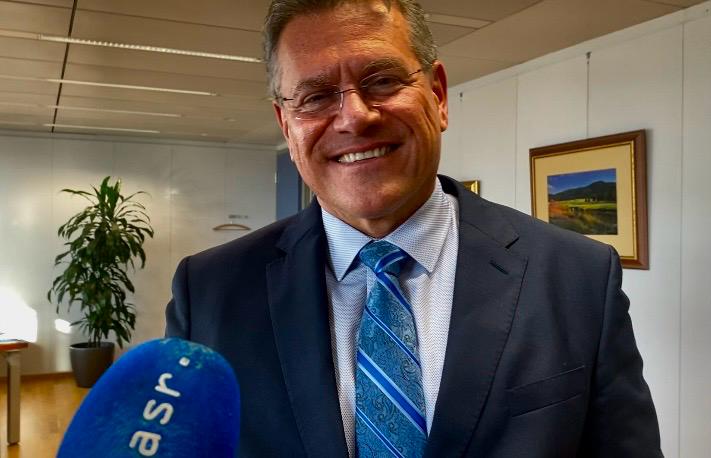
Brussels – The EU’s free trade agreement with the Mercosur association countries is slated for signing at the start of 2026. The European Commission (EC) aims to finalize a similar agreement with India and propose a significant reform of the customs union. Throughout the year, trade negotiations will focus on partners from Asia and the Pacific, as stated by European Commissioner for Trade and Economic Security Maroš Šefčovič during a meeting with Slovak journalists in Brussels, as reported by TASR.
Maroš Šefčovič views the Mercosur agreement, which represents the largest trade pact ever signed by the EU, as a top priority for the new year. He noted its size is four times that of the agreement with Japan.
“This involves exclusive access to critical minerals and substantial opportunities for the engineering and agricultural sectors, where tariffs are often reduced from over 40 percent to zero,” he explained.
Šefčovič expressed optimism that in January, the EC would finalize two key items: negotiations on a free trade agreement with India and a comprehensive reform of the customs union, which would be the largest since 1969. “We aim to utilize digital methods and joint data assessments from customs reports to ensure that EU citizens receive parcels that meet all safety and quality standards,” he elaborated.
Currently, he believes the free trade agreement with India is the most advanced. “A significant milestone for us is the end of January when the EU will be the official guest at India’s National Day. This would be an excellent opportunity to finalize the agreement, despite the complexities and existing gaps we need to address,” the Slovak European Commissioner remarked.
He also confirmed the EC’s progress on a “breakthrough” trade agreement with the United Arab Emirates, which, if successfully navigated, could facilitate accelerated negotiations for a regional trade pact with Gulf nations.
“In the next two years, we aim to conclude free trade negotiations with the Philippines, Thailand, and Malaysia, encompassing most ASEAN members,” he stated.
Šefčovič sees the establishment of a strategic partnership with Pacific countries as a novel component of the EU’s trade strategy. This partnership includes 12 countries in the Pacific region, with the United Kingdom also participating. “Together, we would represent 30 percent of global GDP and up to 30 percent of world trade, marking a significant force in shaping future trade policy frameworks, reforming the World Trade Organization, and providing new opportunities for our entrepreneurs and exporters,” Šefčovič outlined the EU’s key trade objectives moving forward. (5 January)






Leave a Reply