Large Nations Frequently Secure EU’s Coveted Single Market Role

France’s Emphasis on Internal Market Policy Sparks EU Debate

France’s focus on internal market and industry development within the European Union has often been seen as a double-edged sword. “The perception is sometimes that this French focus … is really just a cloaked way of building its own French industrial champions,” noted Nicolas Tordoir, a European policy expert. However, Tordoir was quick to add that such criticism isn’t “entirely fair” and that France’s industry-driven approach could serve as a catalyst for boosting the EU’s overall competitiveness.

Still, these policies have drawn sharp criticism, particularly during recent policy disagreements. Central and Eastern European nations strongly opposed a set of trucker reforms deemed excessively protectionist. Dubbed the “Macron law,” the reforms were criticized for favoring Western European interests at the expense of the bloc’s eastern members. Similarly, France faced backlash for its push to develop an EU Capital Markets Union. This effort was widely interpreted as a move to strengthen the Paris-based European Securities and Markets Authority, further fueling accusations of self-interest.

France’s consistent spotlight on internal market and industrial portfolios has been a defining feature in an otherwise volatile era of EU Commission reshuffles. Over the past five years, this French strategy has stood out against several emerging patterns in portfolio assignments.

For example, critical trade responsibilities have predominantly gone to smaller member states, while larger nations like France have maintained their grip on single market portfolios. Meanwhile, portfolios related to oceans and maritime affairs have largely been handed to Mediterranean nations, with Lithuania’s 2004 assignment as the only exception.

Smaller EU member states and recent joiners—such as Malta, Cyprus, Bulgaria, Hungary, and Slovenia—tend to be assigned what are viewed as weaker or less prominent portfolios, including those focusing on development, equality, culture, multilingualism, research, crisis response, health, and social affairs. However, unpredictable events can elevate the importance of these roles. For instance, Greek Commissioner Stella Kyriakides, responsible for health, found herself thrust into the spotlight during the COVID-19 pandemic, showcasing how “weaker” portfolios can transform into critical arenas under certain circumstances.

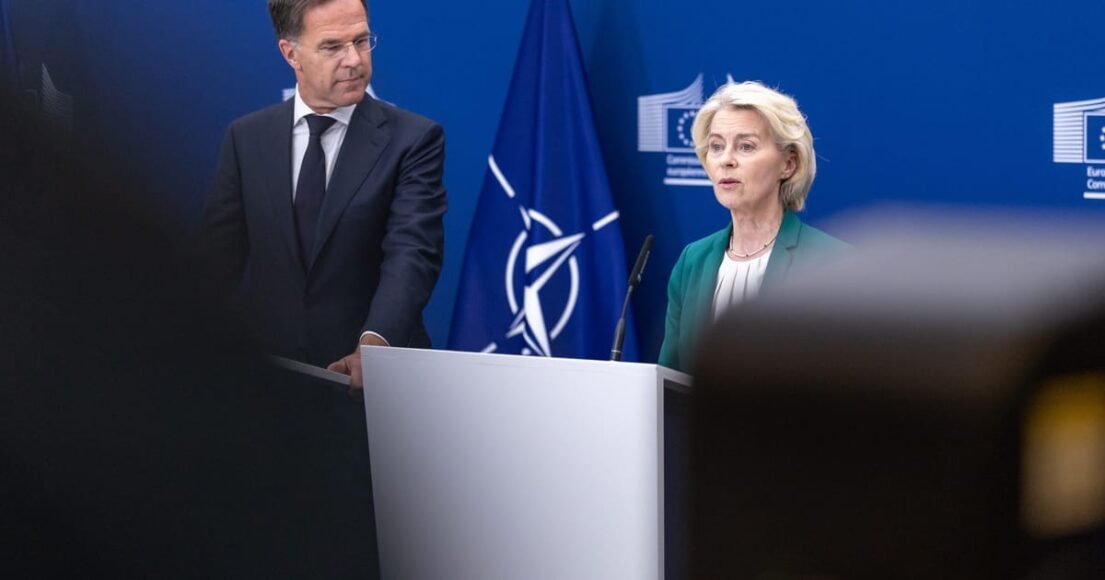
When European Commission President Ursula von der Leyen unveiled her team of commissioners in September, her claim that the lineup represented a “Commission of equals” met with disappointment in several EU capitals. France’s enduring influence—even as it prompts frustration among its peers—continues to highlight the complex dynamics of portfolio distribution and power within the European Union.

Comments

3 responses to “Large Nations Frequently Secure EU’s Coveted Single Market Role”

  1. Nessie Pork Avatar
    Nessie Pork

    Oh, look at France playing the EU like a finely tuned accordion—always managing to squeeze their own interests in while pretending to serenade the rest of us. 🎶 Who knew internal market policies were just a fancy way to roll out the red carpet for their industrial glitterati? 🍷💼

  2. sass burst Avatar

    Oh, the French are at it again, trying to turn the EU into their very own boulangerie, serving up pastries while the rest of us munch on stale bread. 🍞 But hey, who doesn’t love a good “Macron law” to spice up an otherwise ordinary day of bureaucratic wrangling? 😂

  3. Friday Fox Avatar

    Oh, fantastic! Nothing says “unity” like one nation hogging the mic in the EU while the rest of us clap along like a bunch of trained seals. 🎉 I guess the French have taken “every man for himself” to a whole new level—cheers to that! 🍷

Leave a Reply

Your email address will not be published. Required fields are marked *

Last News

Irish Lawmaker Urges Stripe to Defy US Sanctions on UN Investigator Albanese

Irish Lawmaker Urges Stripe to Defy US Sanctions on UN Investigator Albanese

Sanctions placed on Albanese by the Trump administration, following her allegations against governments and corporations for being involved in genocide in Gaza, resulted in her and her family being cut off from U.S. banking, travel, and technology — including transactions by American intermediaries such as Stripe. The Israeli government has firmly denied allegations of genocide.
“I understand, as

Read More

Ignitis Group Finalizes Sale Transaction

Ignitis Group Finalizes Sale Transaction

AB “Ignitis grupė“ (the Group) announces the completion of selling 49% of its shares in UAB Vilniaus kogeneracinė jėgainė (Vilnius CHP). The 49% stake was purchased by Quaero European Infrastructure Fund III, managed by Quaero Capital SA (Quaero Capital).
The transaction finalized on 30 March 2026, following approval from the Group’s General Meeting of Shareholders on 25 March 2026, regulat

Read More

Poland to Keep Patriot Air Defense Systems, Not Diverting to Gulf

Poland to Keep Patriot Air Defense Systems, Not Diverting to Gulf

The report from Polish daily Rzeczpospolita on Tuesday claimed that U.S. officials requested Poland to relocate one of its Patriot batteries to the Middle East due to increased pressure on air defense resources amid Iran’s retaliatory drone strikes on U.S. Gulf allies.
A senior defense official from a NATO country, speaking anonymously, clarified that Poland was not specifically targeted by

Read More

OSCE Evaluation of France: Secularism, Security, and Minority Issues

OSCE Evaluation of France: Secularism, Security, and Minority Issues

A Rigorous Assessment in Paris
PARIS — In June 2025, a delegation of officials from the Organization for Security and Co-operation in Europe (OSCE) arrived in Paris. Led by Ambassador Evren Dağdelen Akgün, Rabbi Andrew Baker, and Professor Wolfgang Palaver, the Personal Representatives of the OSCE Chair-in-Office undertook a comprehensive mission to assess the state of freedom of religion or beli

Read More

Sudan’s Worsening Conflict: Drones, Foreign Aid, and the Road to Accountability

Sudan’s Worsening Conflict: Drones, Foreign Aid, and the Road to Accountability

The conflict in Sudan has persisted for nearly three years, with United Nations agencies declaring it the globe’s largest humanitarian crisis, characterized by “sustained violence” and “restricted humanitarian access.” Civilian casualties are rising due to an increased use of advanced weaponry, notably drones. By March 24, 2026, drone strikes had killed over 500 civi

Read More

Are Fuel Cuts Being Considered Again?

Are Fuel Cuts Being Considered Again?

Europe may be on the brink of another energy crisis, and Brussels is now suggesting a politically sensitive measure: reducing fuel consumption.
Host Zoya Sheftalovich talks with POLITICO’s senior EU politics editor Ian Wishart about a warning from Brussels indicating a potential need to decrease fuel usage, amid rising concerns of a prolonged disruption caused by the conflict in Iran.
They also fo

Read More

Iran: Fragmented Power Structure and Rising Tensions in State Leadership

Iran: Fragmented Power Structure and Rising Tensions in State Leadership

Au centre du système iranien, il y a une fracture identifiée depuis longtemps par les observateurs, mais que les autorités s’efforcent de maîtriser : la tension croissante entre les institutions politiques civiles et le puissant Corps des gardiens de la révolution islamique.
Cette tension n’est ni nouvelle ni accidentelle. Elle est ancrée dans la structure même du régime. Cependant,

Read More

Hungarian Election Reaches Boiling Point in Final Stages

Hungarian Election Reaches Boiling Point in Final Stages

“Independent and critical outlets operate alongside a much larger pro-government media sector,” stated the report.
Kovács dismissed the OSCE’s concerns, labeling its warnings about government media influence as a “political opinion” and questioning the credibility of its findings.
As the campaign heats up and polls indicate that the opposition Tisza Party might win, a

Read More

UN Relief Chief Condemns Middle East War’s ‘$1 Billion-a-Day’ Cost

UN Relief Chief Condemns Middle East War’s ‘$1 Billion-a-Day’ Cost

The UN emergency relief chief, Tom Fletcher, warned of the rapid spread of violence causing mass displacement and economic shocks, stating, “We’re seeing the consequences spread faster than we can respond”.
In Geneva, the UN’s top humanitarian aid official called this a moment of grave peril and stated that without more support, “millions of people will die”.
$14 Billion Needed
The $23 billion

Read More

Pourquoi les partis de centre-gauche en Europe enchaînent les revers électoraux

Pourquoi les partis de centre-gauche en Europe enchaînent les revers électoraux

Le commissaire européen responsable du dossier, Dan Jørgensen, prévient les États membres : ils doivent aborder sérieusement la question de l’accès au logement, sous peine de voir le pouvoir passer aux mains des populistes d’extrême droite.

Read More