Khartoum’s Silent War: Reimposing Religious Restrictions on Women During Civil Conflict

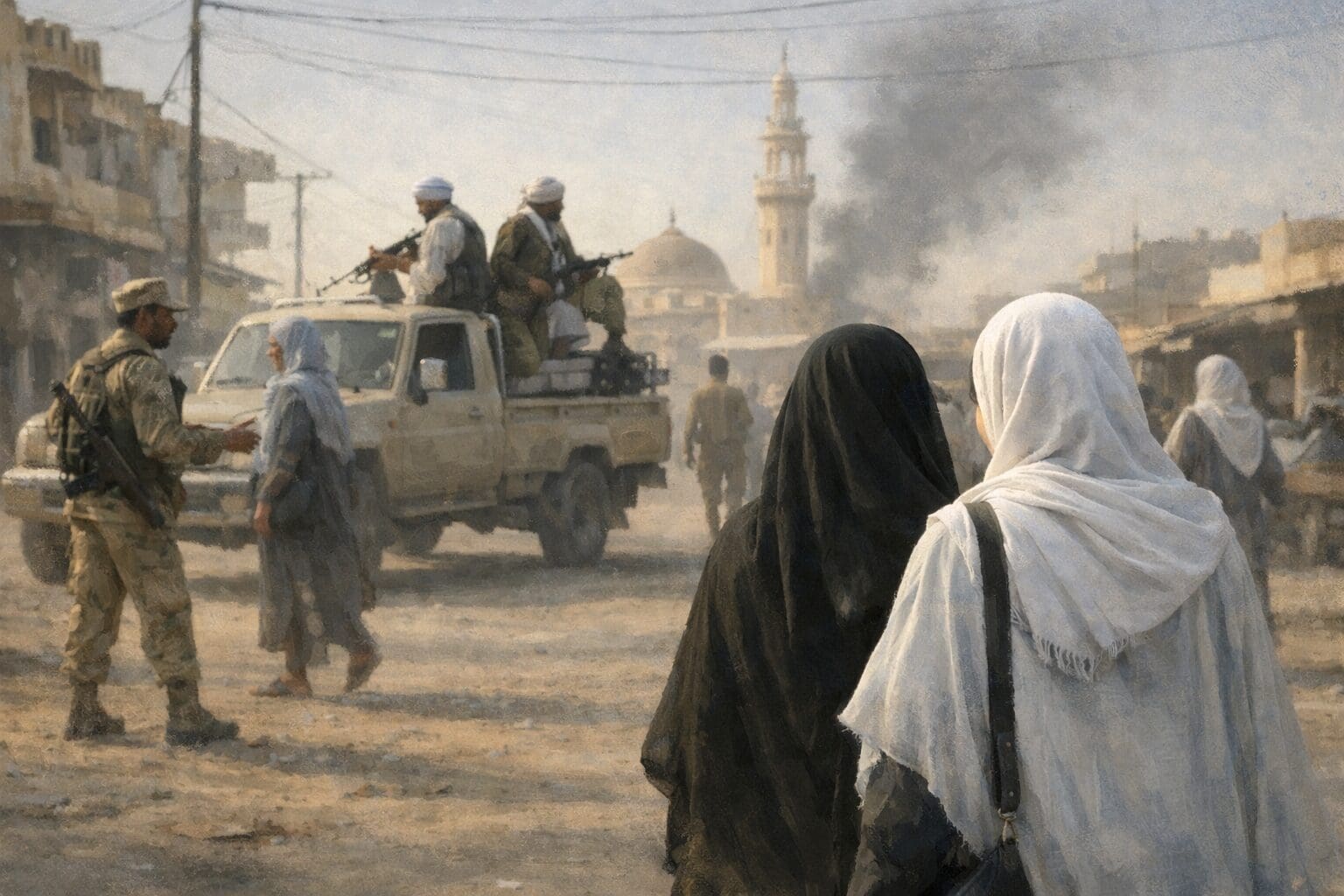
Brussels – Amid the artillery exchanges between the Sudanese Armed Forces (SAF) and the Rapid Support Forces (RSF), a quieter conflict is changing the lives of Khartoum’s residents. According to a recent Mediapart investigation titled “In Khartoum, women are victims of the return of Islamists,” there is a rise in Islamist influence in the capital. The report highlights the targeted harassment and coercion of women, signaling a regression in human rights, particularly regarding freedom of religion or belief and women’s bodily autonomy in a fractured state.

The events reveal a phenomenon termed the “return of Islamists.” As the government seeks support against the RSF, it seems to be reintegrating elements of the former regime’s ideological apparatus. This is not just political but social, manifesting in the enforcement of moral codes challenged after the 2019 revolution. For women in Khartoum, this means renewed surveillance and intimidation, with public spaces increasingly regulated by strict religious interpretations.

Eyewitness accounts indicate women face pressure to adhere to conservative dress codes and behavioral norms, enforced often by security forces or aligned militias, creating fear. Historically, targeting women is a tactic to control the social fabric. In international law terms, these actions violate fundamental human rights.

The legal framework on Freedom of Religion or Belief (FoRB) explicitly protects against coercion. The International Covenant on Civil and Political Rights (ICCPR), Article 18, includes the freedom “to have or to adopt a religion or belief of [one’s] choice.” The UN Human Rights Committee clarifies that this freedom prohibits state coercion to adopt a particular belief.

Khartoum’s situation contradicts these obligations. When state authorities enforce religious dress codes or conduct under threat, it violates women’s rights to manifest their beliefs—or lack thereof. Coercing citizens into specific religious interpretations breaches the ICCPR and the Universal Declaration of Human Rights (UDHR), Article 19, which protects freedom of opinion and expression.

The “Faith in UN Human Rights Treaties” analysis shows that using religion to enforce gender conformity is a perversion of FoRB rights. Treaties protect individuals from the state, not empower the state to enforce piety. Khartoum’s dynamics invert this purpose, using religious mandates for political and social oppression.

This imposition of religious conformity warrants broader analysis of how such policies take root. As Hannah Arendt noted, ideological enforcement can occur through ordinary individuals executing orders without critical reflection. Enforcing morality laws doesn’t require a grand decree but relies on security officials and local groups believing they restore order. This “ordinariness” of perpetrators—regular police or soldiers enforcing a dress code—makes rights erosion more insidious, posing a threat not through anarchy but suffocating order.

The psychological impact on women is significant, as the threat of punishment for non-compliance forces subjugation, stripping them of agency. This dynamic is worsened by ongoing conflict, displacing the rule of law. In this vacuum, extremist ideologies fill the gap, and religious strictures enforce power over vulnerable civilians.

These actions must be analyzed under the Convention on the Elimination of All Forms of Discrimination Against Women (CEDAW). Despite Sudan’s reservations, the principle of non-discrimination and freedom from coercion remains an international benchmark. Targeting women for religious enforcement is sex-based discrimination that cultural or religious relativism cannot justify. Reports by the UN Special Rapporteur on freedom of religion or belief affirm that manifesting one’s religion does not include imposing it on others.

The “return” of Islamist elements raises questions about Sudan’s future. If military leadership appeases religious hardliners as a war strategy, long-term civil liberties consequences are dire. Normalizing religious policing sets a precedent hard to dismantle post-conflict, risking governance that views the female body not as individual possession but state-regulated.

International observers and human rights bodies must address this ideological shift beyond immediate humanitarian crises. Defending women’s rights in Khartoum is tied to defending FoRB. Allowing coercive religion on women negates their personhood and legal standing under international covenants.

Reports from Khartoum detailing women’s victimization by Islamist factions reveal critical international human rights law violations. Coercion into religious observance violates the ICCPR and undermines UDHR principles. As the conflict continues, eroding these fundamental freedoms is a parallel war, fought over individual autonomy against ideological absolutism. The international community must recognize protecting Sudan’s women requires not just aid but a steadfast defense of their right to live free from religious compulsion.

Comments

2 responses to “Khartoum’s Silent War: Reimposing Religious Restrictions on Women During Civil Conflict”

  1. Commando Avatar
    Commando

    Just what we needed, a charming revival of medieval values amidst modern conflict—who knew enforcing dress codes could be the next big thing in “civilized” warfare? 🤦‍♂️ You’d think we were trying to win a fashion contest instead of a battle for basic human rights!

  2. Sweetness Avatar
    Sweetness

    Just what every woman dreams of in a civil war—strict dress codes and a side of intimidation! Who needs freedom when you can have the “joy” of religious policing? 😏

  3. Heartbreaker Avatar
    Heartbreaker

    Just what Sudan needs, right? Another “brilliant” idea to keep the ladies on a tight leash while the world watches the circus from afar. 🤦‍♂️

Leave a Reply

Your email address will not be published. Required fields are marked *

Last News

Khartoum’s Silent War: Reimposing Religious Restrictions on Women During Civil Conflict

Khartoum’s Silent War: Reimposing Religious Restrictions on Women During Civil Conflict

Brussels – Amid the artillery exchanges between the Sudanese Armed Forces (SAF) and the Rapid Support Forces (RSF), a quieter conflict is changing the lives of Khartoum’s residents. According to a recent Mediapart investigation titled “In Khartoum, women are victims of the return of Islamists,” there is a rise in Islamist influence in the capital. The report highlights the targeted harassme

Read More

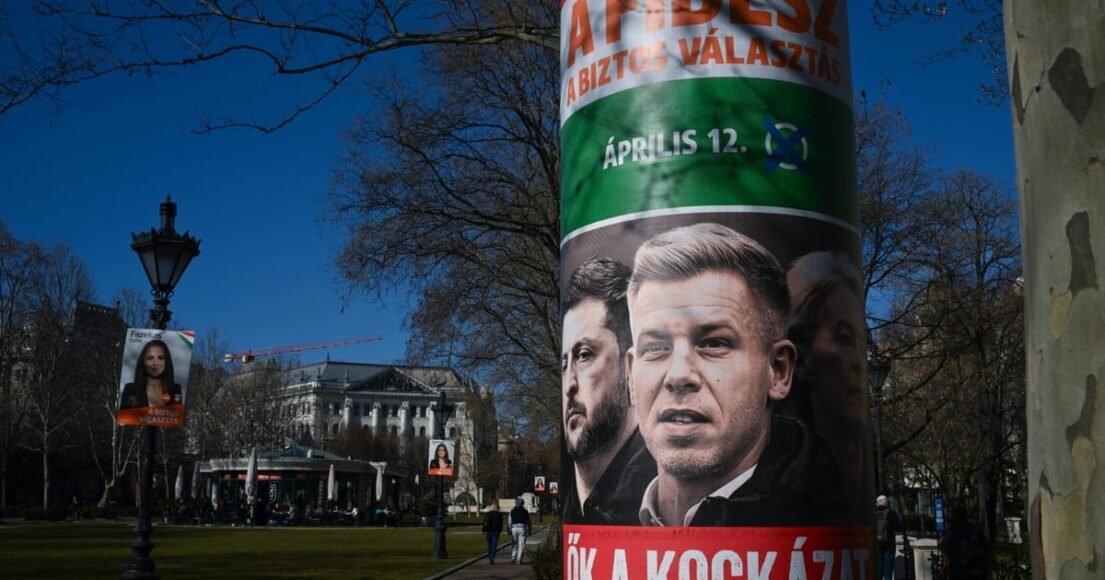
Hungary’s Election Campaign Set to Intensify

Hungary’s Election Campaign Set to Intensify

Hungary’s election campaign is poised to become increasingly contentious as candidates are finalized. Analysts anticipate a surge in smear tactics and influence operations.

Read More

Von der Leyen Stands Firm Amid Energy Crisis Criticism

Von der Leyen Stands Firm Amid Energy Crisis Criticism

“There is criticism and concerns from member states, but at the leaders’ retreat last month in the Belgian countryside, they asked the Commission to devise solutions on energy,” said an EU official familiar with the talks, granted anonymity to speak candidly, as were others quoted in this piece.
Described as an orientation debate, the meeting was a chance for commissioners to exchange

Read More

European Parliament Event Investigates the Goals of the Muslim Brotherhood in Europe and Beyond

European Parliament Event Investigates the Goals of the Muslim Brotherhood in Europe and Beyond

Today, an event titled ‘Safeguarding Europe’ took place inside the European Parliament, organized by IMPAC Belgium, the ECR Group in the European Parliament, and the European People’s Party. The gathering in Brussels brought together policymakers, experts, and stakeholders to discuss the objectives of the Muslim Brotherhood and its affiliates within European societies, democratic institutions, an

Read More

All March EU Meetings in Cyprus Rescheduled or Made Virtual

All March EU Meetings in Cyprus Rescheduled or Made Virtual

A Cypriot official stated that due to regional developments, there were flight disruptions and cancellations not only to Cyprus but also to other countries in the area, necessitating flexibility.

Read More

On Day Seven of Middle East Conflict, Suffering Persists

On Day Seven of Middle East Conflict, Suffering Persists

In the wake of Israeli and US bombing in Iran, counter-strikes across the Middle East continue, causing significant disruption in Lebanon. Humanitarians report that hundreds of shelters are at capacity, as Beirut’s suburbs have largely emptied.
Ravina Shamdasani, spokesperson for the UN human rights office, stated, “Israeli military incursions into southern Lebanon, displacement orders for Beiru

Read More

Farage Travels to Mar-a-Lago Amid Deteriorating Starmer-Trump Relations

Farage Travels to Mar-a-Lago Amid Deteriorating Starmer-Trump Relations

“President Trump has nearly grasped the deal — nearly — but I’ll be dining at Mar-a-Lago tomorrow night to emphasize that it was the worst deal in history,” Farage stated at a “Save Chagos” boat party in London on Thursday night.
Farage’s visit itinerary has not been publicly disclosed by his party, and it’s unclear who he will dine with. Farage aims to secure a meeting with senior officials

Read More

EU’s Gender Equality Champion Awards: When Fairness Improves Science

EU’s Gender Equality Champion Awards: When Fairness Improves Science

In 2024, researchers at the Jožef Stefan Institute (JSI) in Slovenia recognized the benefits of gender-balanced research.
That year, JSI’s space medicine lab, collaborating with the European Space Agency, was focusing on astronauts’ health but only using male subjects. Meanwhile, US astronaut Sunita Williams extended her stay on the International Space Station.
“The lead resea

Read More

Poland Anticipates US Weapons Delays Due to Iran Conflict

Poland Anticipates US Weapons Delays Due to Iran Conflict

The U.S. and Gulf countries are combating Iranian missiles and drones primarily with Patriot PAC-2 and PAC-3 interceptor missiles. U.S. officials have warned that this could deplete American stockpiles.
This situation is also impacting delivery schedules. According to the Swiss press, delivery of Patriot air defense systems to Switzerland will be further delayed due to the Middle East conflict.
Ku

Read More