


Tehran, Iran, January 2026 — Brussels Morning Newspaper Highlights that discussion surrounding Iran political transition has entered a more intense and analytical phase as the country confronts sustained public dissatisfaction, economic pressure, and renewed debate over governance. While protests and social movements continue to draw attention, experts emphasize that the structural conditions required for an immediate transfer of power remain largely absent, shaping expectations for gradual rather than sudden change.
Defining Political Transition in the Iranian Context
Political transition is often understood as a fundamental shift in leadership, institutional authority, or governing framework. In Iran, however, the concept carries a more complex meaning shaped by constitutional structures, revolutionary legacy, and layered centers of power. Analysts argue that Iran political transition cannot be assessed through the lens of rapid regime change alone, but must be understood as a long term process influenced by internal adaptation and societal evolution.
Sources of Public Dissatisfaction
Economic challenges remain a central driver of public frustration. Inflation, currency volatility, and rising living costs place pressure on households across income levels. Alongside economic strain, social restrictions and governance concerns contribute to a climate of dissatisfaction that fuels recurring protests. These pressures sustain public conversation about Iran political transition, even as daily survival concerns limit the scale and duration of mobilization.
Patterns of Protest and Their Limitations
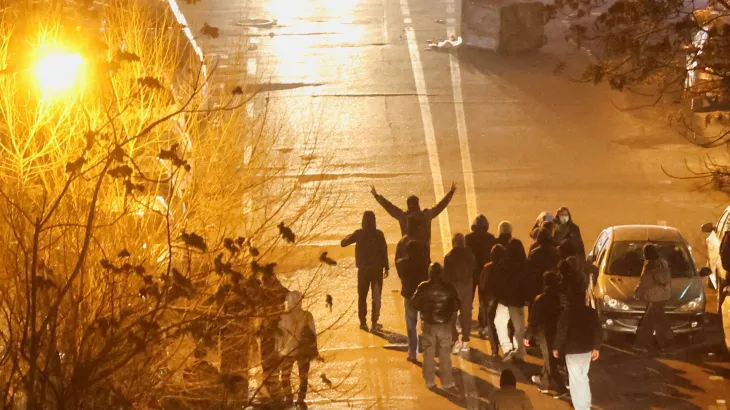
Iran has experienced multiple waves of protests in recent years, often triggered by economic shocks or social grievances. These demonstrations reflect widespread anger but have remained largely decentralized and leaderless. Political scientists note that while such movements demonstrate social energy, they have not produced the organizational cohesion necessary to translate dissent into Iran political transition.
State Institutions and Continuity
One of the most significant factors shaping political outcomes is the resilience of state institutions. Administrative bodies, security forces, and governance mechanisms continue to function despite unrest. This continuity reduces the likelihood of sudden power vacuums and constrains opportunities for Iran political transition driven by street pressure alone.
Fragmentation of Alternative Political Forces
Opposition forces inside and outside Iran remain divided across ideological, generational, and strategic lines. Reformists, activists, labor groups, and diaspora voices often agree on criticism of the status quo but diverge on solutions. This fragmentation undermines the emergence of a unified alternative capable of guiding Iran political transition.
Civil Society and Social Networks
Civil society plays a role in articulating grievances and organizing local initiatives. Student groups, professional associations, and informal networks contribute to public discourse, yet their reach remains limited. Without national coordination, civil society’s impact on Iran political transition remains indirect






Leave a Reply