


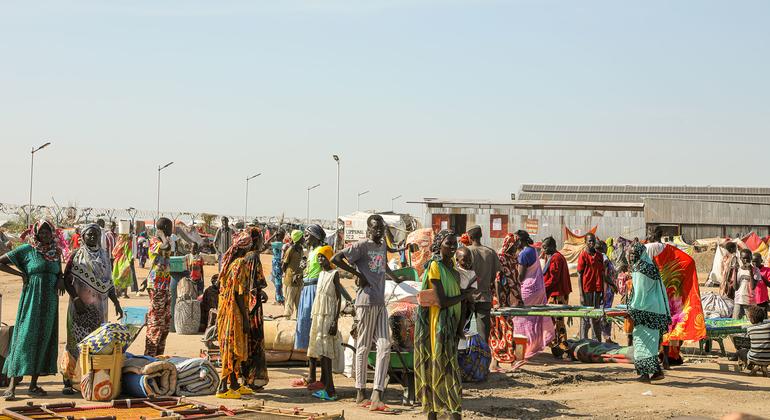
Surge in South Sudan Arrivals Amid Escalating Conflict
Over 20,000 individuals crossed into South Sudan last week, marking a sharp increase in daily arrivals that have tripled compared to previous weeks. Many of these individuals are South Sudanese refugees fleeing from camps in Sudan’s White Nile State, where violent clashes between government forces and opposition militias persist.
Most of the displaced are women and children, according to the UN Refugee Agency (UNHCR), which highlighted the devastating toll on vulnerable populations.
Mounting Humanitarian Concerns
UNHCR spokesperson Olga Sarrado described the situation as “extremely worrying,” noting that some refugees are fleeing due to immediate violence, while others fear worsening conditions in the near future. “Our teams – UNHCR and partners – are on the ground, but the challenges in providing humanitarian assistance remain significant,” she added.
Refugees have been arriving at the main Joda border crossing, as well as more remote, informal entry points that are difficult to access. The influx of displaced individuals has created urgent demand for life-saving aid, particularly water and healthcare, as the region grapples with an ongoing cholera outbreak.
—
Digital Transformation Cuts Demand for Paper and Wood
The global shift to digital media has triggered a steep decline in the trade of wood and paper products, according to a report from the UN Food and Agriculture Organization (FAO). After record-breaking production in 2021 and 2022, the paper market continued its downward trend last year.
Industry Contraction
In 2023, global trade in wood and paper products fell by 12%, with a $64 billion drop in exports, totaling $482 billion. The FAO’s “Global Forest Products Facts and Figures” report revealed a 3% contraction in paper and paperboard production, as printed materials are increasingly replaced by digital alternatives. Only wood-based panels showed marginal growth.
Zhimin Wu, Director of FAO’s Forestry Division, attributed the decline not only to digitalization but also to supply chain disruptions, diminished consumer demand, and trade restrictions.
—
Haiti: Gang Violence Displaces Thousands
Haiti’s capital, Port-au-Prince, remains gripped by gang violence, forcing over 4,500 civilians to flee their homes between December 6 and 8. The UN reports that the total number of displaced people in the country has now surpassed 700,000.
Humanitarian Relief in Crisis
“The activities of armed gangs continue to disrupt lives, particularly among the most vulnerable,” said UN Spokesperson Stéphane Dujarric during a briefing. Despite security challenges, humanitarian aid efforts persist.
In the first week of December alone, the World Food Programme (WFP) distributed over 100,000 hot meals to 24,000 displaced individuals across four sites in Port-au-Prince. The International Organization for Migration (IOM) has delivered water to roughly 14,000 people at six sites and provided medical care and mental health support to more than 12,000 displaced individuals.
Reopening of Maternal Healthcare Facility
Amid the crisis, a significant breakthrough occurred in maternal healthcare. The Isaie Jeanty maternity ward in Cité Soleil, one of the city’s most dangerous neighborhoods, reopened after being closed for nine months due to insecurity. The UN Population Fund (UNFPA) is now equipping the facility with essential medicines and supplies, ensuring critical care for expectant mothers in the beleaguered community.
This story exemplifies the resilience of humanitarian efforts in the face of escalating crises across multiple regions. As conflict, displacement, and economic shifts continue to challenge vulnerable populations, the need for global support remains urgent.









Leave a Reply