



Ghent (Eurotoday) – Ghent’s Orsi Academy (Merelbeke-Melle) and Nvidia have developed an AI tool for surgical training, which analyzes real-time images and assists surgeons. This marks Belgium’s first remote surgery from Ghent to Shanghai (9,000 km). Pieter De Backer was involved.
The Orsi Academy in Ghent, Belgium, has partnered with Nvidia to develop an advanced AI tool for surgical training. This innovative technology debuted at a major international conference, allowing surgeons and medical professionals to engage with an AI-powered chatbot during live procedures. Officials explained that this intelligent system analyzes real-time surgical images and provides tailored explanations to users at all experience levels.
“We first tested the tool during this congress,” says Pieter De Backer of the Orsi Academy from Merelbeke-Melle.
Is Ghent’s Orsi & Nvidia AI transforming surgery on a global scale?
According to officials, the AI tool developed by Orsi Academy and Nvidia is more than just a source of information. This groundbreaking system enables trainees and surgeons to ask questions during procedures without interrupting the operation.
They noted that the AI analyzes live footage and offers insights that enhance decision-making and patient safety. Officials emphasized that this is a significant step in integrating AI into medicine, with potential applications in robotic surgery, diagnostics, and remote education.
“It can certainly be a tool for the team during long operations, and at the same time it helps people in training or patients who have questions afterwards.”
Pieter De Backer, Orsi Academy
The system is designed to understand even a child’s language. In a Belgian first, a long-distance operation was conducted using a robot connected to an operating room in Shanghai, China. The robot can be controlled from Ghent, Belgium, through a visor, control panel, and pedals.
Officials stated that with a stable internet connection, latency is minimal, allowing specialists to perform precise operations remotely. The initial test was conducted on a chicken leg, as the technology is not yet certified for human procedures.
“We work with nanomaterial over a distance of 9,000 kilometers.”
Pieter De Backer
According to Pieter De Backer, this technology could enable patients in remote areas to receive treatment from top surgeons without the need to travel. It also allows specialists to operate in multiple locations. However, some challenges remain. A strong, reliable internet connection is essential, and researchers are working on solutions to prevent connectivity issues. Additionally, official regulatory approval is required before the technology can be implemented in hospitals.
Comments
Last News

By-Election Set for Keir Starmer’s Former Seat on Oct. 8
In 2024, Starmer secured the seat with an 11,572 majority but encountered strong competition from a left-wing independent candidate and the Greens.
Green Leader Zack Polanski has put himself f

Infantino’s Attendance in Doubt as FIFA U-20 Women’s World Cup Begins in Poland
Katowice, Poland, 4 September (Eurotoday Newspaper) – The FIFA U-20 Women’s World Cup begins in Poland on Saturday, with around 15,000 spectators expected for the opening matches in Katowice, although FIFA President Gianni Infantino’s attendance remained uncertain on Friday.
Hosts Poland face Argentina on the opening day, while Mexico play tournament debutants Benin in the other Group A fixture

Sweden’s Inflation Remains at 0.7%
Sweden’s central inflation measure stayed well below the central bank’s target in August, according to preliminary figures released on Monday, intensifying the discussion over interest rates and household finances less than a week before the national election.
The annual inflation rate monitored by CPIF, wh

Musk Celebrates, Tusk Despairs: Global Reactions to AfD’s Election Victory
Allies across Europe celebrated. Italy’s Deputy Prime Minister Matteo Salvini congratulated his “friend” Weidel, saying: “Another Europe is possible.” Austri

Reform UK Officials Resign Amid Electoral Law Allegation in Birmingham
Birmingham, 4 September (Brussels Morning Newspaper) – Two senior Reform UK figures have temporarily stepped down after an undercover investigation raised Reform UK funding claims involving political polling allegedly financed by a foreign donor. The party denies wrongdoing and has launched an internal investigation.
The development came as Reform UK opened its annual party conference in Birming

Taiwan Travelogue Discovers Strength in Dining
Yáng Shuāng-zǐ turns food, translation and thwarted intimacy into a subtle study of colonial rule
Taiwan Travelogue, translated by Lin King, is an enchanting historical novel where abundant meals reveal a stern investigation into empire. Through the bond between a Japanese writer and her Taiwanese interpreter, Yáng Shuāng-zǐ illustrates how affection can be sincere yet distorted by privilege, cl

Germany’s Far-Right Shockwave
As Europe reacts to the AfD’s win, Zoya Sheftalovich and Nick Vinocur engage with Head of Playbook Germany, Hans von der Burchard, t

UK Construction Decline Worsens with Sharp Drop in Housebuilding, London
London, 4 September (Eurotoday Newspaper) – Britain’s construction sector contracted for a 20th consecutive month in August as a sharp deterioration in housebuilding outweighed modest improvements elsewhere in the industry. The latest UK construction PMI fell to 44.3, signalling that the sector remains under significant pressure.
The S&P Global UK Construction Purchasing Managers’ Index dec
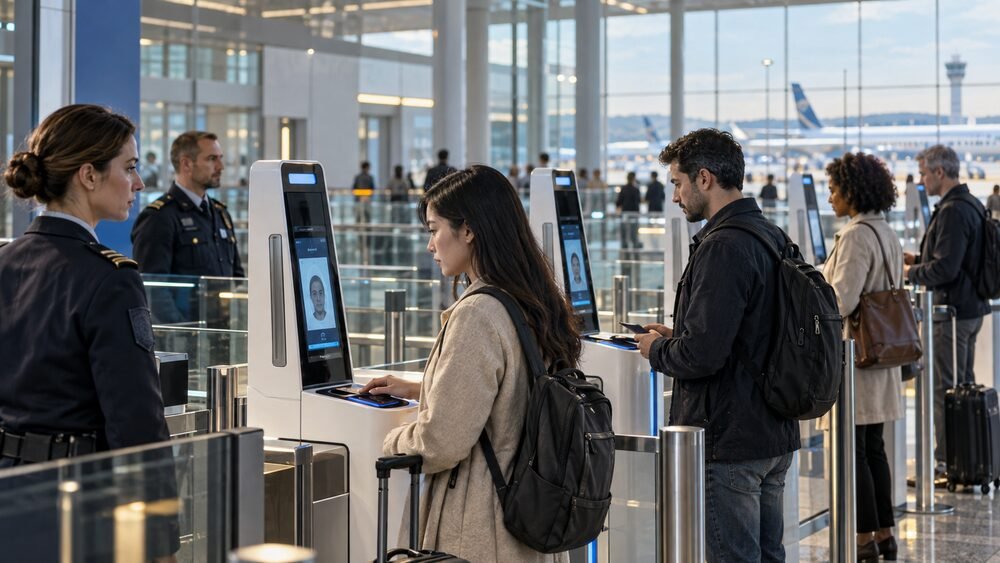
Expiration of EU Biometric Border Safeguard
AITETAI-generated illustrationTransparency information
AI-generated images: One or more images accompanying this report were generated or substantially modified using artificial intelligence. They are illustrative and should not be understood as documentary photographs unless explicitly stated otherwise.
Schengen authorities face pressure to enforce digital checks consistently without allowi

Nasdaq and S&P 500 Futures Climb Before Key US Jobs Report
New York, 4 September (Brussels Morning Newspaper) – US stock futures edged higher on Friday, led by technology shares, as investors awaited the August employment report for fresh evidence about the strength of the American labour market and the Federal Reserve’s next interest-rate decision.
Nasdaq 100 futures were up 0.42% at 4.24am ET, while S&P 500 futures gained 0.06%, according to Reut
Leave a Reply