



New police tactics have significantly decreased crossings from northern France, but humanitarian groups caution that more beach confrontations could increase danger for migrants and asylum seekers.
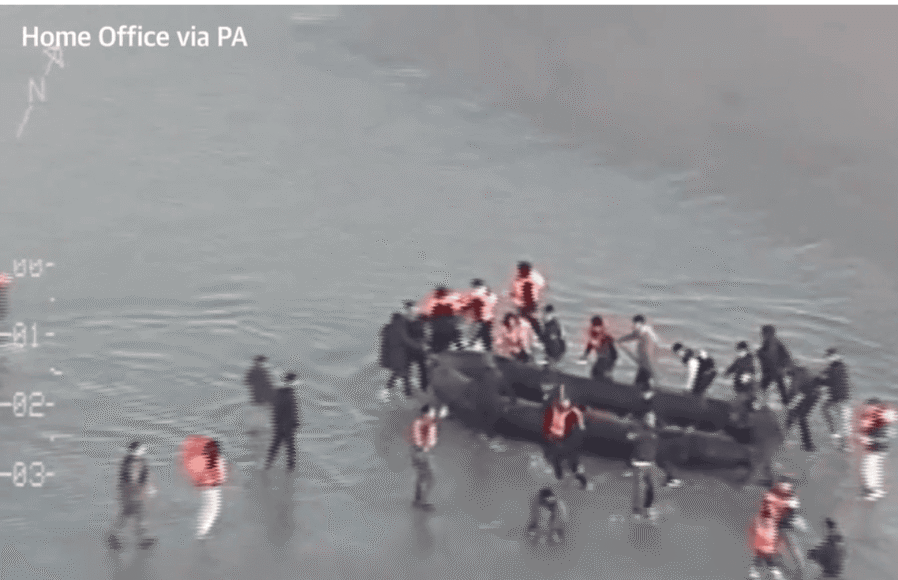
French police are employing more forceful methods to prevent small boats from leaving for the UK, with new data showing a significant drop in Channel crossings. Video released on 21 August shows officers clashing with individuals on a northern French beach, using incapacitant spray and cutting an inflatable boat.
The operation underscores a key tension in Europe’s evolving migration policy: while governments claim that stronger enforcement is disrupting smuggling networks and saving lives, humanitarian organizations warn that increased shoreline pressure could lead to riskier journeys.
Confrontation on the French coast
The footage depicts a group wearing lifejackets trying to protect a dinghy as French officers approach. Some group members are seen throwing objects at police, who respond with incapacitant spray before an officer cuts the inflatable vessel, rendering it unusable.
This incident occurs as France intensifies efforts to halt departures before overcrowded boats reach the Channel.
French authorities prevented 185 small-boat crossing events from 27 April to 2 August, involving more than 4,300 attempted journeys. Officials state that 61% of recorded events in that period were stopped.
The definition of a prevented “event” extends beyond stopping a boat filled with passengers at the waterline. It can include vessels that are stopped from departing, maritime equipment discovered by authorities, and arrests of individuals suspected of facilitating crossings.
Britain’s official small-boat statistics also note that prevention figures are based on provisional French operational data, which can be revised later.
For the week ending 16 August, official figures recorded 405 people reaching Britain in three boats, while French authorities reported preventing 270 people and 16 crossing events.
A £660 million enforcement partnership
The changing tactics are a result of the new UK-France agreement, which increased British funding for French border enforcement, surveillance, intelligence, and anti-smuggling operations.
Under the program, two specialist French units were deployed to northern France, adding 125 officers and reservists to operations aimed at stopping launches and pursuing smuggling networks.
The British government has portrayed the decrease in crossings as evidence of effective cooperation.
Home Secretary Shabana Mahmood claims that the partnership is preventing crossings before they occur and disrupting the business model of criminal groups organizing the journeys. Border officials emphasize the challenging circumstances for French officers, where interventions can become dangerous for both police and individuals attempting to board overloaded boats.
The drop is notable. Nearly 15,900 people had crossed the Channel in small boats by the latest figures cited on Friday, around 43% fewer than at the same point in 2025.
However, fewer boats do not necessarily mean that every part of the route is safer.
Smugglers respond with larger boats
Smuggling networks have adapted by carrying more people in individual vessels.
Recent crossings have involved boats with over 100 passengers, increasing risks of engine failure, fire, collision, or sudden weather changes.
This development presents a new problem: fewer successful launches can still result in significant arrivals if each vessel carries more people.
It also highlights a recurring challenge in border enforcement. Closing one route or method often leads organized networks to alter their behavior rather than disappear.
This concern is increasingly acknowledged at the European level.
The European Commission has advocated for action across the entire Channel migration route rather than focusing solely on French beaches. Measures include cooperation with countries of origin and transit, action against smuggling networks, stronger border management, intelligence sharing, and efforts to disrupt the supply of boats and engines.
The Commission also emphasizes that the Channel route remains dangerous and continues to cause fatalities at sea.
Humanitarian groups warn of escalating danger
The stricter policing strategy has raised concerns among organizations assisting refugees and migrants in Calais, Dunkirk, and Grande-Synthe.
Humanitarian association Utopia 56 has documented clashes between police and those attempting crossings, arguing that intense pressure during embarkation can induce panic and prompt people to take greater risks.
The humanitarian issue extends beyond policing.
The UN Refugee Agency in France has repeatedly highlighted harsh conditions for refugees and migrants on the northern French coast.
Individuals traveling through the area originate from countries afflicted by war, persecution, and widespread violence, including Sudan, Eritrea, Afghanistan, Ethiopia, and Somalia.
UNHCR has called for improved access to asylum information and legal assistance in France, along with more safe and legal pathways, including family reunification.
Research in Calais and Dunkirk shows that many seeking to reach Britain cite international protection, family connections, employment prospects, and knowledge of English among their reasons.
Women, children, and families may face particular risks from smugglers, exploitation, and insufficient access to services.
Border control and protection cannot be separated
European governments face the legitimate challenge of dismantling criminal networks profiting from unsafe crossings. Boats carrying dozens or even hundreds through one of the world’s busiest shipping lanes pose a substantial danger.
However, the individuals





Leave a Reply