



The letter drew immediate backlash from his party: “I don’t like it. I can say that very clearly,” Saxony-Anhalt CDU Premier Sven Schulze told POLITICO’s Berlin Playbook Podcast on Thursday. “I think his approach is wrong. Definitely,” adding that he did not share Prange’s views “in any way.”
Regarding whether the mayor will remain a Christian Democrat, Schulze was non-committal: "We’ll deal with the issue after the election," he said. "Right now, it’s campaign time."

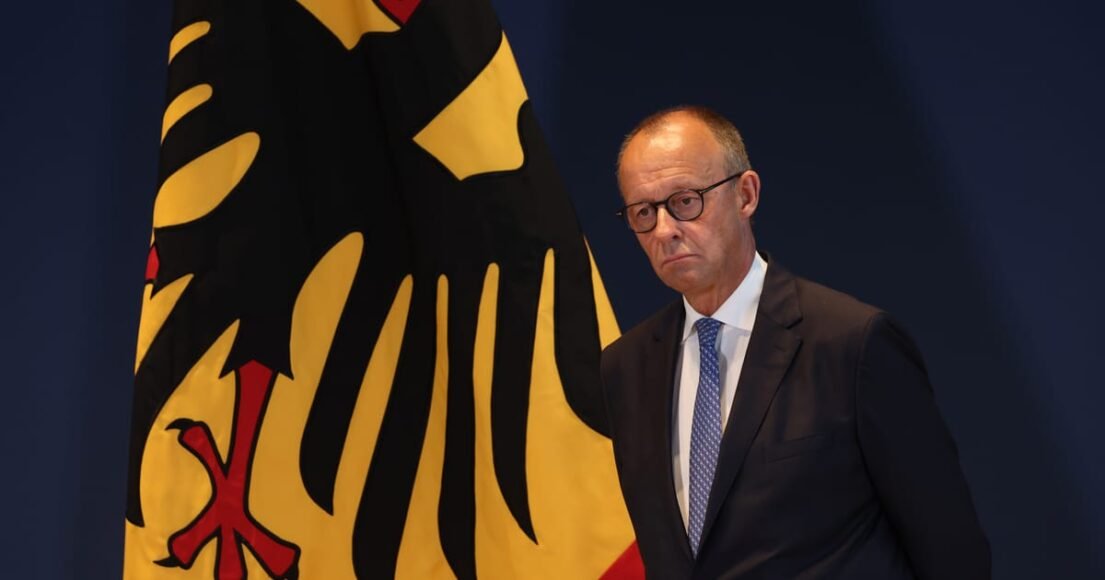
In an interview released earlier on Wednesday, Schulze had dismissed speculation about possible defections after the election: "No, someone switching from the CDU to the AfD will not happen," he said. While Prange hasn’t formally changed political allegiance, he expressed a desire for Chancellor Friedrich Merz to be "removed" as CDU leader and accused him of leading a party that is "giving up the conservative core of the Union."

This situation challenges the CDU at a critical time, as Merz struggles to uphold the country’s "firewall" against cooperation with the far right while AfD support surges across eastern Germany.

The AfD is polling between 41 and 43 percent in Saxony-Anhalt — nearly double the CDU’s 22 to 24 percent — positioning the far right to potentially govern alone. Merz continues to rule out cooperation with the AfD, but September’s elections will test that stance: Saxony-Anhalt votes on Sept. 6, followed by Berlin and Mecklenburg-Western Pomerania on Sept. 20.

The Axel Springer Global Reporters Network leverages the resources of the company’s newsrooms to deliver ambitious scoops, investigations, interviews, opinion pieces, and analysis. It enables journalists — including those from POLITICO, Business Insider, WELT, BILD, Onet, and Fakt — to collaborate on major stories for a global audience of hundreds of millions across platforms: online, print, TV, and audio.

Maximilian Stascheit and Carlotta Diederich contributed to this report.






Leave a Reply