


A Long-Delayed Visit
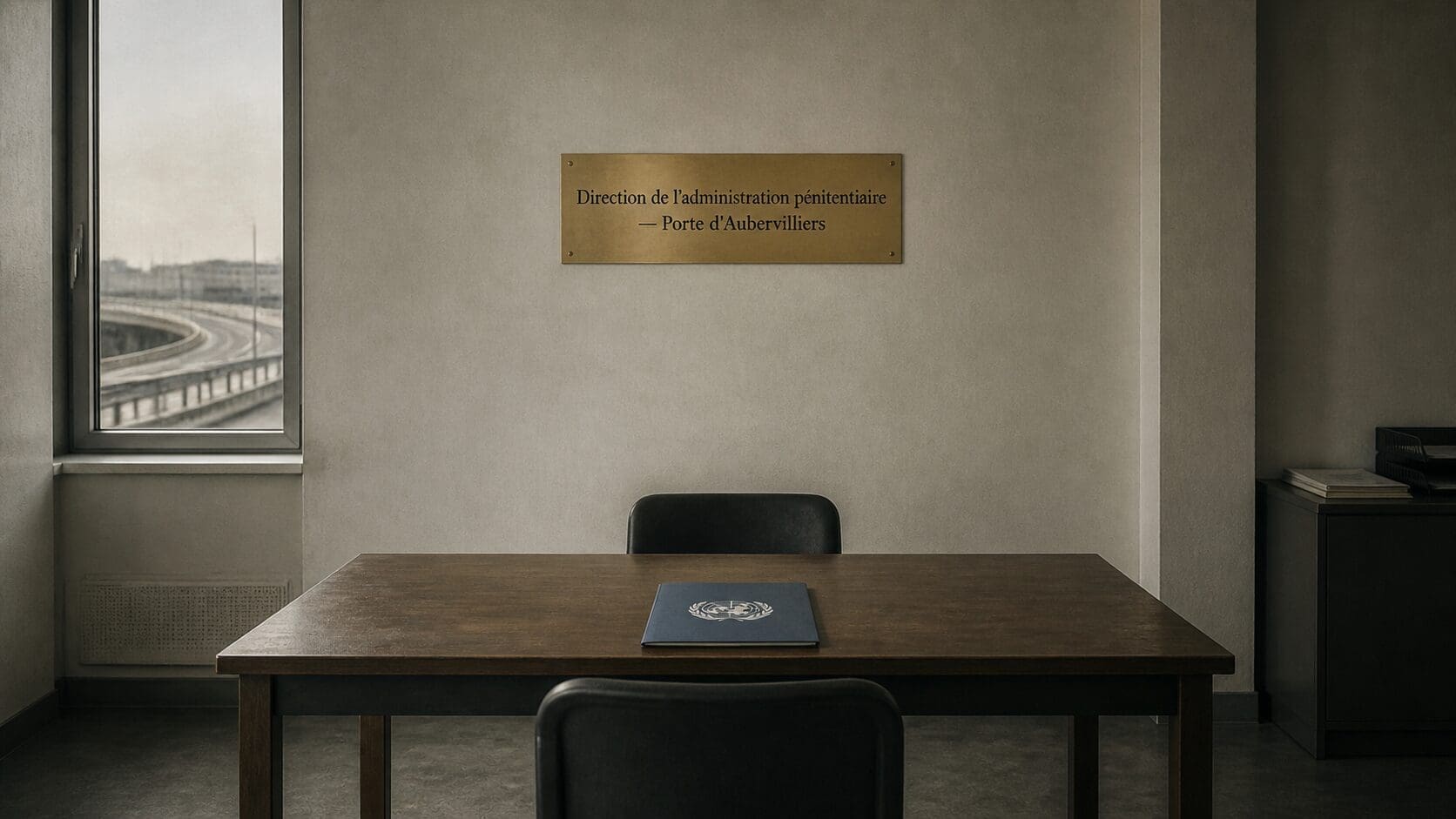
On 12 May 2026, the Office of the UN High Commissioner for Human Rights announced that the Subcommittee on Prevention of Torture (SPT) would visit France from 17 to 23 May, emphasizing “gaining first-hand access to places of detention.” Despite ratifying the Optional Protocol to the Convention Against Torture (OPCAT) in 2008, this marks the first SPT visit in 18 years, highlighting a gap between France’s self-image and its practices.
The SPT inspects cells, speaks to detainees, and examines the treatment of individuals in detention facilities, including prisons, hospitals, and immigration centers. Its mandate is preventive, focusing on documentation, recommendations, and follow-up rather than punishment.
French Press Context
La Croix contextualized the visit amid prison overpopulation and European body warnings. The European Committee for the Prevention of Torture (CPT) had issued a severe report in January 2026, noting a 155% occupancy rate in French remand prisons and 6,400 detainees sleeping on floors. The CPT described prison overpopulation as transforming facilities into “human warehouses” and threatened a “public declaration procedure,” a rare measure used against countries like Russia and Turkey.
The CPT report also highlighted deficiencies beyond overcrowding, including dilapidated conditions, violence allegations, inadequate psychiatric staffing, and unworthy conditions with infestations. The Committee suggested closing Fresnes prison due to its unsuitability for rehabilitation.
Le Canard enchaîné noted that the SPT delegation was received not by top ministers but by a deputy secretary-general at the Directorate of Prison Administration, reflecting concerns about France’s commitment to human rights.
Handicap.fr reported on broader concerns, including issues in psychiatric hospitals and disability centers, citing “major dysfunctions” involving fundamental rights violations. The UN criticized French disability policy in 2021 for institutionalization and lack of accessibility. The SPT urges transparency in its report’s release to ensure accountability.
Libération published a piece on the structural crisis, advocating for a numerus clausus and a genuine socio-judicial policy. On 1 April 2026, only 986 people were in external placement measures, prompting calls for recognizing over-incarceration’s counterproductive nature and reaffirming fundamental rights.
NGO Documentation
The SPT’s visit aligns with extensive civil society documentation. One NGO presented evidence of abuses by French law enforcement, including excessive force and degrading conditions during police raids and detention. Multiple sources corroborate these findings.
CAP LC’s Engagement
CAP Liberté de Conscience has actively engaged with the Committee Against Torture on French issues. At the 82nd session, they submitted reports on domestic violence and police conduct. One report highlighted domestic violence as institutionalized torture, with alarming figures and systemic negligence contributing to revictimization. Another report focused on police targeting of religious minorities, recommending improved supervision and cessation of persecution.
The SPT’s Method and Expectations
The SPT inspects detention places, meets with stakeholders, and evaluates torture risks. Its findings are initially confidential to encourage dialogue, followed by detailed recommendations. The SPT encourages France to authorize public release of its report for transparency. The visit also indirectly examines France’s National Preventive Mechanism (NPM) and its adherence to recommendations.
The Weight of the Record
The SPT’s visit occurs amid pressure from reports on prison conditions, psychiatric alerts, and civil society documentation of abuses, indicating systemic issues eroding detainee dignity. Though the SPT lacks sanctioning power, its documentation and recommendations carry moral weight. The visit marks an accountability moment, with France’s response determining the impact.
The SPT will conclude its visit on 23 May 2026, leaving France to address the documented issues. The visit’s significance depends on whether France views it as a mere formality or a reflective opportunity.






Leave a Reply