


They Use Special Organs
Deep-sea fish often have exceptionally large eyes with highly developed lenses and pupils.
Research has shown fish can see in color and even distinguish a wider range of colors than humans. These creatures need to see nearby rather than far away due to seawater often being cloudy with plankton and particles limiting visibility. To see at longer distances, fish utilize lateral lines or pressure receptors along their bodies to detect wave vibrations from moving fish.
With this natural radar, fish can identify predators or prey and assess their health: injured fish create waves with different pressures than healthy ones.
Deep-sea fish have large eyes with advanced lenses and pupils, allowing them to detect faint light flashes. They are likely sensitive to blue-green lines of the spectrum, wavelengths that penetrate deep ocean areas. During courtship, deep-sea fish have photophores that light up to identify each other as the same species. The ocean depths glimmer with these lights, resembling fireflies at night. Some species use light to lure victims. Recently, photophores were found in a shark’s mouth, likely acting as bait to attract prey.
Do sharks see? Studies have disproven the belief that sharks are blind. Research on fish vision primarily involves freshwater species in labs, and replicating conditions for studying large marine fish is challenging. Thus, sharks’ vision remains a mystery deep in the ocean.
Winter Fishing
Aquatic life continues in winter but is less active. Winter is challenging for fish, with minimal feeding and reduced metabolism, requiring adaptation to cold water. Rapid cooling can shock fish, though rising temperatures increase activity.
Lack of food is easier to endure than oxygen scarcity, which can be fatal. Fresh, oxygen-rich water is vital for fish, with river perch, whitefish, and perch being most sensitive. In winter, polluted water poses a significant threat.
After ice forms and water temperature stabilizes, certain fish species migrate. Bream become active under the ice, and river perch stay near springs. Fish behavior, developed for survival, aligns with ecological conditions. In winter, fish avoid rapids to conserve energy, returning when the season ends. Winter fishing isn’t about harsh frosty, windy, snowy days but enjoying serene nature, with successful fishing boosting confidence.
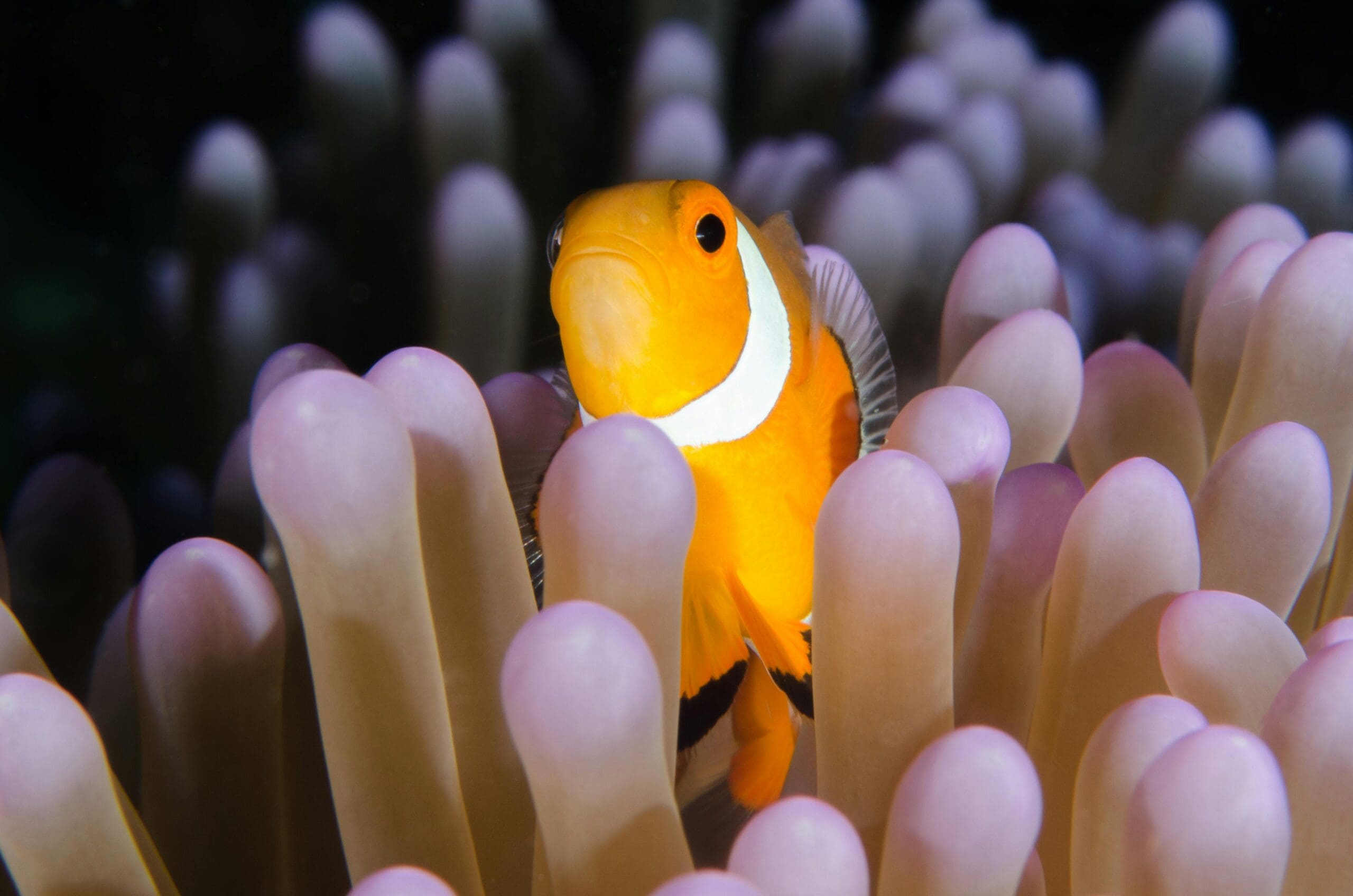
Illustrative Photo by Ben Phillips: https://www.pexels.com/photo/clown-fish-on-white-corals-4781926/










Leave a Reply