


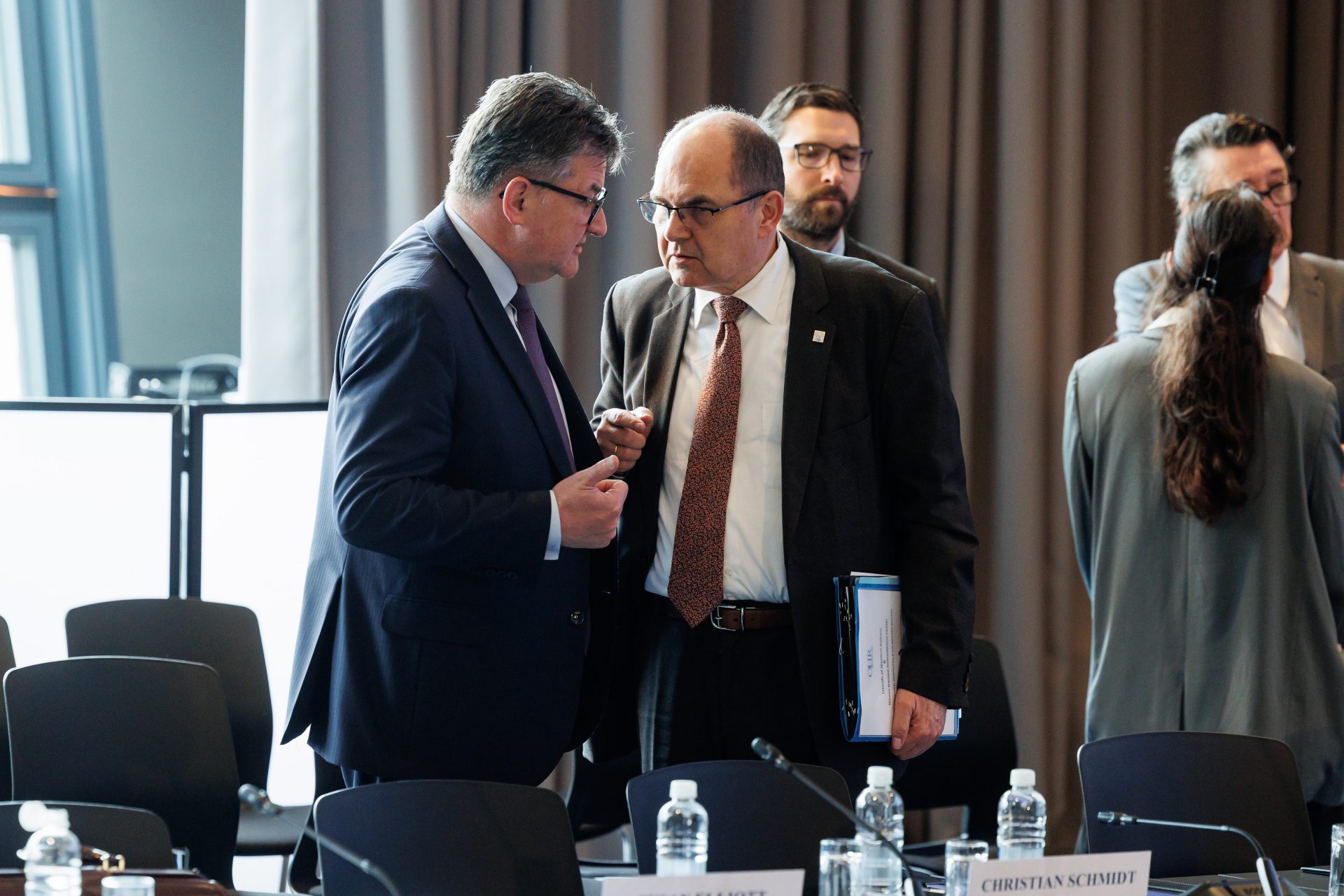
Ljubljana – At the commencement of the two-day Friends of the Western Balkans conference in Ljubljana on Thursday, Foreign Minister Tanja Fajon and former President Borut Pahor highlighted the critical need for the European Union to expand its horizons to include the Western Balkan nations. Fajon articulated that this expansion is a geopolitical imperative, while Pahor cautioned that conditions in the region are worsening.
Pahor, who founded and directs the Friends of the Western Balkans institute, noted during the session titled New Global Geopolitics and the Western Balkans that recent progress regarding EU enlargement has been minimal. He remarked, “The Western Balkans is not associated with stability. (…) While it may appear that the region is calm and secure, I believe the situation is deteriorating.”
“To expedite the expansion process, we must take decisive action,” Fajon stated. She advocated for a significant increase in EU investments aimed at gradually incorporating potential new members, moving away from the current “all or nothing” strategy. She suggested that candidate countries should engage in key EU policies even prior to obtaining full membership.
Fajon also called for enhanced collaboration between the EU and the Western Balkans, recalling the initiative by Slovenia and Germany aimed at accelerating the enlargement process through the adoption of qualified majority voting for certain intermediate technical measures.
Pahor asserted that the EU is faced with two choices: “The EU can either evolve towards a United States of Europe or risk gradual disintegration. There is little room for compromise between these paths.” He firmly believes that the most effective way for the EU to expand into the Western Balkans is through a unified approach that would facilitate the simultaneous accession of all six countries.
Pahor further indicated that the global landscape is deteriorating. “We are witnessing a resurgence of power politics and spheres of influence. Long-established international institutions that have aimed to uphold peace, security, and prosperity since the UN’s inception are losing relevance and power. Protectionism is making a comeback, and the frequency of armed conflicts is on the rise,” he warned.
The conference in Ljubljana attracted 34 speakers from 18 nations, including seven former presidents and four former prime ministers. Notable attendees included the EU Special Representative for the Belgrade-Pristina dialogue, Miroslav Lajčak, and the High Representative of the international community in Bosnia and Herzegovina, Christian Schmidt. (April 24)




Leave a Reply