


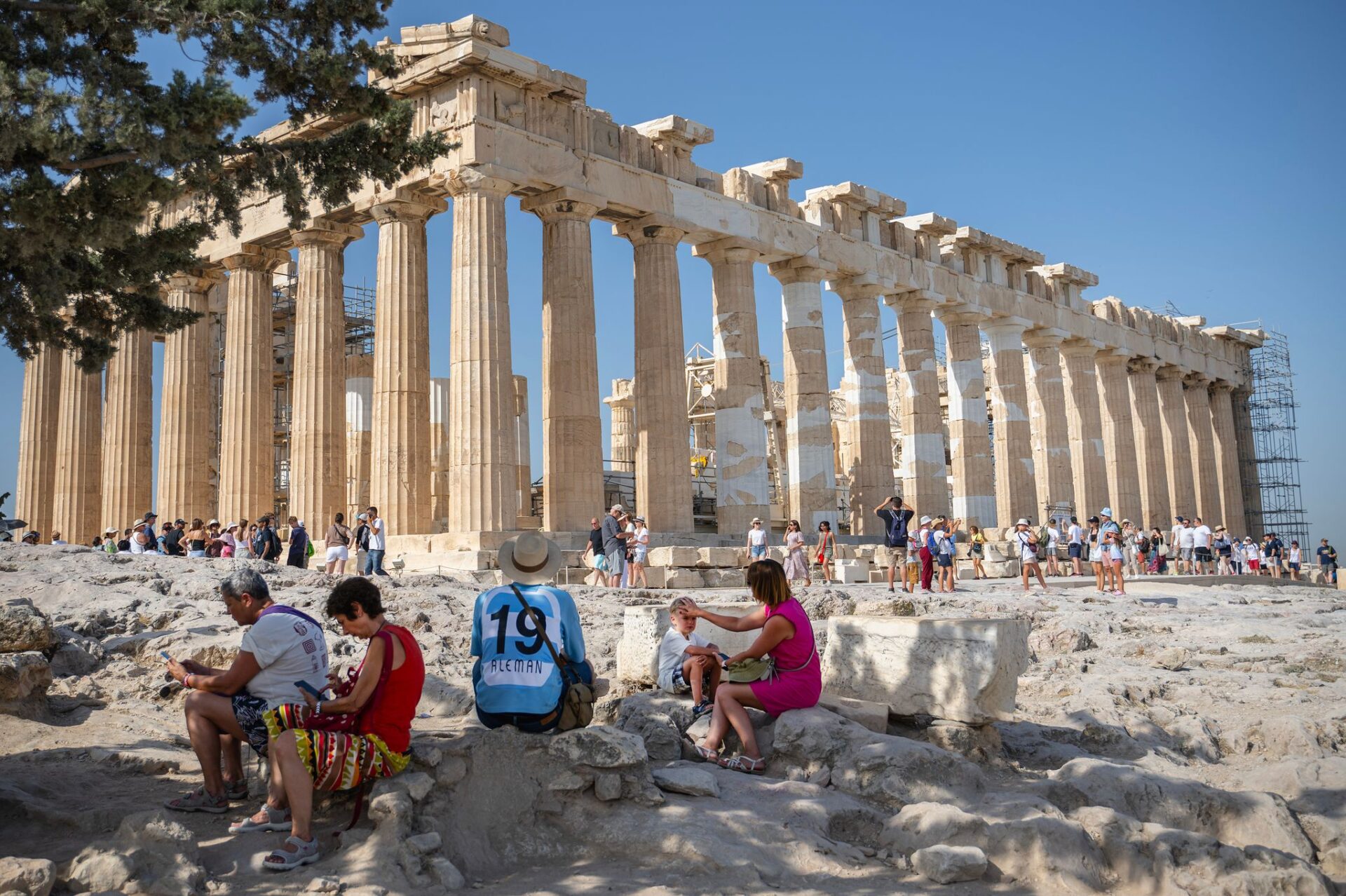
Following Russia’s invasion of Ukraine, the historically amicable relationship between Russia and Greece deteriorated significantly, though pro-Russian sentiments persist among certain far-right and leftist factions in Greece, according to Greek expert Prof. Panagiota Manoli.
Since the end of the Cold War, Athens has sought to navigate a balance between its commitments to the European Union and NATO while maintaining a “special partnership” with Russia. However, in light of Russia’s aggressive actions in Ukraine in 2022, Greece aligned its stance with that of its EU and NATO allies, leading to a collapse in Greek-Russian relations, including trade. Greece was subsequently categorized as one of the “unfriendly countries” by Russia, as noted by Manoli, a professor at the University of Peloponnese and a researcher with the ELIAMEP think tank.
The year 2022 marked a significant shift in Greece’s pro-Russian sentiment, according to Manoli. She pointed out that diplomatic tensions had already escalated in 2018 when Greece expelled two Russian diplomats due to alleged activities threatening national security.
Surveys show that while a majority of Greeks disapprove of Russia’s invasion of Ukraine and support assistance to Kyiv, there are notable differences in Greek opinions compared to other EU nations. Shortly after the invasion, a Politico poll indicated that 60% of Greeks regarded Russian aggression as unacceptable. Additionally, Greeks were among the least supportive of sanctions against Russia; a Eurobarometer survey from May 2022 revealed that only 53% favored such measures, significantly lower than the EU average of 80%. By two years into the conflict, support for sanctions in Greece had declined further to 38%, while EU support stood at 58%.
Manoli observed that Greek society harbors a degree of suspicion towards both Russia and the United States, while pro-European sentiments have increased since the onset of the war in Ukraine.
Despite this shift, pro-Russian attitudes continue to exist in Greece. According to Manoli, even after Crimea’s annexation, Greece remained “the most Russophile country in Europe.” She explained that these sentiments are particularly prevalent among far-right supporters who emphasize common Orthodox beliefs and cultural connections, while some leftists exhibit nostalgia for the Soviet Union.
The Greek far-right also stresses the potential economic benefits of closer ties with Russia, a message that resonates in a society still recovering from a decade-long financial crisis, as Manoli highlighted.
Greece has provided diplomatic, humanitarian, and military support to Ukraine, including a security cooperation agreement. However, Manoli noted a growing reluctance among the Greek public to continue military assistance. According to Eurobarometer surveys from March 2024, support for ongoing and increased aid to Kyiv among EU citizens stands at 61%, while in Greece, only 46% endorse this, marking it as the fourth lowest figure in the EU.
Additionally, Manoli pointed out that Russia has attempted to leverage the Orthodox Church in Greece for influence, particularly in northern Greece and at the monasteries on Mount Athos, by providing funding. Tensions have long existed between the Greek Orthodox Church and the Russian Church.
On the matter of the Greek minority in Ukraine, prior to the invasion, there were an estimated 100,000 individuals of Greek descent in the Mariupol region. Given the current circumstances, it remains difficult to ascertain how many of this group remain under Russian occupation or have fled Ukraine.
As of the end of 2023, Greece has welcomed over 23,000 Ukrainian refugees, not exclusively of Greek descent. In response to the situation in Mariupol, the Greek government is advocating for the establishment of an international tribunal to investigate the aggression against Ukraine. (28.12.2024)




Leave a Reply