


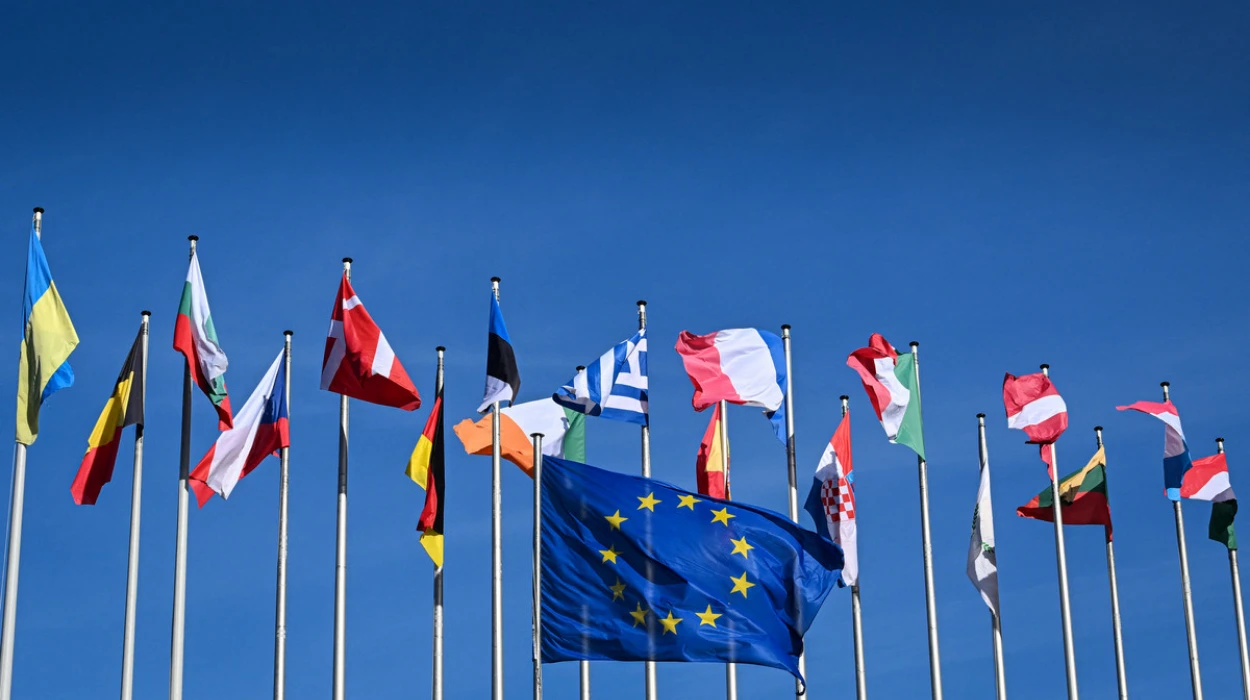
The rise of the far right is an inadequate description for a political shift taking place in Europe. Nationalist and populist parties have gone from the fringes of poltical participation to parliaments, coalitions, and now, even into the mainstream of politics. Their impact is no longer confined to vote numbers, but is also visible in the language of establishment conservative parties, in their influence in the agenda of national debates, and in the policies which governments once thought of as unthinkable.
The European right is used to working through political parties, but it is not being used this way in this moment. It has cultivated a network of politicians, think tanks, donors, conferences, media personalities, religious groups, and transatlantic partners. Such an actor group cannot be said to be moving towards a common goal in a centralized fashion, though this would be a falsehood and an easy read. But more and more they share platforms, tactics, funds and in some cases personnel. The end product is a political system that can outrun most political institutions in its transmission of ideas across borders.
A parliament reshaped
The change is best reflected in the European Parliament. Patriots for Europe were the third largest party in the chamber after the 2024 elections (84 seats). There were 78 from the European Conservatives and Reformists, and 25 from Europe of Sovereign Nations. The situation was tougher than ever after two years: by mid-2026, Patriots for Europe and the ECR were neck in neck for third place, each finishing in the mid-80s, while national conservative and eurosceptic parties throughout the bloc continued to pick up seats via defections and coalitions. The nationalist right has taken control of almost a quarter of the chamber.
What has gone on outside of the chamber is more important than the number of seats. Now the Fidesz in Hungary, the National Rally in France, Brothers of Italy, AfD in Germany, Freedom Party in Austria, Vox in Spain, Party for Freedom in the Netherlands and Chega in Portugal use to play in the political periphery but are now part of the political mainstream. In response, establishment conservative parties have taken more hard-line stances on immigration, borders, and national identity. This is the paradox of this story: while it may not have been the best thing for the new right that the new right has become a government, it may be the best thing for the new right that the political center has been pulled toward the new right.
From national grievance to international project
In the preceding few decades, the parties of the nation were home-grown, based on local grievance, national history. That has changed. Viktor Orbán has made Hungary an intellectual center for a new nationalism and has established ties with European and American politicians and institutions. One facet of that ambition was the creation of Patriots for Europe, not a single far-right super-party, but a network that connects the most important nationalist movements in Europe. Nowadays, European and American politicians, strategists and media personnel routinely meet in such conferences as CPAC.
This exchange is not a guess, it is documented. The Friedrich-Ebert-Stiftung followed approximately 3000 speakers representing 1800 organisations at 302 conferences in 35 countries from 2000 to 2024, recognising CPAC and the National Conservatism conferences as the network’s most significant nodes. Political movements do not become more enduring because they win elections, but because they develop institutions that generate ideas, cultivate activists and generate leadership. The lesson has been learned by Europe’s new right.
The Trump effect and its limits
All of this was hastened by Donald Trump’s return to the White House, but his ties to the right in Europe are a truer picture of the network than any organizational chart could ever be. Trump proved that a nationalist and an anti-in






Leave a Reply