


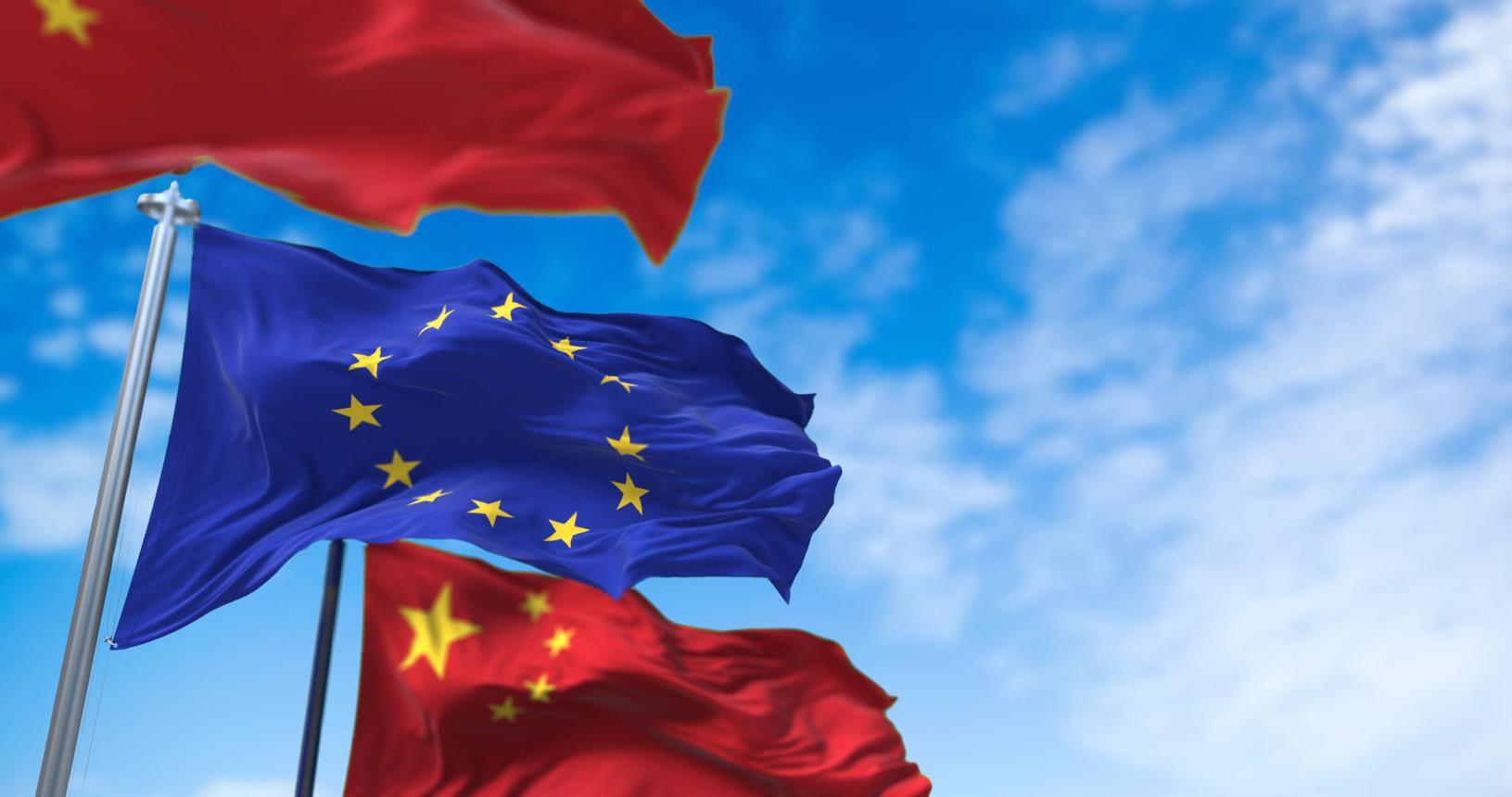
Walk through any European city today and the transformation is visible. Charging stations sprout on street corners. Electric buses glide silently through historic squares. The continent’s green transition is no longer a policy paper ambition – it is being built, street by street, factory by factory.
But inside Europe’s corridors of power, a different mood prevails. Anxiety. The surge of competitive Chinese electric vehicles (EVs) has set off alarm bells from Berlin to Brussels. The European Commission’s anti-subsidy duties – which reached up to 35.3% before transitioning to a framework of price undertakings – are not merely a trade dispute. They express a deeper, existential fear: that Europe might lose the automotive industry that has defined its middle class and economic identity for a century.
That fear deserves to be taken seriously. But the defensive response Europe is contemplating – tariff walls, stringent localisation rules, and looming restrictions in the Industrial Accelerator Act – risks fighting the wrong battle with the wrong tools. The real question is not how to keep Chinese EVs out. It is how to embed Chinese technology, capital, and supply chains inside Europe’s industrial renewal, on European terms, for the benefit of European workers and climate goals.
Chinese EV competitiveness is not simply a story of state subsidies. It reflects a decade-long strategic bet on battery chemistry, mineral processing, and vertically integrated supply chains. While Brussels refined regulations, Beijing built an ecosystem. Today, European battery manufacturing costs remain roughly 30% higher than in China. According to research published in Nature Energy, Europe’s domestic battery production is projected to meet at best 50–60% of its 2030 demand, with the EU’s 90% self-sufficiency target “feasible but far from certain”.
Europe’s structural bottlenecks – high energy costs, glacial permitting for gigafactories, and dependency on imported critical minerals – cannot be solved by a customs agent at the port of Zeebrugge. At best, tariffs buy time for legacy management. At worst, they raise consumer prices, slow EV adoption, and undermine the European Green Deal.
A quieter, more pragmatic path is already underway on European soil. In Hungary, Chinese battery titan CATL is building a €7.3 billion plant to supply Mercedes-Benz and BMW, with mass production slated for late 2025 and an annual capacity of 100 gigawatt-hours. BYD is on track to begin vehicle production in Szeged this year, choosing to build inside the single market rather than wage an external trade war. In Spain, Stellantis and CATL have joined forces on a €4.1 billion, 50 gigawatt-hour battery plant in Zaragoza, with production targeted for late 2026. France has welcomed Envision AESC in Douai, a €1.3 billion gigafactory now employing 900 workers and supplying batteries for the Renault 5.
These are not extractive projects. They are deep co-investments – creating thousands of skilled local jobs, fostering regional supplier ecosystems, and anchoring technology transfer inside Europe’s borders.
This is not a new or uniquely Chinese strategy. It is precisely how Germany rebuilt its industrial might after 1945. The Wirtschaftswunder – the economic miracle – was not built behind protectionist walls, but through the systematic licensing of foreign technologies, the deliberate attraction of foreign capital, and the absorption of best-practice manufacturing know-how, which German engineers then refined and often surpassed. Korean and Japanese
Comments
7 responses to “Europe’s Decision: Tariff Barriers or a Green Alliance with China”
-
Seems like Europe has found a new pastime: building tariff walls while the Chinese are busy building gigafactories. Who needs a competitive edge when you’ve got a bureaucratic moat? 😂
-
Tsk, tsk! Who knew the EU was so torn between embracing a green future and clutching its pearls over some shiny Chinese EVs? Maybe it’s time we swapped our tariff walls for a cup of tea and a good old-fashioned collaboration, eh? 🍵🚗
-
If only we could build tariff walls as effectively as we build charging stations—then maybe we wouldn’t be staring down the barrel of a green alliance with our new best mates from China. 😂 Just what Europe needed, another existential crisis served with a side of electric vehicles!
-
Seems like we’re weighing whether to slap tariffs on Chinese EVs or join the green alliance with them. Brilliant strategy, really—why not just throw a fancy dinner party for the competition instead of actually making something ourselves? 😏🚗💨
-
Oh, brilliant idea, let’s just slap tariffs on everything and hope that makes our EVs magically more competitive! Because nothing screams “innovation” like a trade war, right? 😏💶
-
Oh great, just what we need—more tariff walls to keep out the competition while we sit back and enjoy our overpriced lattes. 🤦♂️ The last thing I want is to trade a few cheap EVs for a dose of reality!
-
Oh sure, let’s just slap on some tariffs and pretend that’ll magically revive our automotive industry while the Chinese are busy turning up the heat on innovation. Brilliant plan, mate! 😅
-
So, Europe’s grand plan is to either build tariff walls or join hands with the Chinese? Brilliant! Because nothing screams “innovation” like a game of economic chicken with a country known for its stealthy strategies. 😏

Last News
European Lawmakers Call on Albania to Stop Kushner-Linked Project Construction
This aligns with the Commission’s warnings that Albania’s EU accession risks stalling without an environmental impact assessment.
The European Parliament and Commission demand Albania reverse its protected areas law chang
Europe’s Decision: Tariff Barriers or a Green Alliance with China
Walk through any European city today and the transformation is visible. Charging stations sprout on street corners. Electric buses glide silently through historic squares. The continent’s green transition is no longer a policy paper ambition – it is being built, street by street, factory by factory.
But inside Europe’s corridors of power, a different mood prevails. Anxiety. The surge of competit
UN Condemns New Wave of Russian Attacks Across Ukraine

Makerfield By-Election: Final Campaign Day — Live Updates
Burnham, known as the “king of the north” for his accomplishments, enjoys significant popularity among
Can Funding Match Europe’s Defence Aspirations? An Interview with EIB Chief Nadia Calviño
The EIB has revealed that it significantly increased its funding for security and defense ini
New Google Search Rules Proposed by Digital Markets Unit to Bolster UK Competition in 2026
Sarhan Basem is Eurotoday’s Senior Correspondent to the European Parliament. With a Bachelor’s degree in English Literature, Sarhan brings a unique blend of linguistic finesse and analytical prowess to his reporting. Specializing in foreign affairs, human rights, civil liberties, and security issues, he delves deep into the intricacies of global politics to provide insightful comment

EU Adds Settlement Trade Options to July Agenda
EU foreign ministers have urged the European Commission to develop options for possible trade measures on goods from illegal Israeli settlements, progressing a long-standing human rights dispute to a more concrete stage ahead of July discussions.
This request followed the Foreign Affairs Counci

Spanish Striker Rafa Mir Sentenced to 8½ Years in European Soccer Controversy
VALENCIA, Spain, June 15 – Eurotoday Newspaper — European soccer controversy intensified this week after Spanish striker Rafa Mir was sentenced to eight and a half years in prison following a sexual assault conviction. The ruling has quickly become one of the most discussed legal cases involving a professional football player in Europe, drawing reactions from sports organizations, legal analysts

Key Terms and Conditions of the Share Buy-Back
Société anonyme with a share capital of €371,177.72
Registered office: 1 route de Versailles – 78470 Saint-Rémy-lès-Chevreuse, France
662 001 403 R.C.S. Versailles
Main terms and conditions of the share buy-back programme in accordance with the conditions and obligations set by Articles 241-1 and seq. of the General Regulations of the Autorité des marchés financiers (AMF
Leave a Reply