


Brussels (Brussels Morning Newspaper) – MEPs debate on recognizing civil status documents of same-sex couples and their children within the EU.
Same-sex couples recognition within the EU today
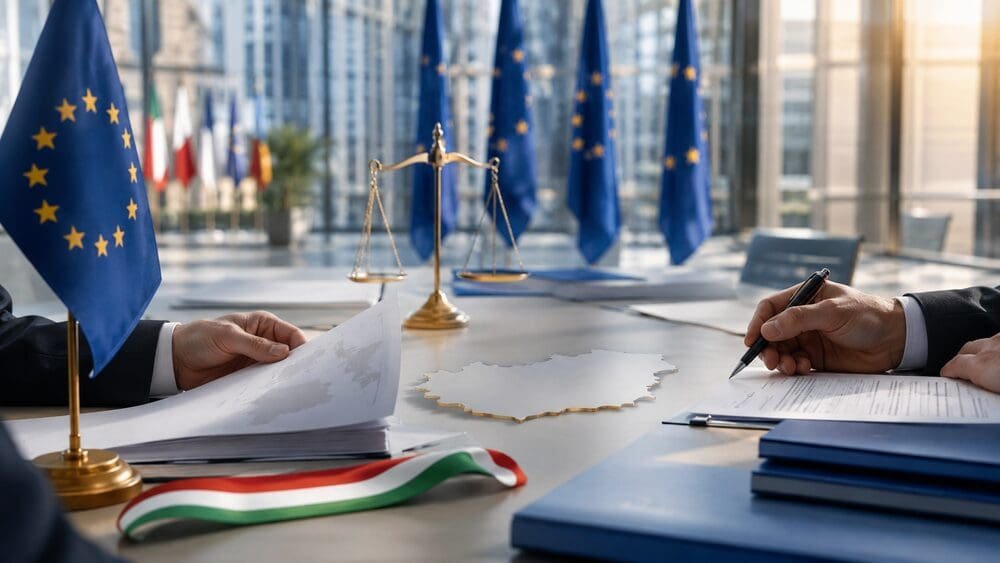
During the February 13, 2025 plenary session in Strasbourg, MEPs debated the possibility of recognizing same-sex couples’ rights uniformly within the EU.
The debate focused on the right to free movement across the Union, the need to protect rainbow families and their children, and the importance of avoiding legal limbo regarding parenthood and marital status. More conservative members argued that parenthood is not a right and that children should be raised by heterosexual couples.
EU law recognizes sexual orientation as a basis for discrimination but does not cover health care, recognition of marital and family status, education, or access to goods and services for LGBTIQ+ people, leaving such regulations to individual member states.
As of today, six EU countries – Bulgaria, Latvia, Lithuania, Poland, Romania, and Slovakia – offer no legal recognition to same-sex couples. While only half of the member states allow same-sex marriage, other countries, such as Hungary, Italy, and Greece, recognize unions similar to marriage or provide some form of contractual registration.
Regarding adoption, only 14 out of 27 EU member states fully recognize same-sex couple adoption. In other countries, adoption is either granted on a case-by-case basis through court decisions, as in Italy, or limited to step-child adoption, as in Estonia.
Such legislative disparities between member states restrict the free movement and residence rights of individuals within the EU, a core principle of the European Union as established in the Maastricht Treaty of 1992.
“I imagine I go somewhere and my partner suddenly gets really sick. In that case, I’m not a person who can make decisions about what to do in a medical emergency. These kinds of things are quite scary to think about,”
MEP Kim Van Sparrentak, co-chair of the EU Intergroup on LGBTIQ+, explained to Eurotoday.
During the debate, Commissioner Glenn Micallef reaffirmed the EU’s commitment to introducing a European certificate of parenthood and to safeguarding rainbow families from ongoing legal challenges. MEP Van Sparrentak expressed to Eurotoday her hope that the European Commission—expected to present a new LGBTIQ Equality Strategy by the end of 2025—will continue transforming words into action rather than following restrictive policies seen elsewhere.
Meanwhile,
“The European Parliament needs to be very vocal on these issues,”
MEP Marc Angel, co-chair of the EU Intergroup on LGBTIQ+, told Eurotoday, emphasizing the necessity of support from national parliaments.
Which steps could be taken next?
Cross-border recognition of same-sex marriage and parental rights may become possible by invoking the EU’s principle of free movement and residence. As MEP Angel noted to Eurotoday, this does not mean that all member states must legalize same-sex marriage, but rather that an EU country cannot deny the marital status of a citizen from another member state.
However, not all MEPs support this approach. Paolo Inselvini, an MEP from the European Conservatives and Reformists group, argued that the debate was an attempt to legitimize surrogate motherhood.
“We will be there on the barricades. We will stop your ideological tide,”
said the Italian MEP.
Both co-chairs of the LGBTIQ+ Intergroup insisted that the issue is fundamentally about non-discrimination.
“There is no ideology, it’s human rights,”
Angel told Eurotoday.
“We also have allies outside the LGBTIQ+ intergroup, and they know that if minorities are attacked, everybody is attacked. Even if there are more far-right and populist MEPs, we are still strong,”
said MEP Marc Angel, assuring LGBTIQ+ individuals across the EU that they will continue to fight for their rights.
—
Eurotoday is a daily online newspaper covering international and European affairs. With a strong focus on European policies, politics, and significant developments within EU member states, Eurotoday provides independent and in-depth reporting with a Europe-wide perspective.







Leave a Reply