


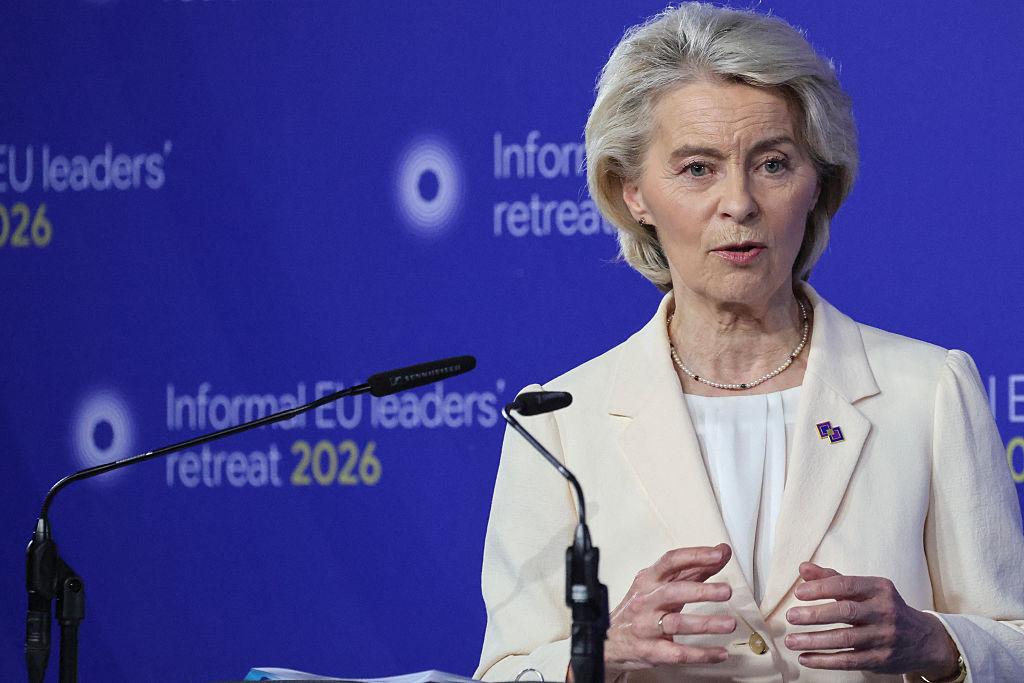
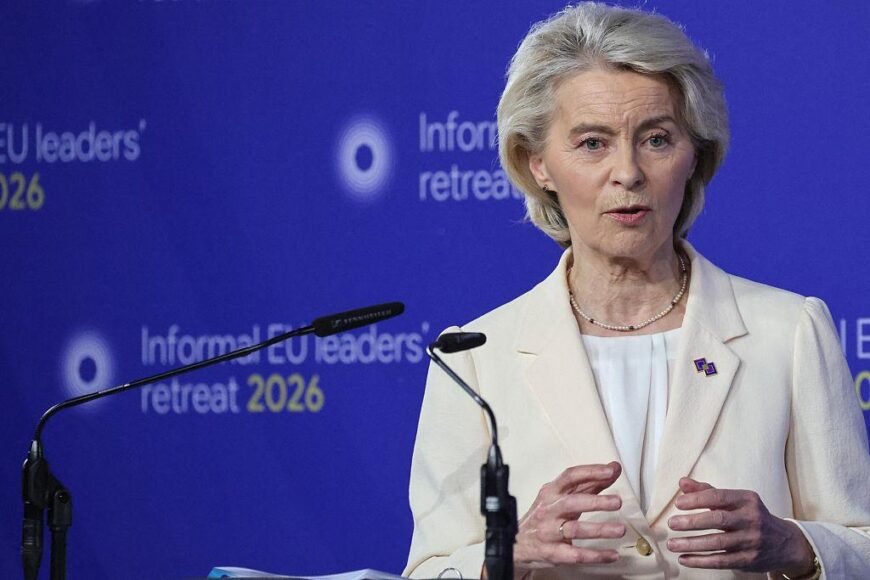
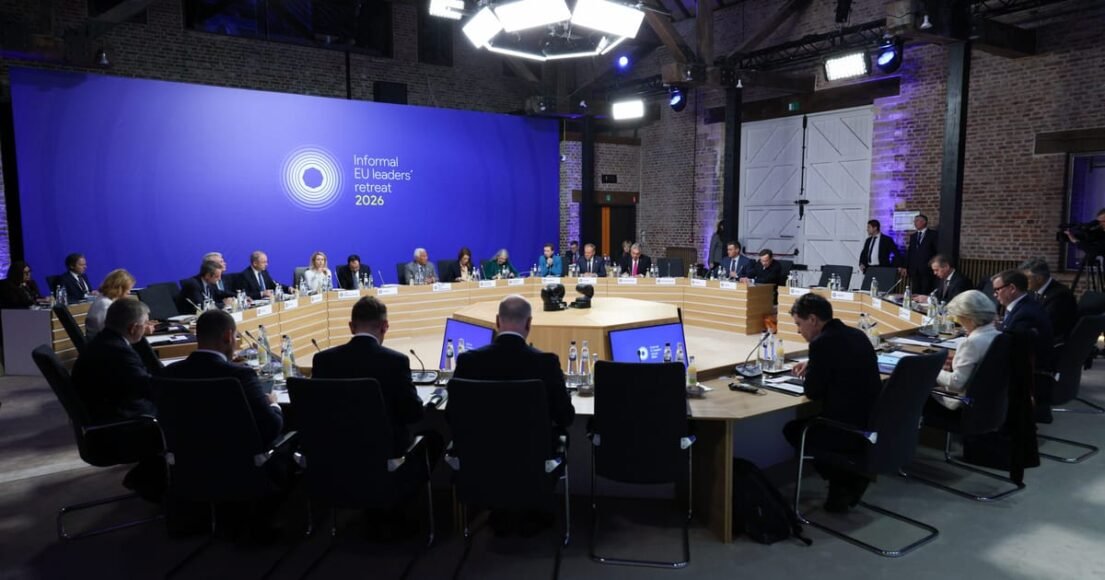
Alden Biesen, Belgium12 February 2026 at a pivotal moment for Europe’s economic future, António Costa emerged from the informal EU leaders’ retreat with a clear and forceful message: 2026 will be the year Europe delivers on competitiveness. Costa said in a press conference today.
Against a backdrop of intensifying global competition, trade tensions, technological disruption, and geopolitical instability, EU leaders gathered at the historic Alden Biesen Castle determined to chart a new course for prosperity, industrial innovation, and strategic autonomy.
What followed was not merely a discussion it was, in Costa’s words, a strategic turning point. With Mario Draghi and Enrico Letta shaping the intellectual framework of the debate, and strong interventions from Ursula von der Leyen and Emmanuel Macron, the retreat crystallized an urgent political consensus: Europe must move faster, invest more, protect its strategic interests, and complete its single market once and for all.
The March European Council is now set to transform these discussions into binding commitments, timelines, and legislative action.
A New Urgency Around Competitiveness
Opening the press conference, European Council President António Costa underscored a shared sense of urgency among leaders.
“Today’s discussions in Alden Biesen brought new energy and a shared sense of urgency,”
he said.
“Most importantly, today we paved the way to agree on concrete actions in the March European Council.”
The objective is clear: build a more competitive and resilient European economy capable of delivering:
⦁ Economic growth
⦁ Industrial innovation
⦁ High-quality jobs
⦁ Affordability for citizens and businesses
Costa framed competitiveness not as an abstract economic concept, but as the foundation of Europe’s prosperity and sovereignty in an increasingly hostile global environment.
Draghi’s Warning: Europe in a Harder World
The retreat’s first working session began with a presentation by former Italian Prime Minister Mario Draghi, whose influential report on European competitiveness has shaped much of the current debate.
Draghi laid out the stark realities of a shifting geopolitical and geoeconomic landscape. The EU, he argued, faces intensified economic coercion, growing trade imbalances, and fierce industrial competition from both the United States and China. Critical raw materials, advanced technologies, and strategic supply chains are now arenas of geopolitical power.
Leaders discussed how the EU should position itself in this environment where economic competition is not always fair, and dependencies can quickly turn into vulnerabilities.
Two priorities emerged:
⦁ Accelerating Europe’s trade agenda, with a focus on diversification.
⦁ Defending European companies, including through targeted protection in strategic sectors.
Rules allowing for “European preference” in specific areas and a systematic de-risking approach were widely acknowledged as necessary tools in the new global reality.
Draghi reportedly encouraged leaders to consider enhanced cooperation mechanisms to move reforms forward faster if unanimity proves elusive.
From 27 Markets to “One Europe, One Market”
If the first session addressed Europe’s external challenges, the second turned inward.
Enrico Letta, former Italian Prime Minister and author of a landmark report on the future of the single market, challenged leaders to move beyond what he called an “incomplete single market.”
Costa summarized the consensus succinctly:
“The Leaders accept Enrico Letta’s challenge to move from an incomplete single market to ‘one market for one Europe.’ This is urgent and must be done in 2026 and 2027.”
The fragmentation of Europe’s regulatory environment continues to hinder company growth, cross-border operations, and capital allocation. National barriers, diverging standards, and inconsistent implementation create friction that weakens Europe’s global position.
To address this, leaders endorsed several major initiatives:
The 28th Regime


Leave a Reply