


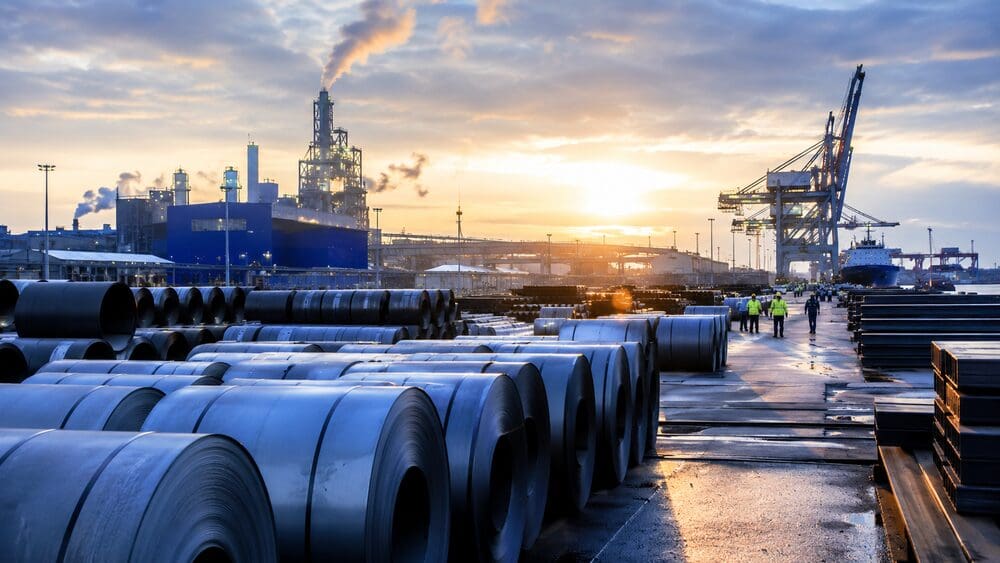
The European Union will implement a new steel import regime starting July 1st, aiming to protect the strategic steel industry from global overcapacity by cutting tariff-free access and doubling duties above quotas. This move provides stronger trade protection for steelmakers but raises concerns for manufacturers, importers, and European partners whose supply chains rely on stable EU market access.
The European Commission announced that the new rules will set tariff-free quotas at 18.3 million tonnes annually and impose a 50% duty on imports exceeding quotas across 26 steel product categories, replacing the existing safeguard system set to expire on June 30th.
For Brussels, this decision is both economic and strategic. Steel is vital for construction, vehicles, energy infrastructure, defense supply chains, and the clean technology required for Europe’s industrial transition. EU policymakers believe rising excess capacity abroad, along with trade restrictions in other markets, increases the risk of steel being redirected to Europe at unsustainable prices for domestic producers.
The new framework signifies more than a basic tariff adjustment; it represents a shift from temporary safeguards to a stronger industrial policy treating steel as part of Europe’s economic security. The Commission aims to restore fair competition while maintaining open EU market access within defined limits.
Additionally, the system includes enhanced supply-chain traceability through a “melt and pour” requirement to clarify where imported steel was produced, reducing circumvention through third countries and providing regulators with a clearer understanding of global steel flows entering the EU market.
This measure follows a proposal unveiled last autumn, as reported by The European Times, highlighting Brussels’ plan to cut tariff-free access and increase above-quota duties to 50%. Since then, discussions have intensified as Europe balances producer protection, downstream costs, and international relations.
The steel sector warns that plant closures and idled capacity could weaken Europe’s ability to produce essential materials for renewable energy, transport, and defense. Trade unions and steelmakers argue that without stronger action, decarbonization plans could be compromised by imports produced under more lenient environmental, labor, or subsidy standards.
However, the stricter regime also poses risks. Automotive, construction, and machinery companies depend on consistent steel supply, and some may face higher costs if quotas are quickly reached. Importers will need to closely monitor quota use, while smaller firms may struggle to manage sudden duty exposure.
The United Kingdom adds another layer of complexity. Despite Brexit, British and EU steel markets remain closely linked, with the UK introducing parallel steel trade measures from July 1st, including reduced tariff-free quotas and a 50% tariff above quota. These regimes reflect shared global overcapacity concerns, but require careful coordination to avoid disrupting cross-border supply chains.
The EU’s steel decision comes at a time when industrial policy is increasingly connected to employment, regional resilience, and climate goals. Steel plants are often economic anchors, supporting skilled jobs beyond the factory. Their decline can expose regions not only to unemployment but to a loss of technical capacity that is hard to rebuild.
Yet, protection alone won’t solve the sector’s deep-rooted issues. European steelmakers still face high energy prices, significant investment needs, and the challenge of transitioning to lower-emission production. If the new import regime creates breathing space, the public-interest question is whether it will be used to accelerate cleaner production and secure decent work, rather than delay restructuring.
The coming months will reveal how quickly quotas are used, how importers adapt, and whether trading partners challenge the measure. For now, the EU has drawn a clearer line: treating steel as a test of whether Europe can defend open trade while preserving the industrial base crucial for its broader objectives.









Leave a Reply