


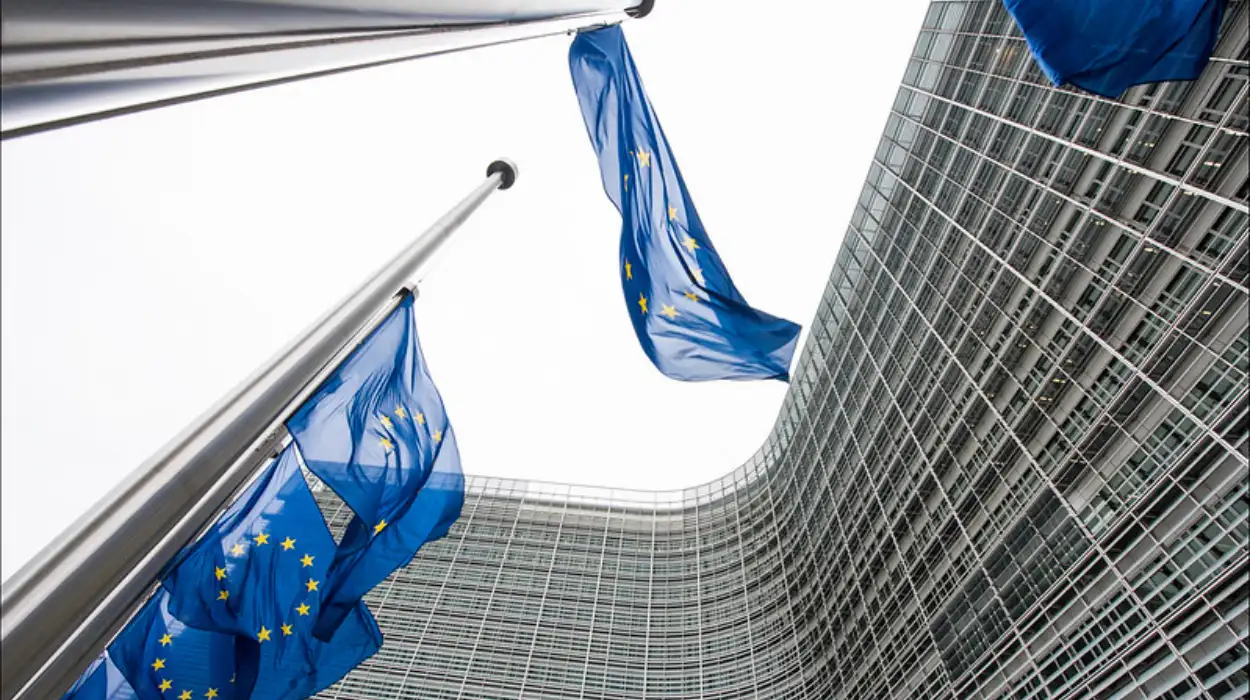
Brussels – EU Commission boosts defence readiness with first-ever financial package for common defence procurement.
The European Commission has authorised funding for five cross-border projects to back more coordinated and efficient defence procurement among EU Member States. The projects executed under the European Defence Industry Reinforcement through Common Procurement Instrument (EDIRPA), each of the 5 selected projects will welcome €60 million, representing a total amount of €300 million in allocation.
How will EDIRPA’s funding impact EU defence procurement efficiency?
According to the European Commission, the common procurement will make necessary defence capabilities more reasonable for Member States’ armed forces. With products procured in common, Member States’ armed forces will have enhanced interoperability. The more straightforward perspectives and more excellent predictability, which come with larger arrangements, will support the European industry, and permit it to adapt its production capacity to Europe’s defence needs.
What are the key areas of defence procurement under EDIRPA?
Projects backing common procurement of critical defence products by the Member States comprise three areas. The first area is procurement of air and missile defence systems: Two projects will support joint air and missile defence capacities. The ‘MISTRAL’ project helps the common procurement of ‘Mistral’ very short-range air defence tactics by nine Member States. Another project, ‘JAMIE’ will result in the common procurement of IRIS-T SLM medium-range air defence systems by six Member States.
The second area is procurement of modern armoured vehicles: EDIRPA will also back the procurement of the Common Armoured Vehicle System (CAVS), a contemporary armoured carrier for covered troop transport, by four Member States. The third area is procurement of ammunition: in two further projects, blank” rel=”noopener”>EDIRPA will help the common procurement of different kinds of 155mm artillery ammunition, namely the project ‘CPoA 155mm’ concerning six Member States and the project ‘HE 155mm’ involving four Member States.
What is the overall financial impact of the EDIRPA programme on EU defence?
As reported by the EU Commission, the five selected projects illustrate a combined procurement value surpassing €11 billion, representing the high leverage of EU funding. EDIRPA’s €300 million investment has incentivized a pledge over 36 times larger, indicating the programme’s effectiveness in driving significant defence investments across the EU.
Comments
6 responses to “EU Commission enhances defense preparedness with €300 million investment”
-
Ah, the EU Commission has decided to sprinkle a mere €300 million on defense preparedness—because who needs a robust strategy when you’ve got a checkbook? One can only imagine the thrill of bureaucrats patting themselves on the back, convinced they’ve finally outsmarted a game of chess with a splendid game of tic-tac-toe. Bravo, folks, let’s hope the next round of tea and crumpets includes a side of actual readiness!
-
Ah, nothing like a €300 million investment from the EU Commission to remind us that if we’re not ready for a zombie apocalypse, we might as well just throw in the towel and take up knitting instead. After all, who needs a robust defense when you’ve got a nice, cozy sweater and a smug sense of superiority, right? Cheers to spending big while hoping the only thing we need to defend against is another round of Brexit debates!
-
Well, isn’t that just delightful? With €300 million, the EU Commission is clearly gearing up to defend us against the ever-looming threat of bad coffee and subpar pastries. One can only hope this investment will come with a complimentary side of “We’ll be ready in five minutes” — because, let’s face it, who doesn’t love a good bureaucratic wait in the name of security?
-
Ah, the EU Commission is throwing €300 million at defense preparedness—because nothing says “we’re ready for anything” quite like a fancy bank statement and a good old-fashioned game of military Monopoly. One has to wonder if they’ll include a complimentary pair of binoculars for spotting the enemy or just a nice selection of fine wines to toast their impeccable planning. Cheers to bolstering defenses while still managing to dodge actual decisions, eh?
-
Ah, nothing says “we’re ready for anything” quite like a hefty €300 million investment in defense, because clearly, a well-funded military is all we need to solve our problems—who needs dialogue when you can just flex your budget? One can only hope this money doesn’t just purchase a fancy new set of uniforms and a couple of shiny toys for the cabinet—it’s not like we’re preparing for a game of Risk or anything, right? Cheers to ensuring Europe is ever so slightly more “prepared” while we sip our espresso and debate the merits of a two-hour lunch!
-
Ah, nothing says “let’s protect our borders” quite like a €300 million investment from the EU Commission—because who doesn’t love a good shopping spree on defense? It’s like giving a toddler a credit card and hoping they’ll buy sensible things instead of glitter and gummy bears. Cheers to keeping us all safe, one overpriced missile at a time!

Last News

Reform UK Officials Resign Amid Electoral Law Allegation in Birmingham
Birmingham, 4 September (Brussels Morning Newspaper) – Two senior Reform UK figures have temporarily stepped down after an undercover investigation raised Reform UK funding claims involving political polling allegedly financed by a foreign donor. The party denies wrongdoing and has launched an internal investigation.
The development came as Reform UK opened its annual party conference in Birming

Taiwan Travelogue Discovers Strength in Dining
Yáng Shuāng-zǐ turns food, translation and thwarted intimacy into a subtle study of colonial rule
Taiwan Travelogue, translated by Lin King, is an enchanting historical novel where abundant meals reveal a stern investigation into empire. Through the bond between a Japanese writer and her Taiwanese interpreter, Yáng Shuāng-zǐ illustrates how affection can be sincere yet distorted by privilege, cl

Germany’s Far-Right Shockwave
As Europe reacts to the AfD’s win, Zoya Sheftalovich and Nick Vinocur engage with Head of Playbook Germany, Hans von der Burchard, t

UK Construction Decline Worsens with Sharp Drop in Housebuilding, London
London, 4 September (Eurotoday Newspaper) – Britain’s construction sector contracted for a 20th consecutive month in August as a sharp deterioration in housebuilding outweighed modest improvements elsewhere in the industry. The latest UK construction PMI fell to 44.3, signalling that the sector remains under significant pressure.
The S&P Global UK Construction Purchasing Managers’ Index dec

Expiration of EU Biometric Border Safeguard
AITETAI-generated illustrationTransparency information
AI-generated images: One or more images accompanying this report were generated or substantially modified using artificial intelligence. They are illustrative and should not be understood as documentary photographs unless explicitly stated otherwise.
Schengen authorities face pressure to enforce digital checks consistently without allowi

Nasdaq and S&P 500 Futures Climb Before Key US Jobs Report
New York, 4 September (Brussels Morning Newspaper) – US stock futures edged higher on Friday, led by technology shares, as investors awaited the August employment report for fresh evidence about the strength of the American labour market and the Federal Reserve’s next interest-rate decision.
Nasdaq 100 futures were up 0.42% at 4.24am ET, while S&P 500 futures gained 0.06%, according to Reut

Guerre au Soudan : al-Burhane, armes chimiques, islam politique et accusations contre les Émirats arabes unis
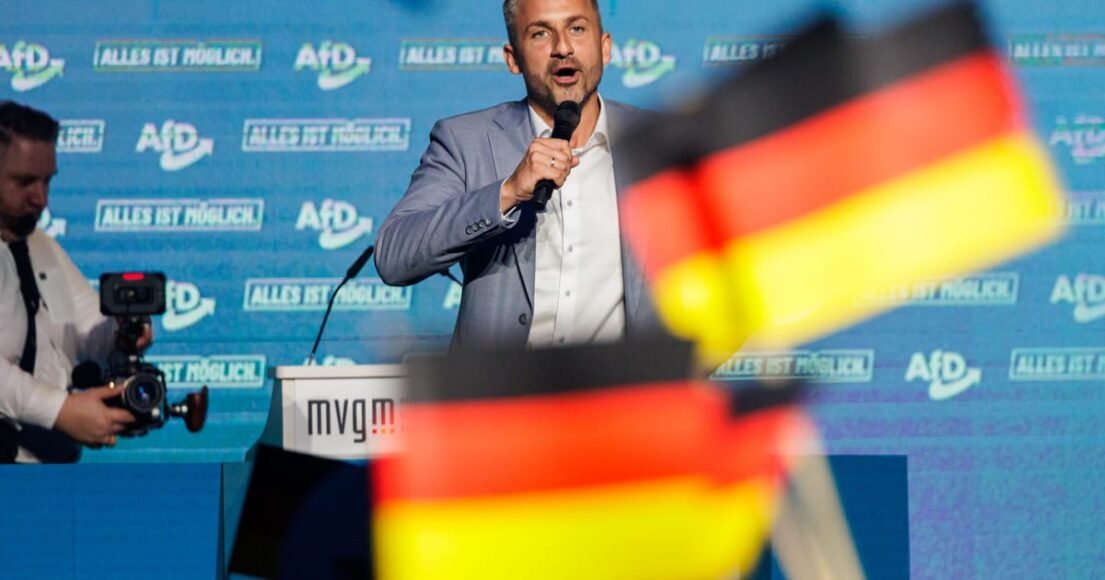
Germany’s Far-Right AfD Poised for Biggest Victory
The fact that 40% of voters backed the AfD, despite its regional branch being identified as a right-wing extremist group by the state intelligence agency and reports linking lead candidate Siegmund’s associates to an organization inspire
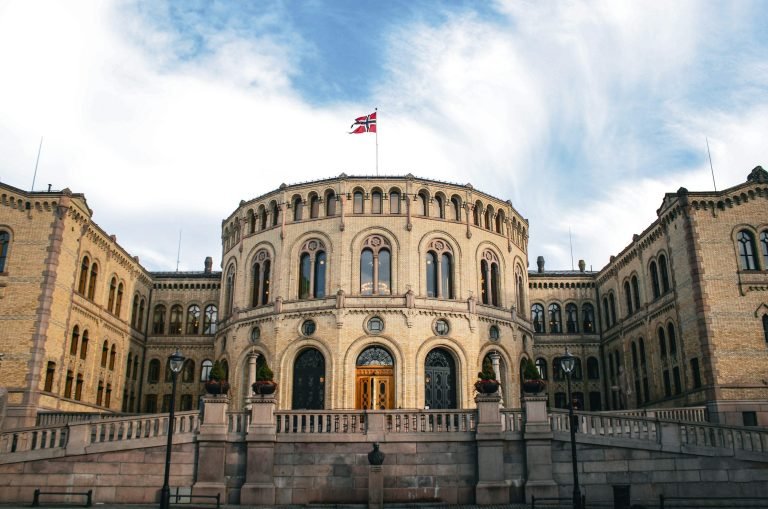
Norway Wealth Fund to Reduce US Treasury Holdings by $80bn, Oslo
Oslo, Norway, 4 September (Brussels Morning Newspaper) – Norway’s vast sovereign wealth fund has proposed sharply reducing its exposure to US government debt, a portfolio shift that could result in nearly $80 billion (£60 billion) being removed from US Treasury holdings. The Norway wealth fund, managed by Norges Bank Investment Management (NBIM), is seeking broader changes to its bond benchmark
Leave a Reply