


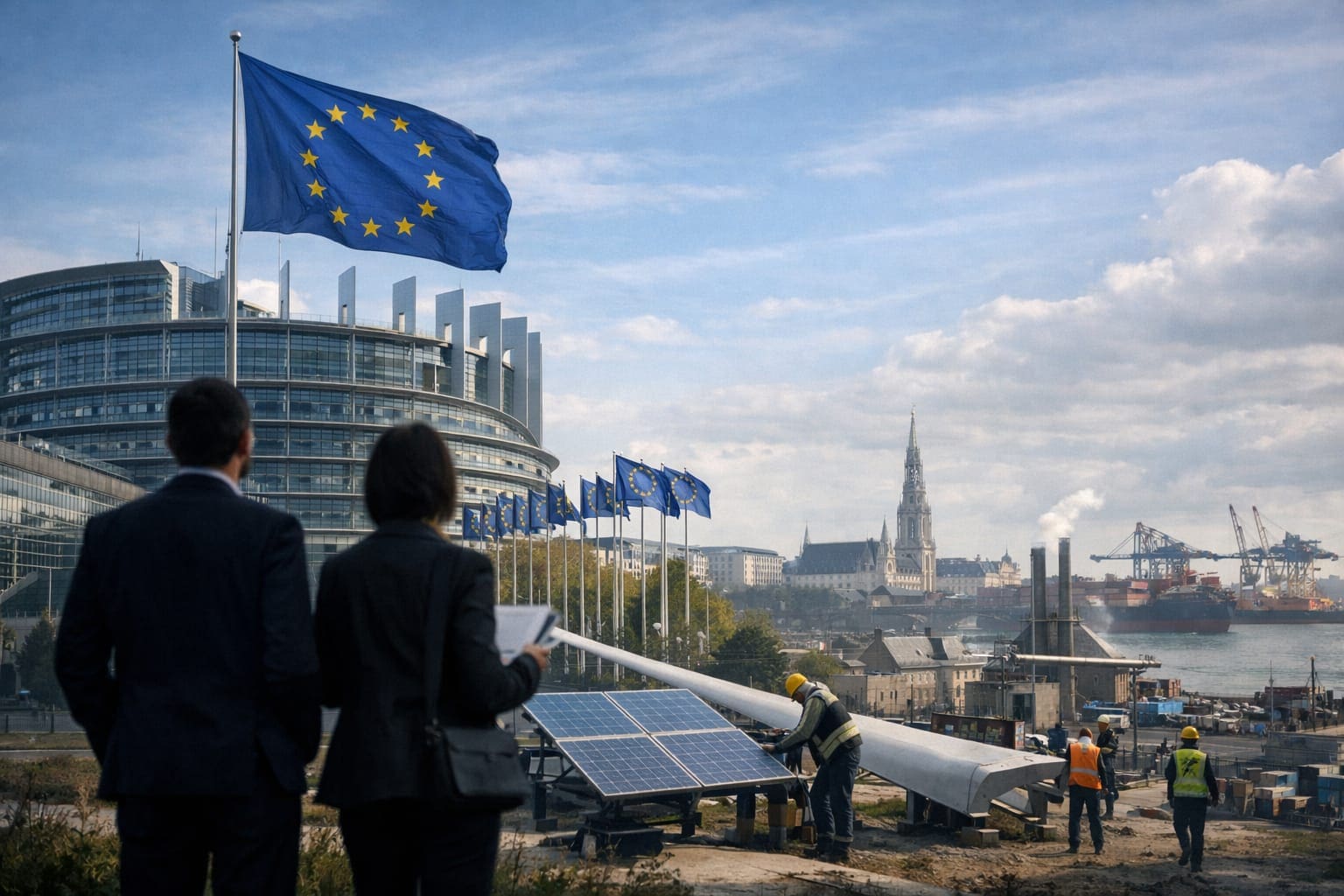
Brussels plans a major procurement shift as industry applauds—and lawyers highlight trade and competition risks
The EU is adopting a “Buy European” strategy for public spending to direct taxpayer funds towards EU-made strategic technologies. Proponents believe it will support jobs and supply chains; critics argue it may increase costs, provoke trade disputes, and challenge the single market’s rules.
Brussels is advancing a plan to prioritize European-made goods in public procurement and subsidy-linked purchases, as part of a wider industrial policy deemed essential for resilience, security, and competitiveness. The debate centers on whether the EU can implement “Buy European” on a large scale without disrupting open-market principles and trade commitments that underpin the bloc’s success.
A Euronews report on 26 February 2026 revealed that at the March 2026 EU summit, the European Commission will propose a “One Europe, One Market” action plan emphasizing “Buy European” policies, which are politically straightforward but legally and economically complex.
Brussels’ considerations
The central idea of the emerging plan is that public funds supporting “strategic” technologies—such as clean tech, advanced manufacturing, and critical infrastructure—should favor European production. A recent Reuters explainer detailed the draft concept for a “made in Europe” approach, which includes requirements for a minimum share of subsidized products to be manufactured in the EU when public support is involved. (See: What is in the EU’s draft “made in Europe” law?.)
Although exact thresholds and sectors are still debated, the intent is clear: using procurement, state aid, and EU-level programs more overtly as industrial policy tools to reduce dependencies and bolster Europe’s manufacturing base.
Controversies
EU procurement law aims to ensure competition, prevent discrimination, and deliver value for money—principles crucial for public trust in spending. Critics warn that “buy local” mandates may limit supplier options and increase costs for public services and infrastructure projects.
On an international level, the EU’s commitments in trade agreements may be jeopardized if non-EU suppliers perceive discrimination, risking disputes or retaliation. Even within Europe, disagreements arise about the extent of “strategic autonomy,” particularly when national industries vie for identical subsidies and contracts.
Practical questions also arise: What defines “European-made” amid intricate supply chains? How should components be categorized? How will the Commission enforce rules without burdening smaller companies and local authorities?
A UK perspective—and the plan’s influence
The debate is affecting non-EU partners. As reported by The Guardian, the UK’s business secretary expressed a desire for closer economic ties with the EU during a Brussels visit, indicating UK interest in the upcoming “Made in Europe” procurement scheme. (See: The Guardian’s Brussels report, 25 February 2026.)
Implications for cohesion, regions, and public trust
Procurement debates often extend beyond technical aspects. If “Buy European” rules apply to EU-funded programs, cohesion-policy regions may face new restrictions on project delivery speed and conditions, a concern discussed by cohesion ministers meeting in Brussels today. (See: Council “Forward look”, 23 February–8 March 2026.)
Beyond cost, public confidence hinges on perceived fairness. Procurement impacts daily life—transport, healthcare, education—and insider favoritism could undermine legitimacy. This concern connects procurement compliance








Leave a Reply